THE ADVENTURE COLLECTIVE® · Independent discovery and booking for outdoor travel

Depart Puerto Natales for a long, full-day crossing into Argentina to stand beside Perito Moreno’s thunderous ice wall. Expect border formalities, steppe scenery, and an unforgettable viewing of calving ice from secure park walkways.
Depart Puerto Natales for a long, full-day crossing into Argentina to stand beside Perito Moreno’s thunderous ice wall. Expect border formalities, steppe scenery, and an unforgettable viewing of calving ice from secure park walkways.
At dawn the van slips out of Puerto Natales onto a flat, wind-scoured plain; the Patagonian steppe opens like a challenge and the road points east toward the blue wall of Perito Moreno.
Verified experiences and guided adventures in the surrounding area.
Operated by Tangol · El Calafate, Santa Cruz
At dawn the van slips out of Puerto Natales onto a flat, wind-scoured plain; the Patagonian steppe opens like a challenge and the road points east toward the blue wall of Perito Moreno.
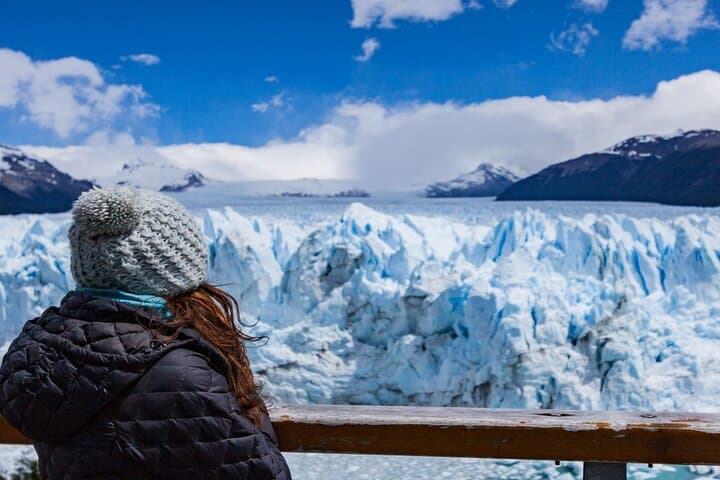
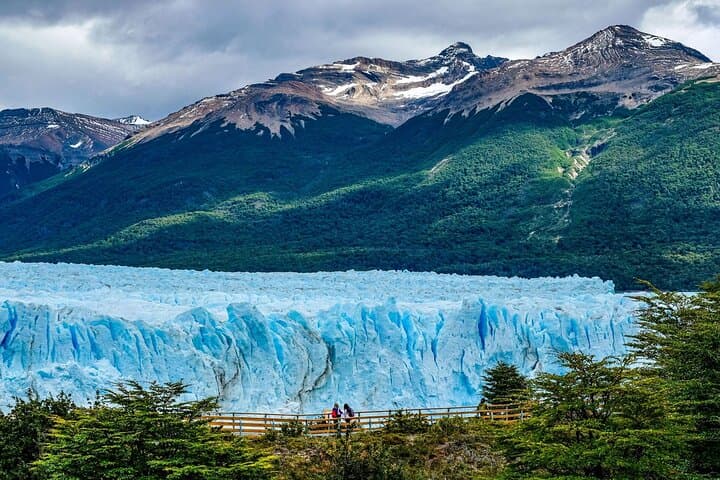
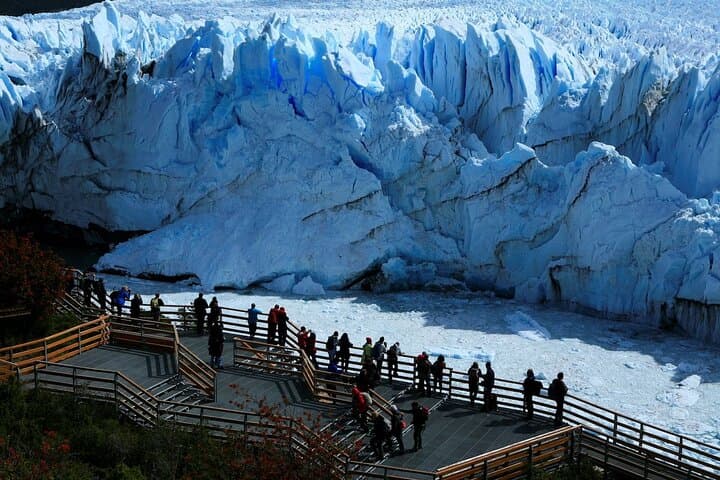
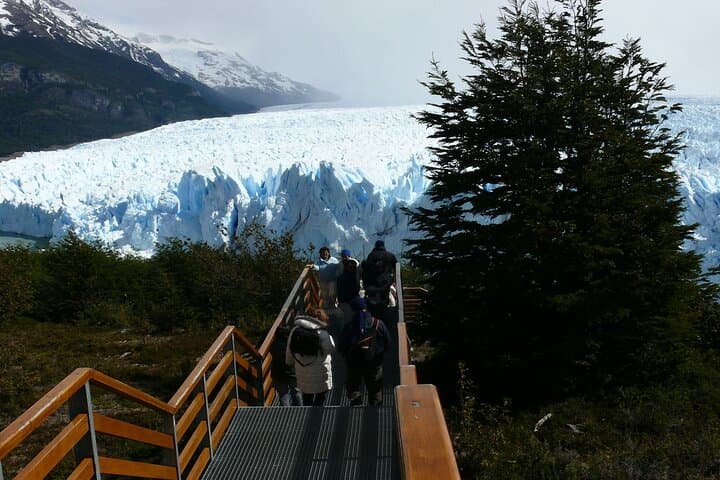
The day is long—customs at Cerro Castillo, a transit across international borderlands, and a drive past guanacos and rhea-dotted plains before Lake Argentino and Los Glaciares National Park come into view. Perito Moreno itself is a working glacier: an advancing, cracking mass of blue ice shaped by millennia of snowfall and sculpted by the forces of gravity and melt. Walkways on the park’s headland thread the viewpoints, letting visitors stand within earshot of towering ice calving into the water below—an unpredictable, thunderous spectacle.
Geologically, Perito Moreno is part of the Southern Patagonian Ice Field, an active remnant of the last ice age that feeds dozens of outlet glaciers. Culturally, the region traces human presence from Tehuelche hunter-gatherers to later gaucho and European settlement, with El Calafate growing as the gateway town.
Practical notes: the excursion is essentially a transfer plus park time—expect a 16–18 hour day total and cross-border documents (passport, visas) are required. Wear sturdy shoes for the boardwalks, layer for strong sun and wind, and bring water, snacks, and camera protection—glacier spray and sudden calvings can soak gear. If you’re planning photos, position yourself downwind for clearer shots and allow time at multiple viewpoints; guides time stops for the best light. For travelers who relish long drives and high-reward scenery, this route delivers one of Patagonia’s most immediate encounters with active ice.
easy.
16–18 hours.
Suitable for most fitness levels; requires tolerance for a long road transfer and short walks on boardwalks
Expect about 16–18 hours round-trip including border formalities, driving time, and roughly 2–4 hours of viewing in the park.
Yes—this tour crosses the Chile–Argentina border; all travelers need valid passports and may need visas depending on nationality.
Yes—the park’s walkways and viewpoints are accessible for many mobility levels, though transfer and some areas may still have uneven surfaces.
Calving is frequent but unpredictable; you’ll likely hear and possibly see chunks fall, but timing and size vary.
Perito Moreno sits in Los Glaciares National Park, designated a UNESCO World Heritage site in 1981; the glacier’s dynamics reflect the region’s glacial history dating to the Pleistocene.
Visitors are encouraged to stay on marked walkways, pack out waste, and support local guides who follow park rules to minimize impact on fragile glacial and steppe ecosystems.
Tangol operates guided outdoor trips and adventures with an emphasis on safety, stewardship, and memorable experiences.
At dawn the van slips out of Puerto Natales onto a flat, wind-scoured plain; the Patagonian steppe opens like a challenge and the road points east toward the blue wall of Perito Moreno.
At dawn the van slips out of Puerto Natales onto a flat, wind-scoured plain; the Patagonian steppe opens like a challenge and the road points east toward the blue wall of Perito Moreno.
The day is long—customs at Cerro Castillo, a transit across international borderlands, and a drive past guanacos and rhea-dotted plains before Lake Argentino and Los Glaciares National Park come into view. Perito Moreno itself is a working glacier: an advancing, cracking mass of blue ice shaped by millennia of snowfall and sculpted by the forces of gravity and melt. Walkways on the park’s headland thread the viewpoints, letting visitors stand within earshot of towering ice calving into the water below—an unpredictable, thunderous spectacle.
Geologically, Perito Moreno is part of the Southern Patagonian Ice Field, an active remnant of the last ice age that feeds dozens of outlet glaciers. Culturally, the region traces human presence from Tehuelche hunter-gatherers to later gaucho and European settlement, with El Calafate growing as the gateway town.
Practical notes: the excursion is essentially a transfer plus park time—expect a 16–18 hour day total and cross-border documents (passport, visas) are required. Wear sturdy shoes for the boardwalks, layer for strong sun and wind, and bring water, snacks, and camera protection—glacier spray and sudden calvings can soak gear. If you’re planning photos, position yourself downwind for clearer shots and allow time at multiple viewpoints; guides time stops for the best light. For travelers who relish long drives and high-reward scenery, this route delivers one of Patagonia’s most immediate encounters with active ice.