THE ADVENTURE COLLECTIVE® · Independent discovery and booking for outdoor travel

Leave Hue before sunrise and enter the cool hush of Paradise Cave, a vast karst cathedral known locally as Thiên Đường. This full-day trip combines dramatic cave galleries with regional history and convenient transfers.
Leave Hue before sunrise and enter the cool hush of Paradise Cave, a vast karst cathedral known locally as Thiên Đường. This full-day trip combines dramatic cave galleries with regional history and convenient transfers.
You step off the air-conditioned bus into the limestone foothills of Phong Nha-Ke Bang and the air shifts: cooler, a touch damp, the scent of leaf litter and stone. The path toward Paradise Cave (Thiên Đường) climbs through rubbly karst until the entrance yawns like a dark mouth; a shuttle golf-cart carries most visitors inside, leaving the valley’s light behind and the cave's cool hush to take over.
Verified experiences and guided adventures in the surrounding area.
Operated by Authentic Hanoi Homestay & Travel · Phong Nha, Quang Binh
You step off the air-conditioned bus into the limestone foothills of Phong Nha-Ke Bang and the air shifts: cooler, a touch damp, the scent of leaf litter and stone. The path toward Paradise Cave (Thiên Đường) climbs through rubbly karst until the entrance yawns like a dark mouth; a shuttle golf-cart carries most visitors inside, leaving the valley’s light behind and the cave's cool hush to take over.
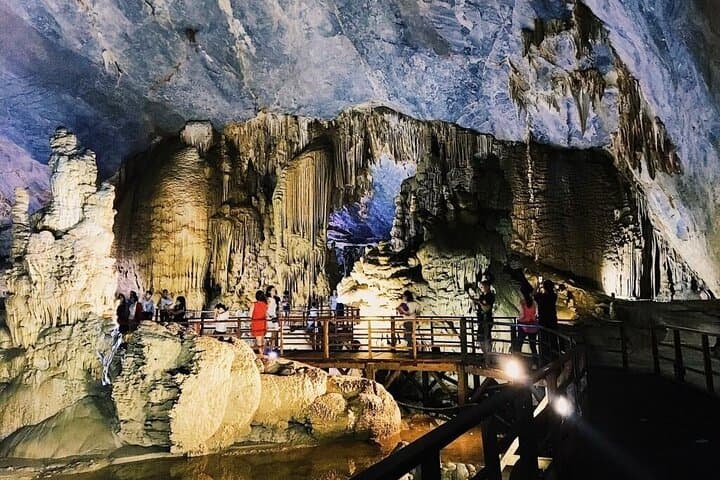
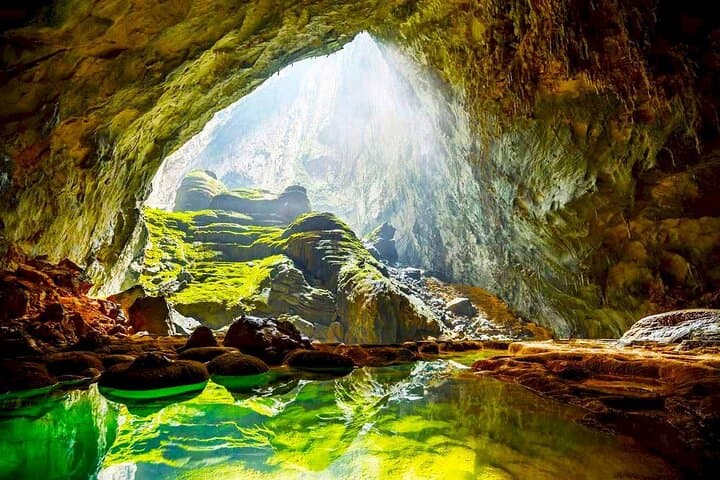
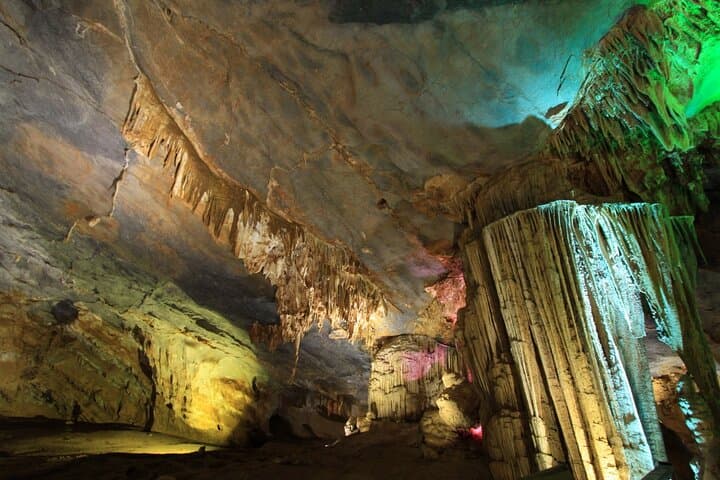
Geology here is bluntly old — 400 million years of uplift and underground rivers carving caverns and columns. French explorers first sketched parts of the system in the early 20th century; modern surveys revealed vast galleries lined with stalactites and flowstone that earned Paradise Cave its “underground palace” nickname. Local villages keep a quiet relationship with the park: subsistence farms and small restaurants serve visitors on the way, and La Vang Holy Land and DMZ sites nearby add layers of regional history to the trip.
Practically, expect three hours inside the cave complex with boardwalks and steps; lighting exposes massive arches and delicate draperies but watch your step where stone is wet. The full-day tour from Hue runs roughly 13 hours round-trip, with airport or city-center pick-up, lunch, and bottled water included. Bring sturdy shoes, a light jacket, a camera with good low-light performance, and patience for the bus transfer. For anyone curious about karst ecology and wartime history, this trip pairs geological spectacle with a clear, accessible logistical plan.
easy.
13 hours (full day).
Suitable for most fitness levels—requires moderate walking and stairs inside the cave but includes golf-cart transfers.
Yes—entrance to Paradise Cave and the included lunch are part of the tour price, as well as bottled water and shuttle transfers inside the park.
The round-trip itinerary runs about 13 hours total; the one-way drive to Phong Nha is roughly 3–4 hours depending on traffic and stops.
The tour is family-friendly and low-impact, but it involves stairs and walking; the golf-cart reduces distance but those with mobility limits should consider restrictions noted by the operator.
Yes—photography is allowed, though lighting is low; a camera with good low-light performance or a steady hand for long exposures works best.
The Phong Nha–Ke Bang karst has been a travel corridor and refuge for centuries; during the 20th century the nearby DMZ and wartime routes added modern historical layers to the landscape.
Phong Nha-Ke Bang is a UNESCO Global Geopark—follow marked trails, avoid touching formations, and pack out waste to protect delicate cave interiors.
Authentic Hanoi Homestay & Travel operates guided outdoor trips and adventures with an emphasis on safety, stewardship, and memorable experiences.
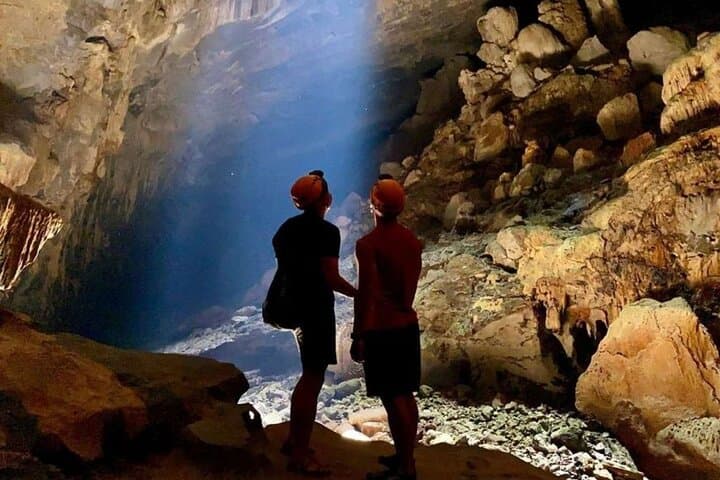
You step off the air-conditioned bus into the limestone foothills of Phong Nha-Ke Bang and the air shifts: cooler, a touch damp, the scent of leaf litter and stone. The path toward Paradise Cave (Thiên Đường) climbs through rubbly karst until the entrance yawns like a dark mouth; a shuttle golf-cart carries most visitors inside, leaving the valley’s light behind and the cave's cool hush to take over.
You step off the air-conditioned bus into the limestone foothills of Phong Nha-Ke Bang and the air shifts: cooler, a touch damp, the scent of leaf litter and stone. The path toward Paradise Cave (Thiên Đường) climbs through rubbly karst until the entrance yawns like a dark mouth; a shuttle golf-cart carries most visitors inside, leaving the valley’s light behind and the cave's cool hush to take over.
Geology here is bluntly old — 400 million years of uplift and underground rivers carving caverns and columns. French explorers first sketched parts of the system in the early 20th century; modern surveys revealed vast galleries lined with stalactites and flowstone that earned Paradise Cave its “underground palace” nickname. Local villages keep a quiet relationship with the park: subsistence farms and small restaurants serve visitors on the way, and La Vang Holy Land and DMZ sites nearby add layers of regional history to the trip.
Practically, expect three hours inside the cave complex with boardwalks and steps; lighting exposes massive arches and delicate draperies but watch your step where stone is wet. The full-day tour from Hue runs roughly 13 hours round-trip, with airport or city-center pick-up, lunch, and bottled water included. Bring sturdy shoes, a light jacket, a camera with good low-light performance, and patience for the bus transfer. For anyone curious about karst ecology and wartime history, this trip pairs geological spectacle with a clear, accessible logistical plan.