THE ADVENTURE COLLECTIVE® · Independent discovery and booking for outdoor travel

Explore Paphos in a single, sunlit day: Roman mosaics, a Crusader castle, and the mythic Aphrodite's Rock. This guided full-day tour stitches archaeology, geology and local flavor into an accessible cultural route.
Explore Paphos in a single, sunlit day: Roman mosaics, a Crusader castle, and the mythic Aphrodite's Rock. This guided full-day tour stitches archaeology, geology and local flavor into an accessible cultural route.
You step off the minivan with the sea already speaking — a low, salt-breath voice that pushes at the edge of the cliffs. The guide folds a battered map and points inland toward a scatter of ruins: mosaic-strewn villas, amphitheaters carved into limestone benches, a fortress that still juts like a jawline against the plain. This is Paphos, where coast and history compete for attention and the past refuses to be polite.
Verified experiences and guided adventures in the surrounding area.
Operated by iTaxi Cyprus · Paphos, Paphos District
You step off the minivan with the sea already speaking — a low, salt-breath voice that pushes at the edge of the cliffs. The guide folds a battered map and points inland toward a scatter of ruins: mosaic-strewn villas, amphitheaters carved into limestone benches, a fortress that still juts like a jawline against the plain. This is Paphos, where coast and history compete for attention and the past refuses to be polite.
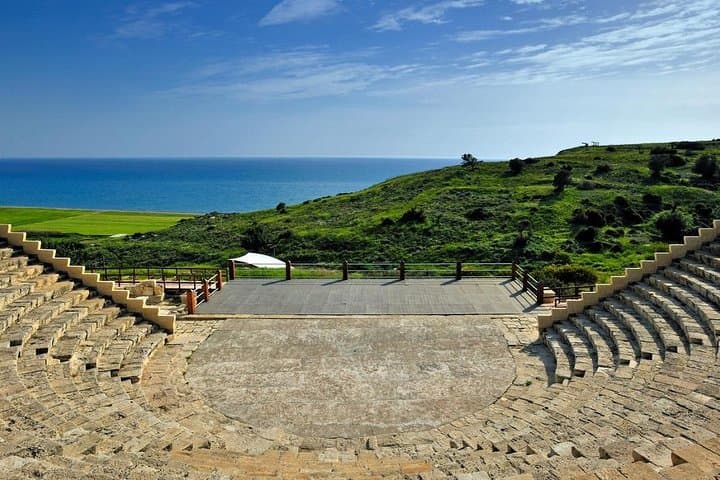
The day moves like a well-paced excavation. At Kourion you descend stone steps into a Greco-Roman amphitheater whose terraced stones still hold the shadow of an audience; the stadium nearby once hosted pentathlons under Antoninus Pius. The House of Dionysos presents tiles and mosaics so intact you can trace the motions of ancient revelers. In Kouklia, the Sanctuary of Aphrodite reaches back to the 12th century BCE, a layered knot of myth, cult practice and later Roman patronage now cataloged inside a compact museum in a Lusignan manor.
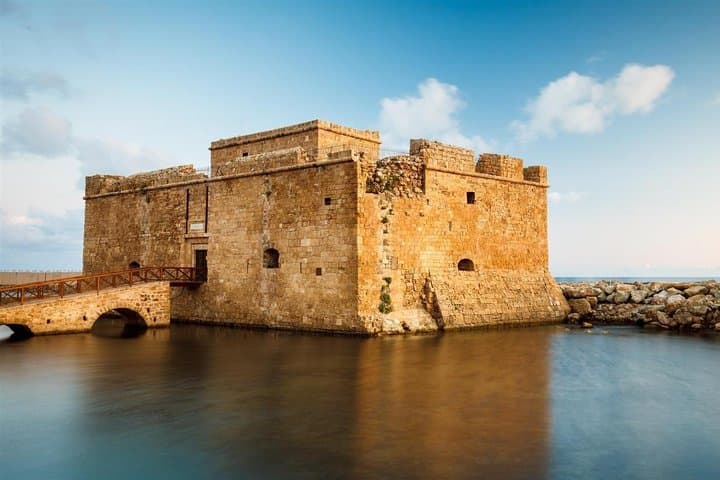
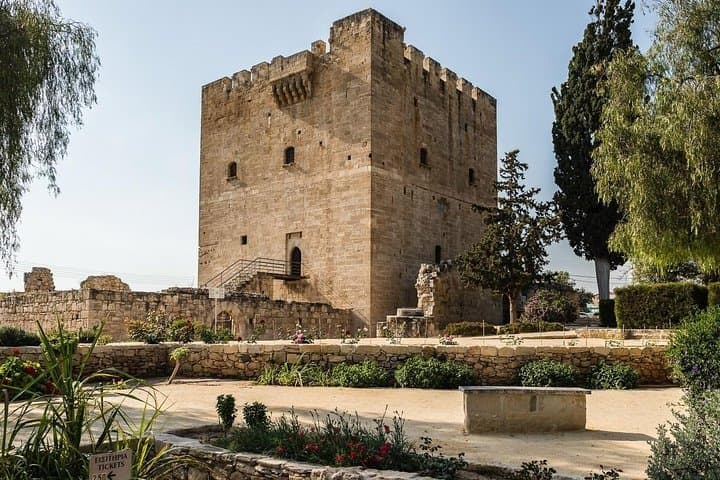
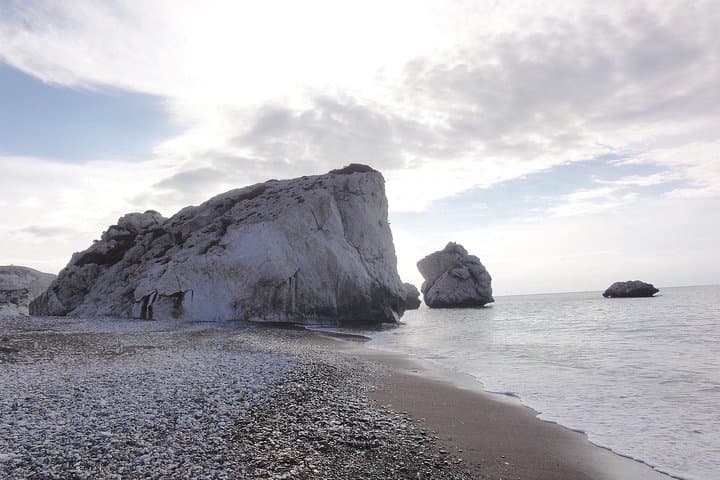
Geology frames the tour. The coast here is a ledger of uplifted seabed and weathered limestone; cliffs and sea stacks like Aphrodite's Rock mark where tectonic push and the Mediterranean's tireless tongue shaped the shoreline. Medieval history arrives in Kolossi Castle, a compact Crusader stronghold and sugar-estate command post that reveals the island's later feudal era and the strategic value of Paphos' harbor.
Culture is practical and immediate: lunch at a family taverna where halloumi squeaks and vine leaves are rolled under watchful hands, and conversation is a mix of modern Cypriot life and stories of ancestry. Archaeology here is not behind velvet ropes — it sits on sunlit ground, exposed and durable, but fragile enough that guides ask for care.
Practical guidance: expect an 8–9 hour day with several short walks, uneven surfaces and sun exposure. Comfortable, broken-in footwear and a brimmed hat will make the difference between a long, satisfied day and an achy one. Bring water, and carry small change for coffees and museum entries if required. Many stops allow photos but not touching of mosaics; listen to your guide about conservation rules.
Timing matters: mornings are quieter at larger sites; late afternoon light flattens mosaics but sharpens cliff textures at Aphrodite's Rock. If you want to linger at a single ruin, tell your guide early — private tours often have some flexibility.
By dusk the shoreline reclaims the day; waves buff the cliff faces and the air cools. You will leave with a pocketful of images — tessellated floors, a castle gate, a wind-mussed coastline — and a clearer sense of why Cyprus has been a crossroads for so many civilizations.
easy.
8–9 hours.
Suitable for travelers in basic walking fitness; expect several short uphill/downhill sections and stairs.
Lunch is typically at a traditional restaurant and is included in some itineraries; check the booking details or confirm with the operator before arrival.
Admission is not always included; be prepared to pay museum or site fees on the day unless your confirmation specifies otherwise.
Yes — private pickup and drop-off are offered from numerous hotels and the airport; supply exact pickup details when booking.
The tour is family-friendly, but many sites have uneven terrain and stairs; travelers with limited mobility should notify the operator to assess access and assistance options.
English is standard; other languages may be available on request depending on guide availability — confirm in advance.
Full refund is typically available if you cancel at least 24 hours before departure; check your booking confirmation for exact terms.
Paphos was a major Late Bronze Age and later Hellenistic-Roman center; Palepaphos and Nea Paphos together are a UNESCO World Heritage site for their continuous archaeological record.
Sites face wear from foot traffic and coastal erosion; follow path restrictions, avoid touching mosaics and support local museums that fund preservation.
iTaxi Cyprus operates guided outdoor trips and adventures with an emphasis on safety, stewardship, and memorable experiences.
You step off the minivan with the sea already speaking — a low, salt-breath voice that pushes at the edge of the cliffs. The guide folds a battered map and points inland toward a scatter of ruins: mosaic-strewn villas, amphitheaters carved into limestone benches, a fortress that still juts like a jawline against the plain. This is Paphos, where coast and history compete for attention and the past refuses to be polite.
You step off the minivan with the sea already speaking — a low, salt-breath voice that pushes at the edge of the cliffs. The guide folds a battered map and points inland toward a scatter of ruins: mosaic-strewn villas, amphitheaters carved into limestone benches, a fortress that still juts like a jawline against the plain. This is Paphos, where coast and history compete for attention and the past refuses to be polite.
The day moves like a well-paced excavation. At Kourion you descend stone steps into a Greco-Roman amphitheater whose terraced stones still hold the shadow of an audience; the stadium nearby once hosted pentathlons under Antoninus Pius. The House of Dionysos presents tiles and mosaics so intact you can trace the motions of ancient revelers. In Kouklia, the Sanctuary of Aphrodite reaches back to the 12th century BCE, a layered knot of myth, cult practice and later Roman patronage now cataloged inside a compact museum in a Lusignan manor.
Geology frames the tour. The coast here is a ledger of uplifted seabed and weathered limestone; cliffs and sea stacks like Aphrodite's Rock mark where tectonic push and the Mediterranean's tireless tongue shaped the shoreline. Medieval history arrives in Kolossi Castle, a compact Crusader stronghold and sugar-estate command post that reveals the island's later feudal era and the strategic value of Paphos' harbor.
Culture is practical and immediate: lunch at a family taverna where halloumi squeaks and vine leaves are rolled under watchful hands, and conversation is a mix of modern Cypriot life and stories of ancestry. Archaeology here is not behind velvet ropes — it sits on sunlit ground, exposed and durable, but fragile enough that guides ask for care.
Practical guidance: expect an 8–9 hour day with several short walks, uneven surfaces and sun exposure. Comfortable, broken-in footwear and a brimmed hat will make the difference between a long, satisfied day and an achy one. Bring water, and carry small change for coffees and museum entries if required. Many stops allow photos but not touching of mosaics; listen to your guide about conservation rules.
Timing matters: mornings are quieter at larger sites; late afternoon light flattens mosaics but sharpens cliff textures at Aphrodite's Rock. If you want to linger at a single ruin, tell your guide early — private tours often have some flexibility.
By dusk the shoreline reclaims the day; waves buff the cliff faces and the air cools. You will leave with a pocketful of images — tessellated floors, a castle gate, a wind-mussed coastline — and a clearer sense of why Cyprus has been a crossroads for so many civilizations.