THE ADVENTURE COLLECTIVE® · Independent discovery and booking for outdoor travel

A full‑day coach trip from Bodrum takes you to Pamukkale’s white travertine terraces and the ancient city of Hierapolis. Expect long travel time, scenic stops, restorative thermal pools and a guided walk through Roman ruins.
A full‑day coach trip from Bodrum takes you to Pamukkale’s white travertine terraces and the ancient city of Hierapolis. Expect long travel time, scenic stops, restorative thermal pools and a guided walk through Roman ruins.
You step off the air‑conditioned coach into a white slope that looks almost unreal: tiers of calcium terraces glint under the Anatolian sun, pockets of blue water daring you closer. The travertines at Pamukkale—locally called the Cotton Castle—stretch along a gentle hillside above a ruined Roman city; steam drifts from mineral springs and a guide points out the theatre’s carved rows as if reading the landscape’s history aloud.
Verified experiences and guided adventures in the surrounding area.
Operated by Payless · Pamukkale, Denizli Province
You step off the air‑conditioned coach into a white slope that looks almost unreal: tiers of calcium terraces glint under the Anatolian sun, pockets of blue water daring you closer. The travertines at Pamukkale—locally called the Cotton Castle—stretch along a gentle hillside above a ruined Roman city; steam drifts from mineral springs and a guide points out the theatre’s carved rows as if reading the landscape’s history aloud.
Geology here is obvious: hot, carbonate-rich water deposits travertine over millennia, building the terraces visitors walk today. Hierapolis, founded in the Hellenistic era and later a Roman spa town, leaves stone proof of a civic life keyed to thermal therapy—necropolis rows, bath foundations and a monumental theatre still standing against the sky.
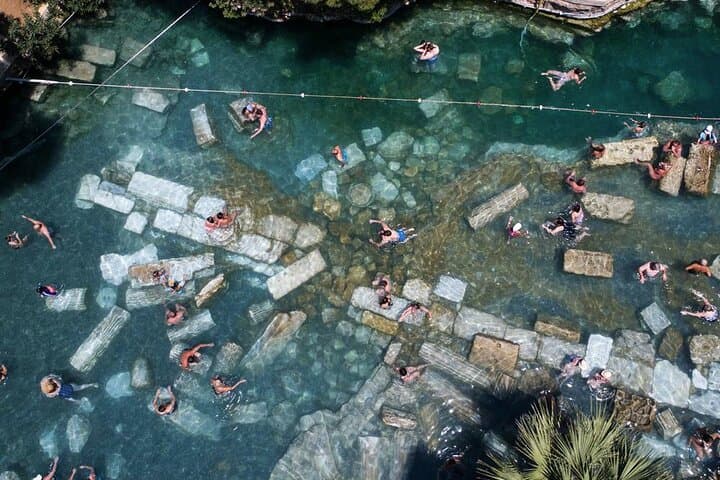
Local culture threads through small onyx workshops and a village restaurant where an open buffet lunch offers regional flavors. Swimming in the antique Cleopatra Pool is a separate option—an extra cost but a tactile connection to the place.
Practicalities matter: the trip from Bodrum is a long coach haul (about four hours each way), so expect a 13–14 hour day with several hours on your feet exploring terraces and ruins. Wear layers, carry water and a towel, and plan for bare feet on travertine paths (shoes are removed to protect the formations). Bring cash for optional entrance fees and souvenirs. For travelers who want a single-day deep dive into geology, archaeology and thermal bathing without overnight logistics, this Bodrum departure is a direct, efficient way to experience one of Turkey’s most singular landscapes.
moderate.
13–14 hours.
Suitable for reasonably fit travelers who can walk 1–3 kilometers with some stair sections; not recommended for serious mobility issues.
General access to the travertines and Hierapolis is included with the tour, but entry to the Cleopatra Pool is an optional extra payable on site.
Expect roughly four hours each way by coach, making this a 13–14 hour round trip including visits and breaks.
Yes—the site requires visitors to go barefoot on the calcium terraces to protect the formations; carry shoes in your daypack for transfers.
The tour involves walking on uneven stone, stairs and long days; it’s not recommended for those with major back, heart conditions, pregnancy or limited mobility.
Hierapolis grew as a Hellenistic and Roman spa town; its theatre, baths and necropolis reflect centuries of therapeutic and civic life tied to thermal springs.
Site rules require barefoot access on travertines and limit swimming areas to protect fragile mineral deposits; visitors should stay on designated paths and avoid soaps or oils in thermal waters.
Payless operates guided outdoor trips and adventures with an emphasis on safety, stewardship, and memorable experiences.
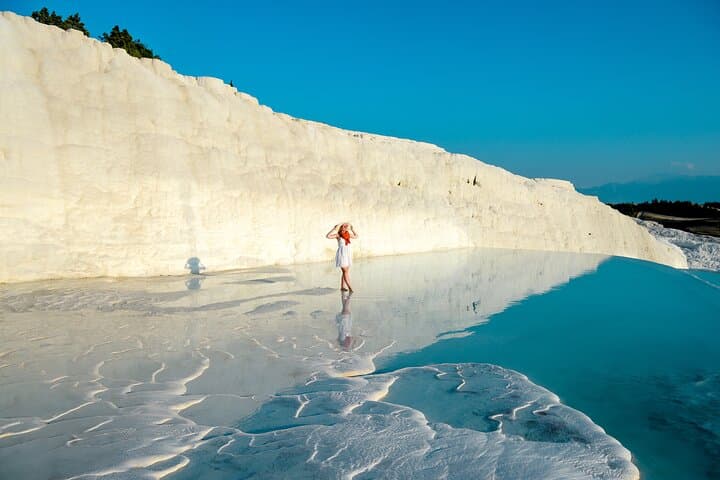
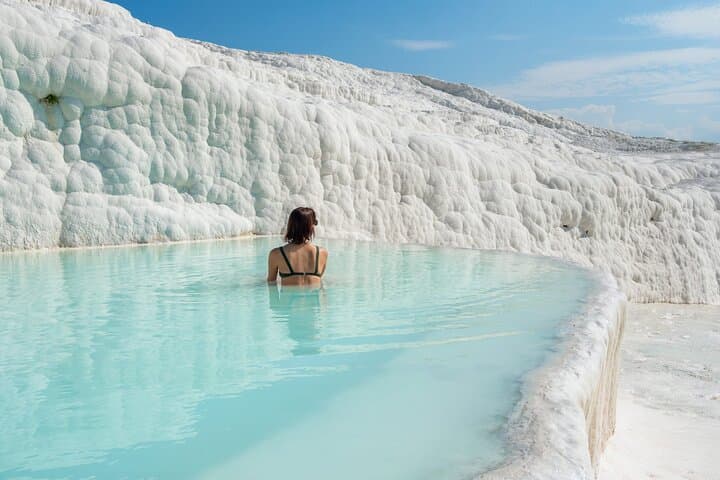

You step off the air‑conditioned coach into a white slope that looks almost unreal: tiers of calcium terraces glint under the Anatolian sun, pockets of blue water daring you closer. The travertines at Pamukkale—locally called the Cotton Castle—stretch along a gentle hillside above a ruined Roman city; steam drifts from mineral springs and a guide points out the theatre’s carved rows as if reading the landscape’s history aloud.
You step off the air‑conditioned coach into a white slope that looks almost unreal: tiers of calcium terraces glint under the Anatolian sun, pockets of blue water daring you closer. The travertines at Pamukkale—locally called the Cotton Castle—stretch along a gentle hillside above a ruined Roman city; steam drifts from mineral springs and a guide points out the theatre’s carved rows as if reading the landscape’s history aloud.
Geology here is obvious: hot, carbonate-rich water deposits travertine over millennia, building the terraces visitors walk today. Hierapolis, founded in the Hellenistic era and later a Roman spa town, leaves stone proof of a civic life keyed to thermal therapy—necropolis rows, bath foundations and a monumental theatre still standing against the sky.
Local culture threads through small onyx workshops and a village restaurant where an open buffet lunch offers regional flavors. Swimming in the antique Cleopatra Pool is a separate option—an extra cost but a tactile connection to the place.
Practicalities matter: the trip from Bodrum is a long coach haul (about four hours each way), so expect a 13–14 hour day with several hours on your feet exploring terraces and ruins. Wear layers, carry water and a towel, and plan for bare feet on travertine paths (shoes are removed to protect the formations). Bring cash for optional entrance fees and souvenirs. For travelers who want a single-day deep dive into geology, archaeology and thermal bathing without overnight logistics, this Bodrum departure is a direct, efficient way to experience one of Turkey’s most singular landscapes.