THE ADVENTURE COLLECTIVE® · Independent discovery and booking for outdoor travel

A full-day escape from Marrakech to Ouzoud delivers thunderous cascades, riverside Berber meals, and a short boat ride that brings you face-to-face with Morocco’s tallest falls. This guide covers what to expect, what to pack, and how to make the most of a long, rewarding day in the Atlas foothills.
A full-day escape from Marrakech to Ouzoud delivers thunderous cascades, riverside Berber meals, and a short boat ride that brings you face-to-face with Morocco’s tallest falls. This guide covers what to expect, what to pack, and how to make the most of a long, rewarding day in the Atlas foothills.
You feel it before you see it: a distant roar that swells with every switchback on the road out of Marrakech. The minibus slips away from the city’s ochre walls and onto a ribbon of asphalt that unspools through olive orchards and low Atlas foothills. By mid-morning the sound resolves into a thunder—Ouzoud’s falls announcing themselves across the valley.
Verified experiences and guided adventures in the surrounding area.
Operated by Marrakesh Travel Services · Ouzoud, Azilal Province
You feel it before you see it: a distant roar that swells with every switchback on the road out of Marrakech. The minibus slips away from the city’s ochre walls and onto a ribbon of asphalt that unspools through olive orchards and low Atlas foothills. By mid-morning the sound resolves into a thunder—Ouzoud’s falls announcing themselves across the valley.
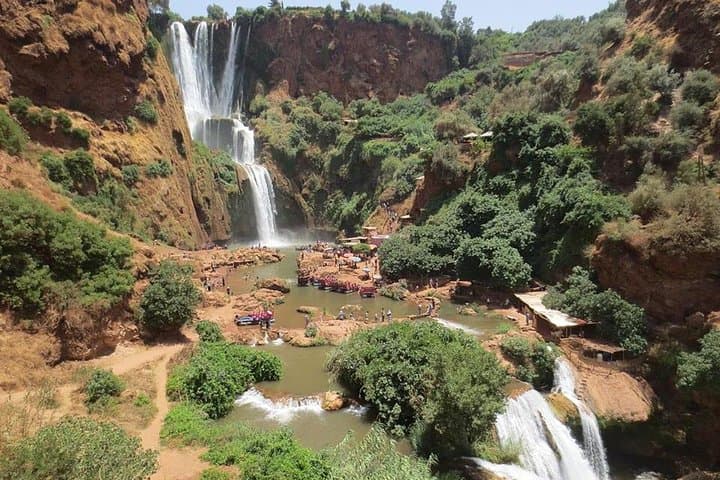
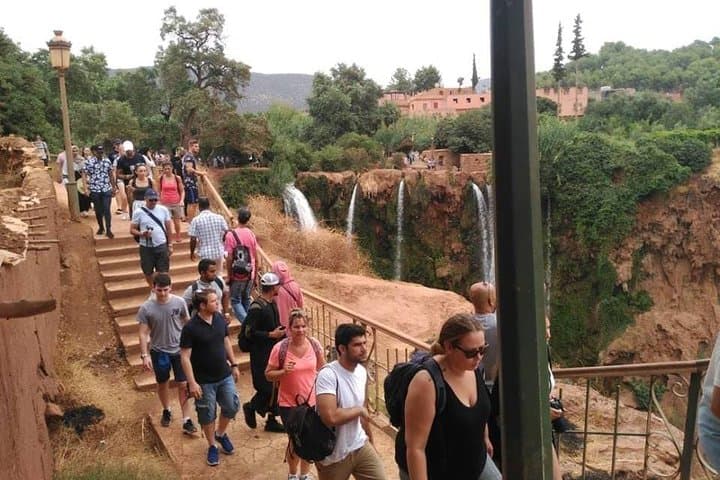
At the top, the viewpoint frames three main drops collapsing into a bowl of green. Water pushes insistently over weathered limestone, carving ledges and little caves where light fractures into rainbows. The path down is a mix of packed earth and stone steps, about 3–4 km round trip with roughly 120–150 m of elevation change; you’ll trade elevation for intimacy—closer viewpoints, the scent of damp rock, and the chance to watch Barbary macaques move between olive trees like local extras in a wild theater.
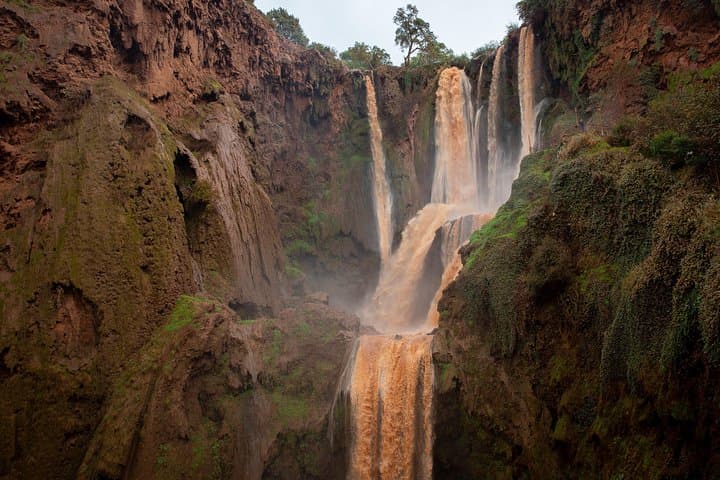
Geology here is a quiet clash: seasonal torrents slicing through Miocene limestone to reveal terraces and plunge pools. Human history threads through that geology—milling wheels tucked near the stream recall centuries of olive and grain processing by Berber communities who settled these slopes. Local restaurants, many family-run, serve tagine and mint tea beside the river; sitting down to a Berber meal after the hike feels less like tourism and more like joining a long-running domestic ritual.
The optional boat ride brings a different perspective: the falls become a wall you almost touch, spray daring you to step closer. Guides steer traditional wooden boats for 10–20 minutes around the base; expect to get damp if wind picks up. The site’s popularity does create crowds at prime viewpoints, but scatter off the main path toward smaller trails and you’ll find quieter ledges and views across the valley.
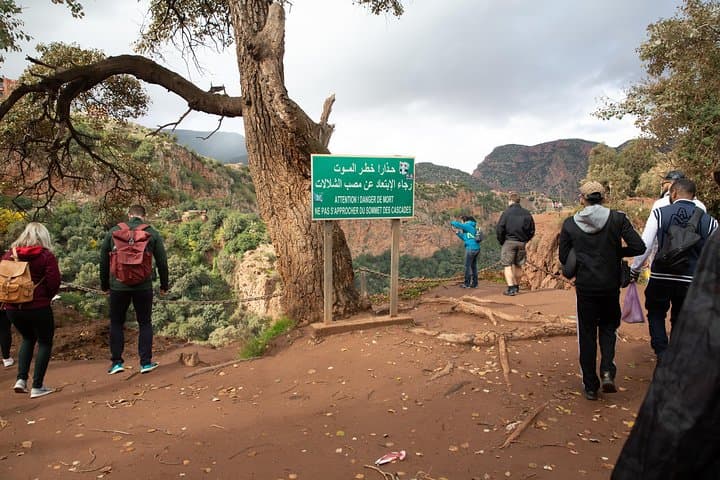
Practical guidance: leave Marrakech before 8:00 to avoid midday crowds and use the cooler morning light for photos. Expect 2.5–3 hours each way by road (about 150 km). Trails are uneven; sturdy walking shoes are essential. Bring 1–2 liters of water, cash for small restaurants and tips, and a lightweight rain layer—spray from the falls can chill you even on warm days. If you encounter macaques, admire from a distance; feeding them encourages bold behavior and stress for the animals.
For a daytrip, plan for an active but accessible outing—moderate trails, a short boat excursion, and a riverside meal that ties the natural spectacle to local life. Ouzoud rewards the slow approach: the longer you linger on a ledge, the more the falls reveal their small stories—an otter slipping through reeds, a child skipping stones, a local guide pointing out an ancient mill wheel—reminders that this place is both a landscape and a lived place.
moderate.
10 hours.
You should be comfortable walking 3–5 km on uneven surfaces and climbing/descending ~150 m of elevation; basic stamina for a long day is needed.
The drive is roughly 150 km and typically takes 2.5–3 hours each way depending on traffic and stops.
Boat rides are offered as part of the tour itinerary; confirm inclusion at booking—often the short ride is optional on-site.
Yes; the excursion is family-friendly but children should be supervised on steep or slippery sections and near the water.
Barbary macaques are common around the falls; they may approach but are wild—avoid feeding or touching them.
A traditional Berber lunch by the river is typically included or arranged at a local restaurant; check your booking details.
Comfortable layered clothing and sturdy shoes; bring a rain shell if visiting in wetter months and sun protection in summer.
Local Berber villages have used the Ouzoud waterways for centuries; water-powered mills visible near the falls reflect long-standing agricultural practices.
Tourism supports local economies but can strain trails and wildlife; avoid littering, do not feed animals, and use established paths to minimize erosion.
Marrakesh Travel Services operates guided outdoor trips and adventures with an emphasis on safety, stewardship, and memorable experiences.
You feel it before you see it: a distant roar that swells with every switchback on the road out of Marrakech. The minibus slips away from the city’s ochre walls and onto a ribbon of asphalt that unspools through olive orchards and low Atlas foothills. By mid-morning the sound resolves into a thunder—Ouzoud’s falls announcing themselves across the valley.
You feel it before you see it: a distant roar that swells with every switchback on the road out of Marrakech. The minibus slips away from the city’s ochre walls and onto a ribbon of asphalt that unspools through olive orchards and low Atlas foothills. By mid-morning the sound resolves into a thunder—Ouzoud’s falls announcing themselves across the valley.
At the top, the viewpoint frames three main drops collapsing into a bowl of green. Water pushes insistently over weathered limestone, carving ledges and little caves where light fractures into rainbows. The path down is a mix of packed earth and stone steps, about 3–4 km round trip with roughly 120–150 m of elevation change; you’ll trade elevation for intimacy—closer viewpoints, the scent of damp rock, and the chance to watch Barbary macaques move between olive trees like local extras in a wild theater.
Geology here is a quiet clash: seasonal torrents slicing through Miocene limestone to reveal terraces and plunge pools. Human history threads through that geology—milling wheels tucked near the stream recall centuries of olive and grain processing by Berber communities who settled these slopes. Local restaurants, many family-run, serve tagine and mint tea beside the river; sitting down to a Berber meal after the hike feels less like tourism and more like joining a long-running domestic ritual.
The optional boat ride brings a different perspective: the falls become a wall you almost touch, spray daring you to step closer. Guides steer traditional wooden boats for 10–20 minutes around the base; expect to get damp if wind picks up. The site’s popularity does create crowds at prime viewpoints, but scatter off the main path toward smaller trails and you’ll find quieter ledges and views across the valley.
Practical guidance: leave Marrakech before 8:00 to avoid midday crowds and use the cooler morning light for photos. Expect 2.5–3 hours each way by road (about 150 km). Trails are uneven; sturdy walking shoes are essential. Bring 1–2 liters of water, cash for small restaurants and tips, and a lightweight rain layer—spray from the falls can chill you even on warm days. If you encounter macaques, admire from a distance; feeding them encourages bold behavior and stress for the animals.
For a daytrip, plan for an active but accessible outing—moderate trails, a short boat excursion, and a riverside meal that ties the natural spectacle to local life. Ouzoud rewards the slow approach: the longer you linger on a ledge, the more the falls reveal their small stories—an otter slipping through reeds, a child skipping stones, a local guide pointing out an ancient mill wheel—reminders that this place is both a landscape and a lived place.