THE ADVENTURE COLLECTIVE® · Independent discovery and booking for outdoor travel

Escape Marrakech for a day and follow a river that roars through olive groves to the 110‑meter tiers of Ouzoud Falls. This private day trip mixes easy hiking, riverside lunches, and wildlife sightings with practical transport and local insight.
Escape Marrakech for a day and follow a river that roars through olive groves to the 110‑meter tiers of Ouzoud Falls. This private day trip mixes easy hiking, riverside lunches, and wildlife sightings with practical transport and local insight.
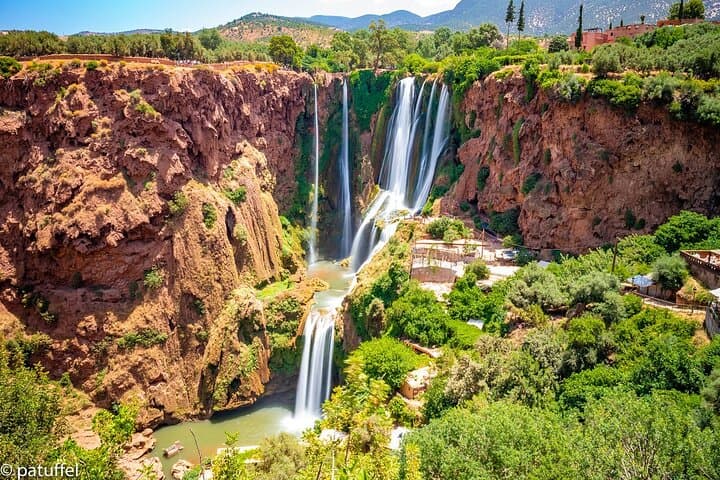
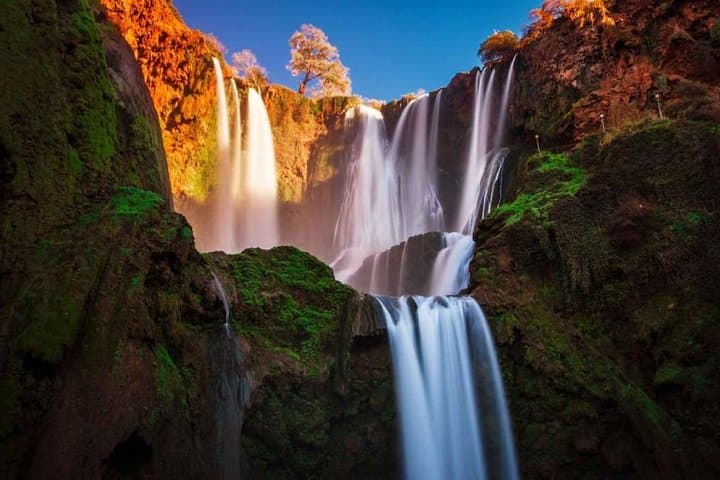
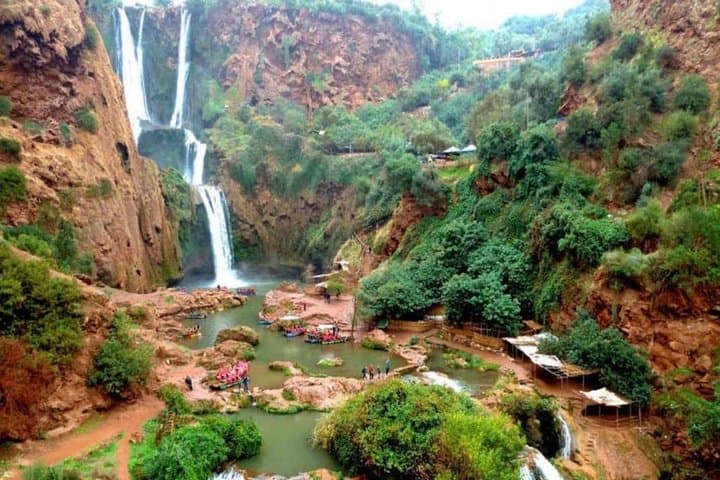
By midmorning the van eases off the motorway and the light shifts: Marrakech’s ochre walls give way to olive-flecked hills and low ridges that push the Atlas foothills into view. The road tightens, villages appear in soft clusters of flat roofs, and then, after a last bend, the river announces itself with a roar. Ouzoud Falls unfolds in tiers—white spray leaping from a 110-meter drop—framed by red cliffs and terraces where small restaurants hang their tables over the gorge.
Verified experiences and guided adventures in the surrounding area.
Operated by Safari Desert Tours · Ouzoud, Azilal Province
By midmorning the van eases off the motorway and the light shifts: Marrakech’s ochre walls give way to olive-flecked hills and low ridges that push the Atlas foothills into view. The road tightens, villages appear in soft clusters of flat roofs, and then, after a last bend, the river announces itself with a roar. Ouzoud Falls unfolds in tiers—white spray leaping from a 110-meter drop—framed by red cliffs and terraces where small restaurants hang their tables over the gorge.
Ouzoud sits in the northern reaches of the High Atlas, a geological seam of folded limestone and schist that channels winter rains into the valley here. For centuries Berber farmers have worked these slopes; the waterfalls and surrounding olive groves have long been a seasonal hub for trade and refreshment on transhumance routes. The site’s name—Ouzoud—comes from the Amazigh word for “the mills,” a reminder that this water has driven local industry for generations.
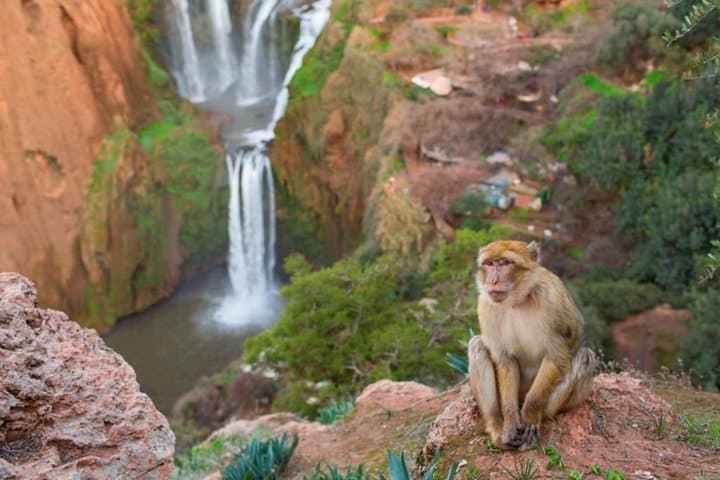
The experience balances spectacle and accessibility. There are well-worn stone paths and stairs that lead from the rim to viewpoints and down toward the pools; in wet months the basalt and flagstone can be slick, the river daring you closer with its plunge. Small cafes cluster along terraces offering tagines and mint tea with a front-row seat to the falls; local guides—often from nearby villages—will point out the resident Barbary macaques that move through the olives and the flocks of rock doves that wheel on the thermals.
Practically, the trip is a full day. Expect roughly 2–3 hours’ drive each way from Marrakech depending on traffic, with 3–4 hours at the site to hike, eat, and take photos. Wear sturdy shoes: the main circuits include uneven stone steps and occasional muddy sections. Carry at least 1–1.5 liters of water per person (more in summer), a light rain layer for spring and winter, and sun protection in high summer—these microclimates shift quickly in the valley.
This private tour format adds flexibility: you can skirt the busiest viewpoints early, linger for a riverside lunch, or follow a quieter path toward the lower pools. Leave no trace—erosion and litter are visible pressures—and consider dining at family-run terraces to keep income local. For travelers willing to rise early, the light before midmorning softens the spray and the crowds, turning Ouzoud from a postcard into a place where you can hear the current pushing forward and feel the valley breathe.
moderate.
10–11 hours (round trip).
Suitable for most walkers who can manage uneven paths and short stair descents; not strenuous.
The transfer typically takes about 2–3 hours each way depending on traffic; the full excursion is a 10–11 hour day including time at the falls.
Yes—this private tour includes admission to the main falls area as part of the itinerary.
Swimming in the natural pools is possible in calm sections but is not always recommended due to currents and seasonal debris—ask your guide about safe spots.
Yes—several family-run restaurants and terraces overlook the falls; they serve Moroccan meals and are good for lunch stops.
The tour is labeled accessible for a range of fitness levels but involves stairs and uneven paths; inform the operator of mobility needs for pickup adjustments.
You’re likely to see Barbary macaques around the olives and flocks of doves; birdwatchers may also spot raptors on thermals above the gorge.
Ouzoud has long served local Berber communities as a water‑powered hub—its mills and terraced farms reflect centuries of mountain agriculture.
Trail erosion and litter pressure are growing; staying on marked paths and choosing local family restaurants helps support sustainable tourism.
Safari Desert Tours operates guided outdoor trips and adventures with an emphasis on safety, stewardship, and memorable experiences.
By midmorning the van eases off the motorway and the light shifts: Marrakech’s ochre walls give way to olive-flecked hills and low ridges that push the Atlas foothills into view. The road tightens, villages appear in soft clusters of flat roofs, and then, after a last bend, the river announces itself with a roar. Ouzoud Falls unfolds in tiers—white spray leaping from a 110-meter drop—framed by red cliffs and terraces where small restaurants hang their tables over the gorge.
By midmorning the van eases off the motorway and the light shifts: Marrakech’s ochre walls give way to olive-flecked hills and low ridges that push the Atlas foothills into view. The road tightens, villages appear in soft clusters of flat roofs, and then, after a last bend, the river announces itself with a roar. Ouzoud Falls unfolds in tiers—white spray leaping from a 110-meter drop—framed by red cliffs and terraces where small restaurants hang their tables over the gorge.
Ouzoud sits in the northern reaches of the High Atlas, a geological seam of folded limestone and schist that channels winter rains into the valley here. For centuries Berber farmers have worked these slopes; the waterfalls and surrounding olive groves have long been a seasonal hub for trade and refreshment on transhumance routes. The site’s name—Ouzoud—comes from the Amazigh word for “the mills,” a reminder that this water has driven local industry for generations.
The experience balances spectacle and accessibility. There are well-worn stone paths and stairs that lead from the rim to viewpoints and down toward the pools; in wet months the basalt and flagstone can be slick, the river daring you closer with its plunge. Small cafes cluster along terraces offering tagines and mint tea with a front-row seat to the falls; local guides—often from nearby villages—will point out the resident Barbary macaques that move through the olives and the flocks of rock doves that wheel on the thermals.
Practically, the trip is a full day. Expect roughly 2–3 hours’ drive each way from Marrakech depending on traffic, with 3–4 hours at the site to hike, eat, and take photos. Wear sturdy shoes: the main circuits include uneven stone steps and occasional muddy sections. Carry at least 1–1.5 liters of water per person (more in summer), a light rain layer for spring and winter, and sun protection in high summer—these microclimates shift quickly in the valley.
This private tour format adds flexibility: you can skirt the busiest viewpoints early, linger for a riverside lunch, or follow a quieter path toward the lower pools. Leave no trace—erosion and litter are visible pressures—and consider dining at family-run terraces to keep income local. For travelers willing to rise early, the light before midmorning softens the spray and the crowds, turning Ouzoud from a postcard into a place where you can hear the current pushing forward and feel the valley breathe.