THE ADVENTURE COLLECTIVE® · Independent discovery and booking for outdoor travel

A full-day escape from Marrakech, Ouzoud Falls pairs a three-hour country drive with dramatic 110m cascades, olive terraces and curious Barbary macaques. Expect a day of steep steps, riverside viewpoints, optional boat rides and unbeatable lunch terraces above the falls.
A full-day escape from Marrakech, Ouzoud Falls pairs a three-hour country drive with dramatic 110m cascades, olive terraces and curious Barbary macaques. Expect a day of steep steps, riverside viewpoints, optional boat rides and unbeatable lunch terraces above the falls.
You arrive before the crowd has fully formed: the road from Marrakech loosens into sun-baked red cliffs and wide bands of olive trees, and the sound of the falls finds you first—a steady, distant drum that grows into thunder as you descend.
Verified experiences and guided adventures in the surrounding area.
Operated by Agoudal Travel · Ouzoud (Azilal Province), Béni Mellal-Khénifra
You arrive before the crowd has fully formed: the road from Marrakech loosens into sun-baked red cliffs and wide bands of olive trees, and the sound of the falls finds you first—a steady, distant drum that grows into thunder as you descend.
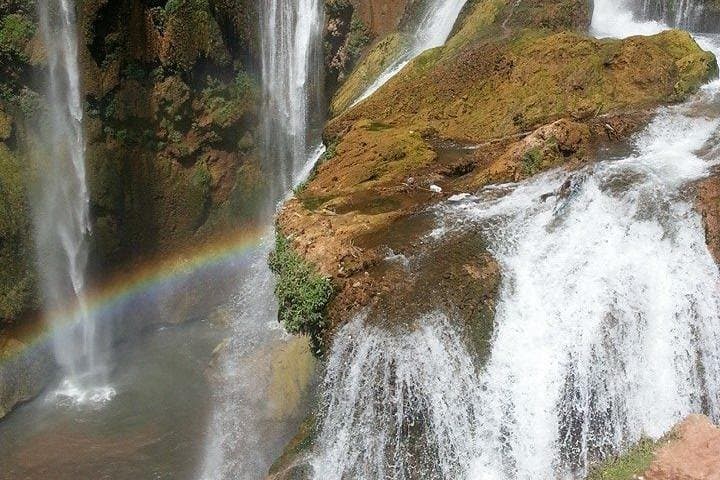
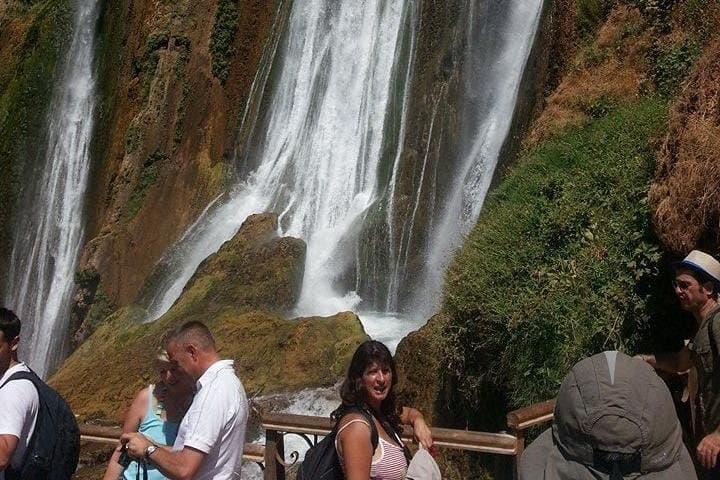
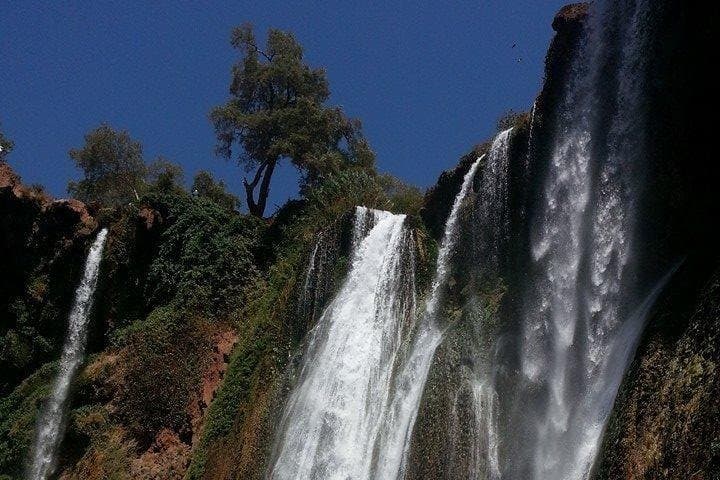
At Ouzoud, the world narrows to water and rock. The main cascade plunges roughly 110 meters in a sequence of tiers, carving a green amphitheater where olive groves cling to steep slopes and mist sends rainbows spinning across the gorge. Local guides lead short treks along stone paths, past millhouses and terraces, and offer a route down toward the pool for a closer look; it’s a vigorous day-walk with nearly 1,000 steps between the parking area and the upper viewpoints.
The falls sit in Azilal province on the edge of the High Atlas foothills, a landscape shaped by Miocene uplift and river incision. Human history here is agricultural—centuries of olive cultivation have terraced the slopes, and small Berber villages still keep the rhythms of harvest and irrigation. Barbary macaques are a familiar presence around the viewpoints; they’ve learned to navigate crowds, so a measured distance and no feeding is the right etiquette.
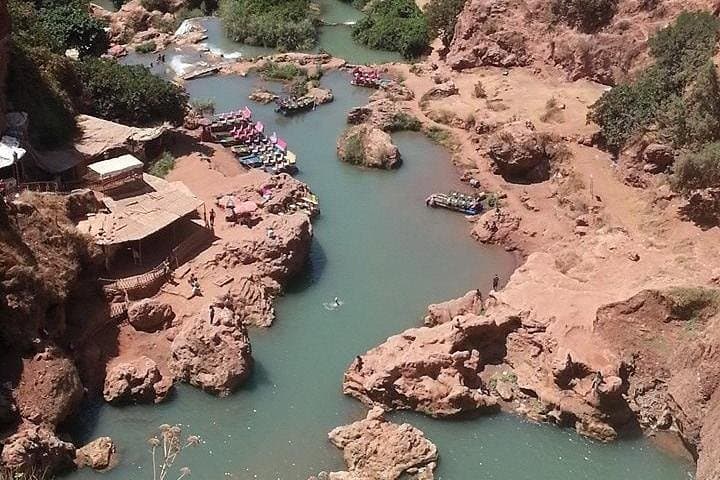
Birdwatchers come for kingfishers, bee-eaters and raptors that patrol the canyon thermals; photographers come for the long exposures and sunlit sprays. Locals operate boat rides at the base, and a cluster of simple cafes near the top plate up tagine and salads with an unbeatable outlook.
Practicalities matter on a full-day trip from Marrakech: the drive is about three hours each way in an air-conditioned vehicle, and the tour runs roughly 10 hours door-to-door. Wear grippy shoes for uneven, sometimes wet stone steps, and carry at least 1.5–2 liters of water—you’ll earn every panoramic view. The descent and ascent are the physical heart of the visit; guides time stops so you can rest at shaded lookouts and eat with the falls in sight.
If you want the most dramatic photos, plan for mid-morning to late-afternoon light when a low sun produces rainbows in the spray and soft side-light reveals the canyon contours. Consider the boat ride only if you’re comfortable with wet rocks and slipping; it’s optional and weather-dependent. Respect conservation rules: stay on trails, avoid buying wild-caught animal souvenirs, and support local guides and small cafes.
A full-day Ouzoud trip is both accessible and rewarding—an active day of steps and viewpoints that delivers one of Morocco’s most elemental landscape experiences, paired with the cultural flavor of river-side villages and olive-scented air.
moderate.
10 hours.
Participants should have a moderate fitness level—able to handle sustained stair descent and ascent and uneven terrain.
Expect about three hours each way in an air-conditioned vehicle, depending on traffic and exact pickup location.
Yes—count on roughly 1,000 steps between parking and top viewpoints; the tour includes rest stops and shaded lookouts.
Some visitors take a quick dip in calmer pools, but currents and cold water can be risky—follow your guide’s advice and avoid swimming after heavy rain.
Very likely. They are habituated to visitors but should not be fed or approached; secure your belongings.
Lunch is typically at a local cafe or terrace with falls views and may be included depending on the operator; check your booking details.
Not recommended—the steep stairs and uneven paths make access difficult for those with limited mobility.
The falls lie in a rural olive-growing landscape in Azilal province; local communities have farmed terraces here for generations.
Visitor pressure and trail erosion are concerns—stick to marked paths, use local guides and avoid feeding wildlife to reduce human impact.
Agoudal Travel operates guided outdoor trips and adventures with an emphasis on safety, stewardship, and memorable experiences.
You arrive before the crowd has fully formed: the road from Marrakech loosens into sun-baked red cliffs and wide bands of olive trees, and the sound of the falls finds you first—a steady, distant drum that grows into thunder as you descend.
You arrive before the crowd has fully formed: the road from Marrakech loosens into sun-baked red cliffs and wide bands of olive trees, and the sound of the falls finds you first—a steady, distant drum that grows into thunder as you descend.
At Ouzoud, the world narrows to water and rock. The main cascade plunges roughly 110 meters in a sequence of tiers, carving a green amphitheater where olive groves cling to steep slopes and mist sends rainbows spinning across the gorge. Local guides lead short treks along stone paths, past millhouses and terraces, and offer a route down toward the pool for a closer look; it’s a vigorous day-walk with nearly 1,000 steps between the parking area and the upper viewpoints.
The falls sit in Azilal province on the edge of the High Atlas foothills, a landscape shaped by Miocene uplift and river incision. Human history here is agricultural—centuries of olive cultivation have terraced the slopes, and small Berber villages still keep the rhythms of harvest and irrigation. Barbary macaques are a familiar presence around the viewpoints; they’ve learned to navigate crowds, so a measured distance and no feeding is the right etiquette.
Birdwatchers come for kingfishers, bee-eaters and raptors that patrol the canyon thermals; photographers come for the long exposures and sunlit sprays. Locals operate boat rides at the base, and a cluster of simple cafes near the top plate up tagine and salads with an unbeatable outlook.
Practicalities matter on a full-day trip from Marrakech: the drive is about three hours each way in an air-conditioned vehicle, and the tour runs roughly 10 hours door-to-door. Wear grippy shoes for uneven, sometimes wet stone steps, and carry at least 1.5–2 liters of water—you’ll earn every panoramic view. The descent and ascent are the physical heart of the visit; guides time stops so you can rest at shaded lookouts and eat with the falls in sight.
If you want the most dramatic photos, plan for mid-morning to late-afternoon light when a low sun produces rainbows in the spray and soft side-light reveals the canyon contours. Consider the boat ride only if you’re comfortable with wet rocks and slipping; it’s optional and weather-dependent. Respect conservation rules: stay on trails, avoid buying wild-caught animal souvenirs, and support local guides and small cafes.
A full-day Ouzoud trip is both accessible and rewarding—an active day of steps and viewpoints that delivers one of Morocco’s most elemental landscape experiences, paired with the cultural flavor of river-side villages and olive-scented air.