THE ADVENTURE COLLECTIVE® · Independent discovery and booking for outdoor travel

Escape Marrakech for a full-day into the Ourika Valley and the High Atlas: river walks, Setti Fatma waterfalls, riverside tagine, and visits to Berber homes and argan cooperatives. Practical guidance and cultural context help you plan a sustainable, comfortable day trip.
Escape Marrakech for a full-day into the Ourika Valley and the High Atlas: river walks, Setti Fatma waterfalls, riverside tagine, and visits to Berber homes and argan cooperatives. Practical guidance and cultural context help you plan a sustainable, comfortable day trip.
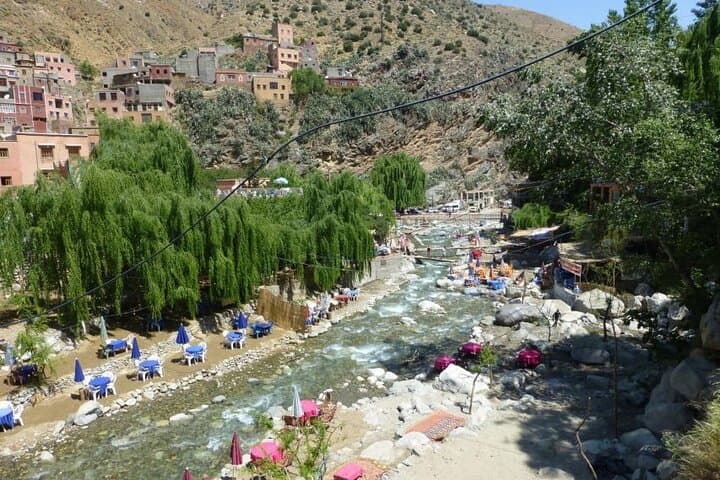
A dust-swept road peels away from Marrakech and the city heat loosens its grip as the foothills of the High Atlas rise ahead. The Ourika River threads green through stone terraces; mule tracks and narrow villages populate the slopes. By late morning, the sound of water becomes a constant — a chorus that dares you to follow it toward Setti Fatma's waterfalls.
Verified experiences and guided adventures in the surrounding area.
Operated by Masterpiece Morocco Travel · Setti Fatma, Marrakech-Safi
A dust-swept road peels away from Marrakech and the city heat loosens its grip as the foothills of the High Atlas rise ahead. The Ourika River threads green through stone terraces; mule tracks and narrow villages populate the slopes. By late morning, the sound of water becomes a constant — a chorus that dares you to follow it toward Setti Fatma's waterfalls.
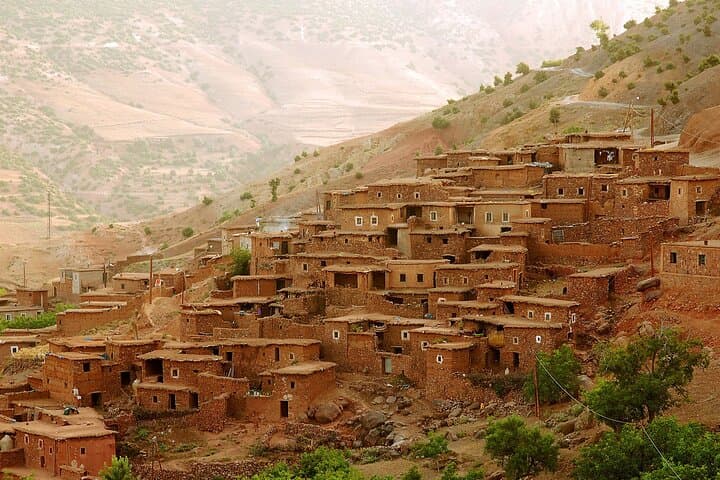
Geology here is blunt and readable: folded sedimentary layers give way to rugged granite and shale higher on the spine of the Atlas. Human history is equally plain—Berber villages carved terraces into steep slopes for centuries, growing olives, figs and barley and trading hand-crafted goods along mountain tracks. Culture is lived visibly: mint tea offered at a family home, argan oil pressed slowly by cooperatives, and markets where produce sits in piles on low tables.
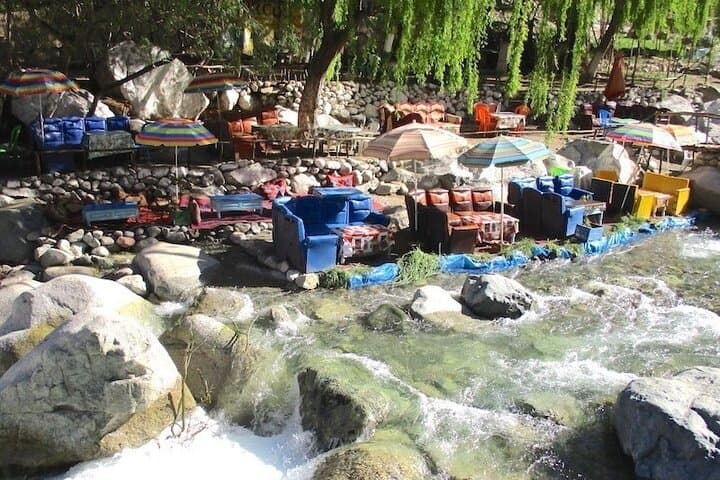
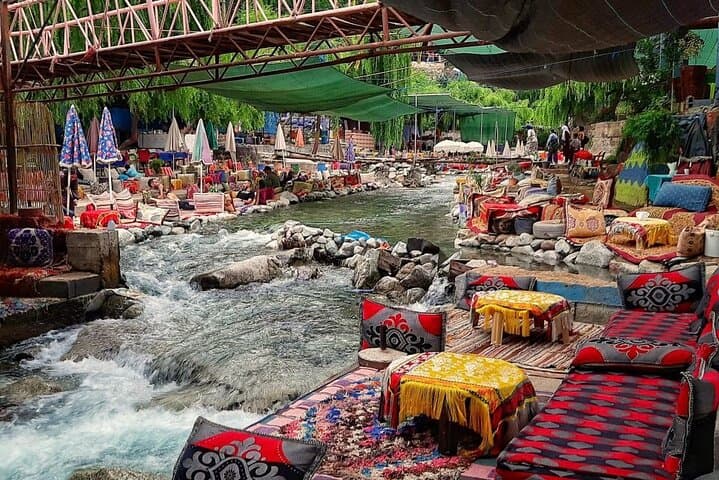
Expect a mix of gentle valley walks and short, stepped climbs to viewpoints and cascades. The Setti Fatma falls area is well-trafficked but still offers quieter spurs where the river narrows and the current seems to push you upstream. Lunch on a riverside terrace is often tagine and flatbread; vendors and cooperatives near the parking area sell argan products and woven items.
Practical advice: bring sturdy walking shoes for uneven, sometimes slippery rocks; pack water and sun protection; and leave time to visit a local argan cooperative. If you want a softer pace, ask the operator to prioritize shorter walks and more village time. Respect private homes—accept invitations with curiosity and tip cooperatives directly.
moderate.
8 hours.
Suitable for anyone comfortable with several short hikes on uneven terrain; basic stamina for repeated uphill steps required
Typical door-to-door duration is about 8 hours, with roughly 1–1.5 hours each way depending on traffic and exact pickup location.
No — the main walks to Setti Fatma falls are short but include uneven rock and steps; choose shorter options if mobility is limited.
Lunch is usually at a riverside restaurant and may be included depending on the operator; confirm when booking to avoid surprises.
Yes, most itineraries stop at a cooperative where you can observe production and buy directly from local women’s groups.
The Ourika Valley has long been inhabited by Berber communities who built terraced agriculture and maintained trade routes across the Atlas for centuries.
Water stress and visitor pressure can strain local resources; support local cooperatives, stay on trails, and minimize single-use plastics to reduce impact.
Masterpiece Morocco Travel operates guided outdoor trips and adventures with an emphasis on safety, stewardship, and memorable experiences.
A dust-swept road peels away from Marrakech and the city heat loosens its grip as the foothills of the High Atlas rise ahead. The Ourika River threads green through stone terraces; mule tracks and narrow villages populate the slopes. By late morning, the sound of water becomes a constant — a chorus that dares you to follow it toward Setti Fatma's waterfalls.
A dust-swept road peels away from Marrakech and the city heat loosens its grip as the foothills of the High Atlas rise ahead. The Ourika River threads green through stone terraces; mule tracks and narrow villages populate the slopes. By late morning, the sound of water becomes a constant — a chorus that dares you to follow it toward Setti Fatma's waterfalls.
Geology here is blunt and readable: folded sedimentary layers give way to rugged granite and shale higher on the spine of the Atlas. Human history is equally plain—Berber villages carved terraces into steep slopes for centuries, growing olives, figs and barley and trading hand-crafted goods along mountain tracks. Culture is lived visibly: mint tea offered at a family home, argan oil pressed slowly by cooperatives, and markets where produce sits in piles on low tables.
Expect a mix of gentle valley walks and short, stepped climbs to viewpoints and cascades. The Setti Fatma falls area is well-trafficked but still offers quieter spurs where the river narrows and the current seems to push you upstream. Lunch on a riverside terrace is often tagine and flatbread; vendors and cooperatives near the parking area sell argan products and woven items.
Practical advice: bring sturdy walking shoes for uneven, sometimes slippery rocks; pack water and sun protection; and leave time to visit a local argan cooperative. If you want a softer pace, ask the operator to prioritize shorter walks and more village time. Respect private homes—accept invitations with curiosity and tip cooperatives directly.