THE ADVENTURE COLLECTIVE® · Independent discovery and booking for outdoor travel

Escape Marrakech for a day into the green Ourika Valley and foothills of the High Atlas. This full-day tour mixes riverside walks, a women’s argan cooperative visit, a mountain hike, and a local lunch for a concise cultural and landscape immersion.
Escape Marrakech for a day into the green Ourika Valley and foothills of the High Atlas. This full-day tour mixes riverside walks, a women’s argan cooperative visit, a mountain hike, and a local lunch for a concise cultural and landscape immersion.
The van eases out of Marrakech and the city’s heat loosens its grip as the road winds into olive-silver hills. In the Ourika Valley, terraces step down toward a fast-flowing river and villages cling to the lower slopes; the air sharpens with thyme and smoke from communal ovens.
Verified experiences and guided adventures in the surrounding area.
Operated by Arwa-Travel · Ourika Valley, Marrakech-Safi
The van eases out of Marrakech and the city’s heat loosens its grip as the road winds into olive-silver hills. In the Ourika Valley, terraces step down toward a fast-flowing river and villages cling to the lower slopes; the air sharpens with thyme and smoke from communal ovens.
This valley has long been a living corridor between Marrakech and the High Atlas — a landscape shaped by volcanic and sedimentary folding, then carved by seasonal torrents into narrow gorges and fertile plains. Berber communities have farmed these slopes for centuries; argan and olive production, along with small-scale irrigation, remain central to daily life. Visiting a women’s argan cooperative provides a hands-on look at a craft that supports families and retains cultural knowledge.
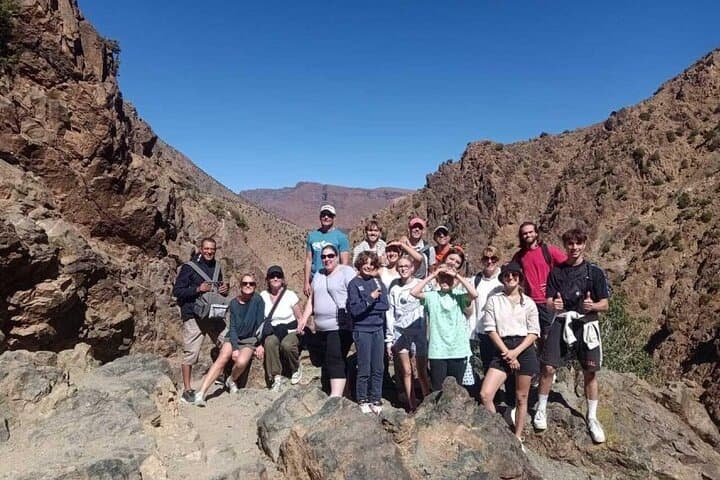
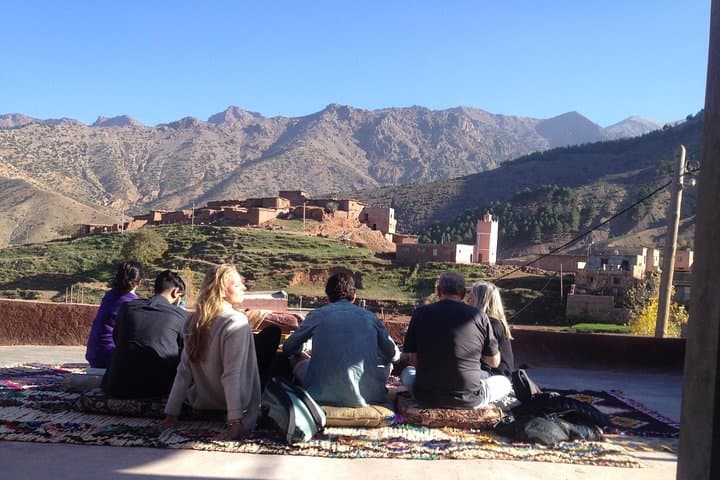
The itinerary typically includes a weekly market (if it coincides with your visit), a cooperative visit, a guided walk around Setti Fatma, and lunch in a local house or mountain restaurant. Trails range from easy riverside paths to steeper mule tracks that climb into juniper and oak stands; expect loose rock, short climbs, and exposed viewpoints. Rivers can be lively after rain and cool the air on hot days.
Practical guidance: start early to avoid midday sun, bring sturdy footwear for uneven paths, and carry water and sun protection. If you want photos of waterfalls, time visits for after recent rains—water levels fall in late summer. Respect private spaces in villages, ask before photographing residents, and support cooperatives by buying small items directly. The day is accessible for most fitness levels and offers a compact, grounded introduction to Atlas mountain life and landscapes.
easy.
7–9 hours.
Suitable for most people with basic mobility; some short uphill walking on uneven terrain is required.
The full-day tour lasts about 7–9 hours, including travel time from Marrakech, stops, and a guided hike.
The walking segments are generally easy to moderate with short uphill sections; basic mobility is required.
Lunch in a local house or restaurant, tea, coffee, and bottled water are included per the tour details.
Yes—families are welcome; infant seats can be arranged but young children should be supervised on uneven paths.
The Ourika Valley has long been a trade and seasonal farming corridor for Berber communities linking Marrakech to high-altitude pastures; traditional irrigation and terracing techniques still shape land use.
Support for women’s argan cooperatives helps sustain local economies; visitors should avoid littering, stick to trails to limit erosion, and buy locally made goods to reduce environmental and social impacts.
Arwa-Travel operates guided outdoor trips and adventures with an emphasis on safety, stewardship, and memorable experiences.
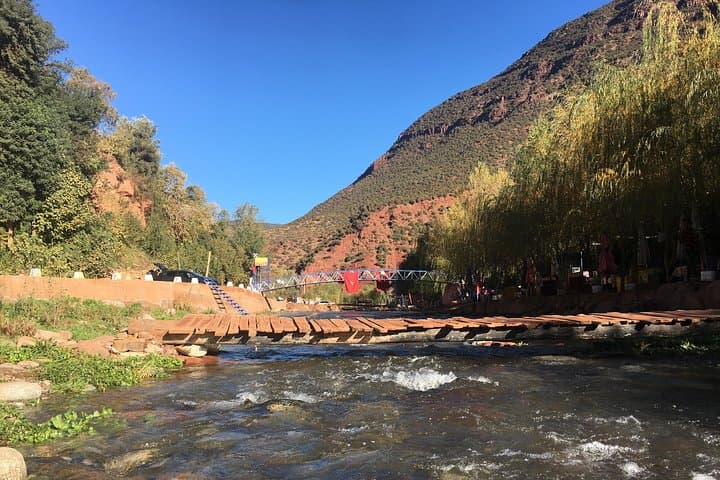
The van eases out of Marrakech and the city’s heat loosens its grip as the road winds into olive-silver hills. In the Ourika Valley, terraces step down toward a fast-flowing river and villages cling to the lower slopes; the air sharpens with thyme and smoke from communal ovens.
The van eases out of Marrakech and the city’s heat loosens its grip as the road winds into olive-silver hills. In the Ourika Valley, terraces step down toward a fast-flowing river and villages cling to the lower slopes; the air sharpens with thyme and smoke from communal ovens.
This valley has long been a living corridor between Marrakech and the High Atlas — a landscape shaped by volcanic and sedimentary folding, then carved by seasonal torrents into narrow gorges and fertile plains. Berber communities have farmed these slopes for centuries; argan and olive production, along with small-scale irrigation, remain central to daily life. Visiting a women’s argan cooperative provides a hands-on look at a craft that supports families and retains cultural knowledge.
The itinerary typically includes a weekly market (if it coincides with your visit), a cooperative visit, a guided walk around Setti Fatma, and lunch in a local house or mountain restaurant. Trails range from easy riverside paths to steeper mule tracks that climb into juniper and oak stands; expect loose rock, short climbs, and exposed viewpoints. Rivers can be lively after rain and cool the air on hot days.
Practical guidance: start early to avoid midday sun, bring sturdy footwear for uneven paths, and carry water and sun protection. If you want photos of waterfalls, time visits for after recent rains—water levels fall in late summer. Respect private spaces in villages, ask before photographing residents, and support cooperatives by buying small items directly. The day is accessible for most fitness levels and offers a compact, grounded introduction to Atlas mountain life and landscapes.