THE ADVENTURE COLLECTIVE® · Independent discovery and booking for outdoor travel

Cross the Atlas, crest Tizi n'Tichka and explore the earthen alleys of Ait Benhaddou on a full-day guided tour from Marrakech. Expect long scenic drives, short village walks, and a deep dose of Berber history and cinematic landscapes.
Cross the Atlas, crest Tizi n'Tichka and explore the earthen alleys of Ait Benhaddou on a full-day guided tour from Marrakech. Expect long scenic drives, short village walks, and a deep dose of Berber history and cinematic landscapes.
You leave Marrakech before dawn, the city’s dust and calls to prayer shrinking behind the van as the road begins to climb. The Atlas Mountains push and hold the highway; stone walls and scrub rise up, then fold into long, sun-baked passes. By midmorning you crest Tizi n'Tichka at roughly 2,260 meters, where wind and sky take the place of noise.
Verified experiences and guided adventures in the surrounding area.
Operated by Desertbrise Travel · Marrakech, Marrakesh-Safi
You leave Marrakech before dawn, the city’s dust and calls to prayer shrinking behind the van as the road begins to climb. The Atlas Mountains push and hold the highway; stone walls and scrub rise up, then fold into long, sun-baked passes. By midmorning you crest Tizi n'Tichka at roughly 2,260 meters, where wind and sky take the place of noise.
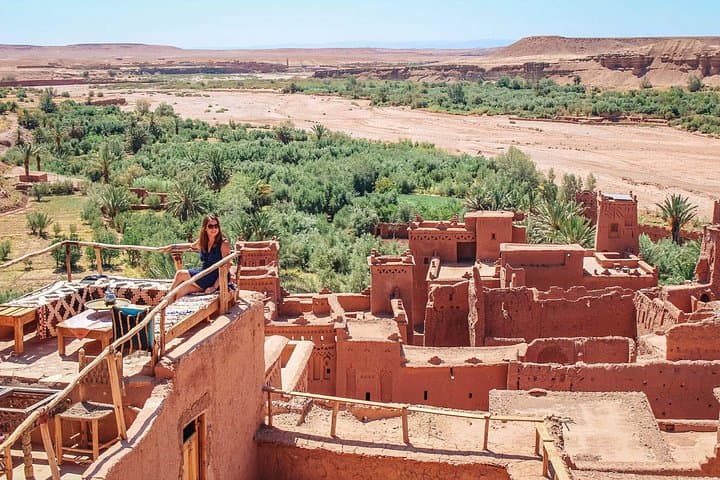
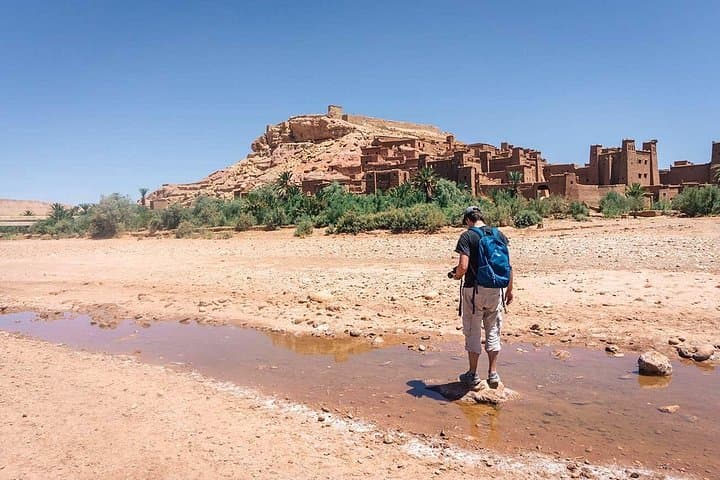
The route is both natural and human history: a high-Atlas spine carved from ancient riverbeds, villages of rammed-earth and flat-roofed kasbahs, and caravan routes that once carried salt and saffron. Ait Benhaddou is a compact ksar of mud-brick towers—UNESCO-protected—whose façades recall centuries of Berber architecture and, more recently, cinema; nearby Ouarzazate earned its “Hollywood of Africa” nickname for film studios and dramatic desert backdrops.
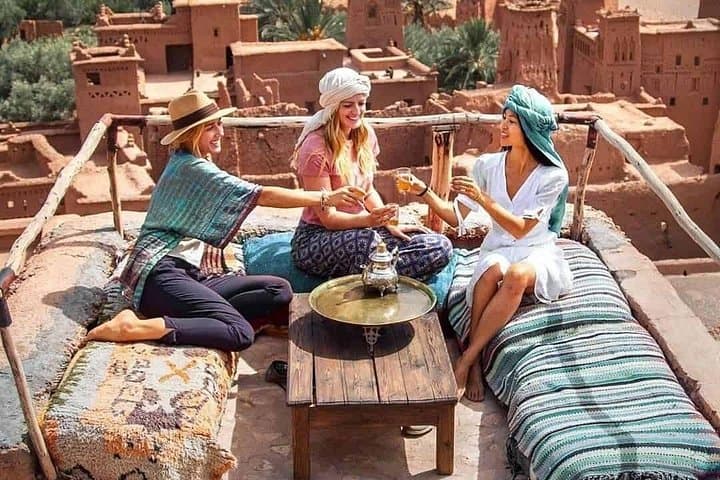
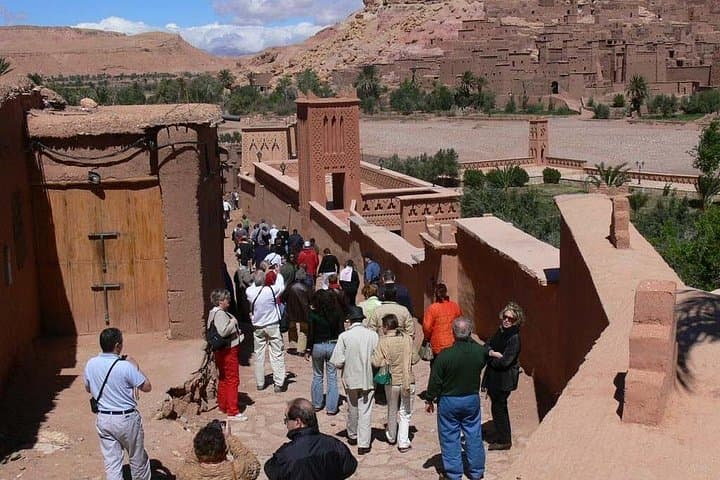
Expect mostly road time punctuated by short walks: viewpoints at the pass, the layered alleys of the ksar, and a stroll to a panoramic ridge for photos. Local guides explain kasbah construction, seasonal irrigation, and village life; vendors offer mint tea and simple lunches.
Practical guidance: this is a long, 9–10 hour day—bring snacks, water, sun protection, and a light wind layer for the pass. Restrooms are sporadic; cash (Moroccan dirham) is useful in villages. Shoes should be comfortable for uneven cobbles and short climbs. If you want quieter photos, aim for the earliest pick-up and plan for late return to Marrakech around 19:30.
easy.
9–10 hours.
Suitable for most fitness levels; mostly seated travel with short, easy walks and uneven cobbles
Most tours include entry to the main ksar area; confirm with your operator—some sections have modest on-site fees.
Restrooms are available at larger stops and at some cafés, but facilities are basic; bring tissues and hand sanitizer.
Yes—this is family-friendly, but the day is long and includes extended vehicle time, so consider children’s comfort with long drives.
Plan for roughly three hours each way between Marrakech and Ouarzazate, plus short local transfers and walking at stops.
Ait Benhaddou grew as a fortified caravan settlement on trans-Saharan routes; Ouarzazate developed as a colonial-era administrative and film-production center.
Tourism pressures on mud-brick structures make respectful access important—stay on paths, avoid climbing fragile walls, and support local guides to channel revenue into communities.
Desertbrise Travel operates guided outdoor trips and adventures with an emphasis on safety, stewardship, and memorable experiences.
You leave Marrakech before dawn, the city’s dust and calls to prayer shrinking behind the van as the road begins to climb. The Atlas Mountains push and hold the highway; stone walls and scrub rise up, then fold into long, sun-baked passes. By midmorning you crest Tizi n'Tichka at roughly 2,260 meters, where wind and sky take the place of noise.
You leave Marrakech before dawn, the city’s dust and calls to prayer shrinking behind the van as the road begins to climb. The Atlas Mountains push and hold the highway; stone walls and scrub rise up, then fold into long, sun-baked passes. By midmorning you crest Tizi n'Tichka at roughly 2,260 meters, where wind and sky take the place of noise.
The route is both natural and human history: a high-Atlas spine carved from ancient riverbeds, villages of rammed-earth and flat-roofed kasbahs, and caravan routes that once carried salt and saffron. Ait Benhaddou is a compact ksar of mud-brick towers—UNESCO-protected—whose façades recall centuries of Berber architecture and, more recently, cinema; nearby Ouarzazate earned its “Hollywood of Africa” nickname for film studios and dramatic desert backdrops.
Expect mostly road time punctuated by short walks: viewpoints at the pass, the layered alleys of the ksar, and a stroll to a panoramic ridge for photos. Local guides explain kasbah construction, seasonal irrigation, and village life; vendors offer mint tea and simple lunches.
Practical guidance: this is a long, 9–10 hour day—bring snacks, water, sun protection, and a light wind layer for the pass. Restrooms are sporadic; cash (Moroccan dirham) is useful in villages. Shoes should be comfortable for uneven cobbles and short climbs. If you want quieter photos, aim for the earliest pick-up and plan for late return to Marrakech around 19:30.