THE ADVENTURE COLLECTIVE® · Independent discovery and booking for outdoor travel

A culturally rich full-day excursion from Tirana to Ohrid that blends Roman ruins, medieval churches and sweeping lake views. Expect a 2.5-hour drive each way with guided visits to the amphitheater, Icon Gallery, Tsar Samoil’s Fortress and St. Jovan at Kaneo.
A culturally rich full-day excursion from Tirana to Ohrid that blends Roman ruins, medieval churches and sweeping lake views. Expect a 2.5-hour drive each way with guided visits to the amphitheater, Icon Gallery, Tsar Samoil’s Fortress and St. Jovan at Kaneo.
The morning drive from Tirana unwinds across folded hills until the road drops toward Lake Ohrid's blue rim — by the time passengers step out, wind off the lake is sweeping away the city’s heat and sharpening the stones beneath their feet.
Verified experiences and guided adventures in the surrounding area.
Operated by Albania Express Travel · Ohrid, Southwestern
The morning drive from Tirana unwinds across folded hills until the road drops toward Lake Ohrid's blue rim — by the time passengers step out, wind off the lake is sweeping away the city’s heat and sharpening the stones beneath their feet.
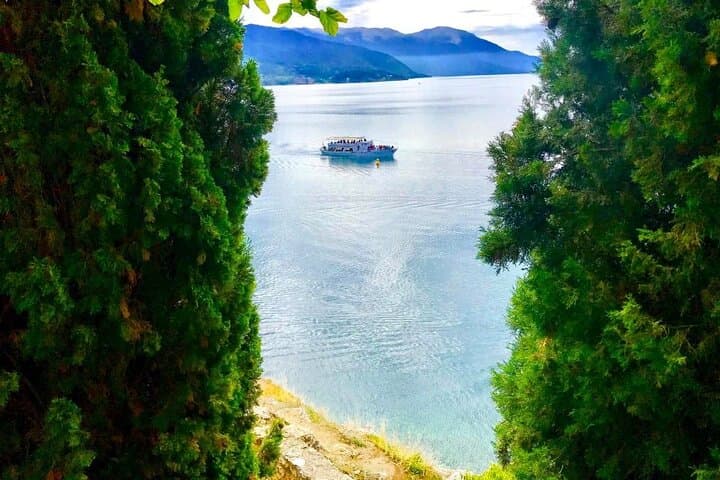
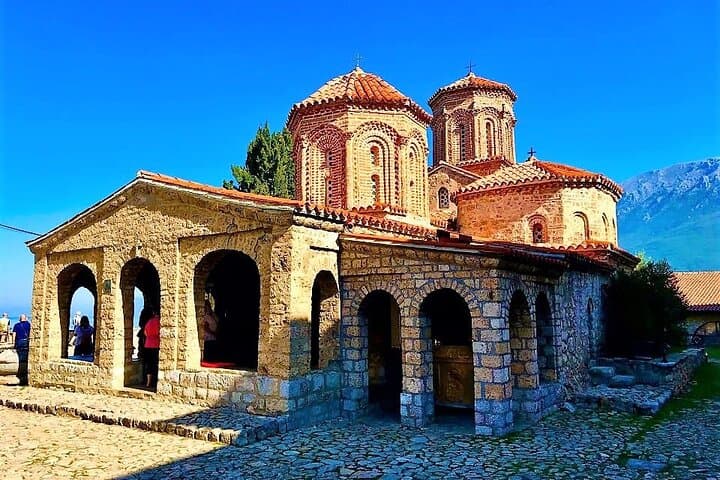
Ohrid’s compact core is a living palimpsest: Roman amphitheater tiers, Byzantine churches with 11th–13th century frescoes, and medieval fort walls that watch the lake. Geologically the basin is ancient — Lake Ohrid is one of Europe’s oldest and deepest, its limestone cliffs cut by millennia of wind and water. Culturally the town earned UNESCO recognition for its concentration of religious architecture and for preserving Slavic literacy and icon painting traditions.
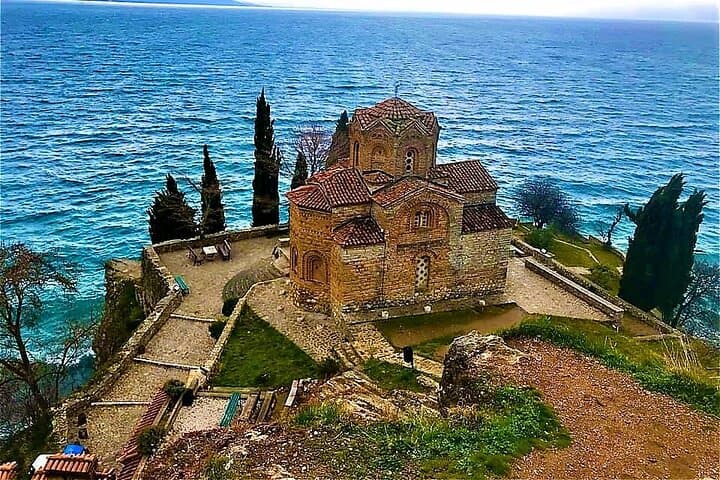
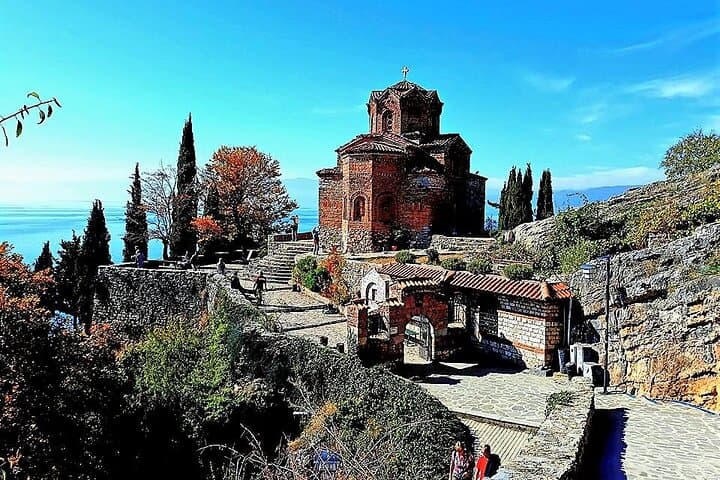
A guided half-day tour commonly visits St. Sophia, the Roman amphitheater, the Icon Gallery, Tsar Samoil’s Fortress, Plaoshnik, and the cliffside Church of St. Jovan at Kaneo. Expect cobbled streets, short stair climbs and long viewpoints over the water; the most memorable moments are the frescoes’ colors in low light and the amphitheater’s view back to the lake.
Practical tips: plan for roughly 2.5 hours each way driving from Tirana and a 3–4 hour walking program in Ohrid; wear sturdy shoes for uneven paving; bring sun protection and a light layer for wind off the lake. Museums and churches have modest admission and limited bag storage; allow time to sit by the waterfront after the main monuments to feel the scale of the lake before the return drive.
easy.
8 hours.
Suitable for most fitness levels; involves several short walking segments, stairs, and standing during visits.
Expect about 2.5 hours each way by air-conditioned vehicle, depending on border traffic and road conditions.
Some tours include admissions but many only include guided commentary—confirm at booking and carry cash for entry fees if required.
Yes; the itinerary is rated easy, but infants must sit on an adult’s lap during transportation and shorter walks are involved.
Yes—it's a standard stop; access involves short steps down to the cliffside viewpoint and limited indoor space for groups.
Ohrid was an important stop on the Roman Via Egnatia and later a major Slavic cultural center; sites like Plaoshnik mark early medieval Christian scholarship.
Lake Ohrid’s endemic species and archaeological sites are protected under UNESCO; visitors should avoid littering, limit disturbance of shorelines, and follow local guidelines to reduce pressure on fragile habitats.
Albania Express Travel operates guided outdoor trips and adventures with an emphasis on safety, stewardship, and memorable experiences.
The morning drive from Tirana unwinds across folded hills until the road drops toward Lake Ohrid's blue rim — by the time passengers step out, wind off the lake is sweeping away the city’s heat and sharpening the stones beneath their feet.
The morning drive from Tirana unwinds across folded hills until the road drops toward Lake Ohrid's blue rim — by the time passengers step out, wind off the lake is sweeping away the city’s heat and sharpening the stones beneath their feet.
Ohrid’s compact core is a living palimpsest: Roman amphitheater tiers, Byzantine churches with 11th–13th century frescoes, and medieval fort walls that watch the lake. Geologically the basin is ancient — Lake Ohrid is one of Europe’s oldest and deepest, its limestone cliffs cut by millennia of wind and water. Culturally the town earned UNESCO recognition for its concentration of religious architecture and for preserving Slavic literacy and icon painting traditions.
A guided half-day tour commonly visits St. Sophia, the Roman amphitheater, the Icon Gallery, Tsar Samoil’s Fortress, Plaoshnik, and the cliffside Church of St. Jovan at Kaneo. Expect cobbled streets, short stair climbs and long viewpoints over the water; the most memorable moments are the frescoes’ colors in low light and the amphitheater’s view back to the lake.
Practical tips: plan for roughly 2.5 hours each way driving from Tirana and a 3–4 hour walking program in Ohrid; wear sturdy shoes for uneven paving; bring sun protection and a light layer for wind off the lake. Museums and churches have modest admission and limited bag storage; allow time to sit by the waterfront after the main monuments to feel the scale of the lake before the return drive.