THE ADVENTURE COLLECTIVE® · Independent discovery and booking for outdoor travel

Step into Noboribetsu’s steaming Jigokudani for a day of sulfur-scented boardwalks, a mineral-rich footbath at Oyunuma, and time in the historic Dai-ichi Takimotokan hot springs. This full-day tour from Sapporo pairs easy walking with authentic onsen culture.
Step into Noboribetsu’s steaming Jigokudani for a day of sulfur-scented boardwalks, a mineral-rich footbath at Oyunuma, and time in the historic Dai-ichi Takimotokan hot springs. This full-day tour from Sapporo pairs easy walking with authentic onsen culture.
Steam rises like a living thing from the black volcanic rock as your guide leads a tidy line of travelers along a wooden boardwalk. The air smells of sulfur and mineral-rich spring water; vents hiss and small pools shimmer in colors you wouldn't expect. This is Jigokudani — Hell Valley — where the landscape behaves like a slow, warm engine pushing steam toward the sky.
Verified experiences and guided adventures in the surrounding area.
Operated by Snow Monkey Resorts Tours (Machinovate Japan Ltd.) · Noboribetsu, Hokkaido
Steam rises like a living thing from the black volcanic rock as your guide leads a tidy line of travelers along a wooden boardwalk. The air smells of sulfur and mineral-rich spring water; vents hiss and small pools shimmer in colors you wouldn't expect. This is Jigokudani — Hell Valley — where the landscape behaves like a slow, warm engine pushing steam toward the sky.
The valley is the visible throat of Hokkaido's geothermal plumbing: groundwater meeting hot rock in the broader Shikotsu-Toya volcanic region. Ainu people long recognized these hot springs as places of healing; later, the town of Noboribetsu grew around the onsen culture, its streets lined with ryokan, souvenir shops, and the towering presence of Dai-ichi Takimotokan with its many communal baths.
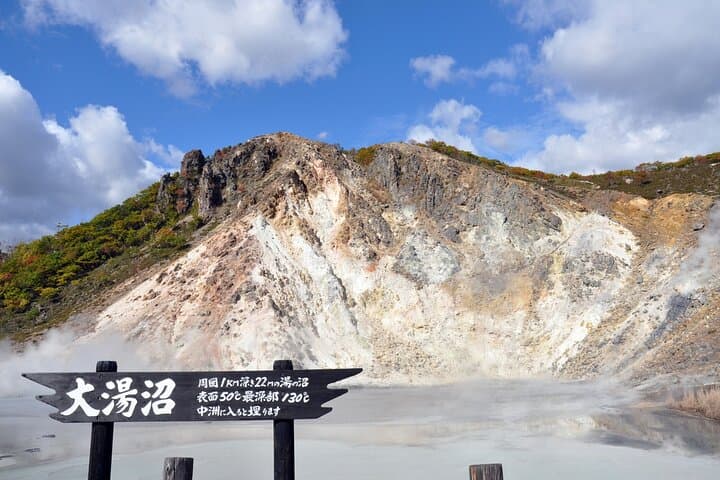
On the tour you walk a short but rugged loop (roughly 1–2 km of boardwalks, stairs, and packed volcanic gravel, minimal elevation gain) then move to Oyunuma’s warm river footbath for leg-soothing mineral water. After time for lunch in Noboribetsu Onsen, you can try one of the hotel baths included with admission — mindful that Japanese onsen etiquette and tattoo restrictions apply.
Practicalities: the trip runs about 10.5 hours door-to-door from Sapporo Station (depart ~08:00, return ~18:15) and uses train and local bus. Wear sturdy walking shoes, pack a small towel and cash, and plan for variable weather — volcanic steam can fog cold mornings and amplify sulfur smells. If you want fewer crowds, aim for early spring or late afternoon at the valley; accessibility is limited in parts, so expect uneven surfaces and steps.
easy.
10–10.5 hours.
Light fitness required: short walks and stairs, but no long climbs; suitable for most able-bodied travelers.
Many public onsen prohibit visible tattoos. The tour notes that guests with body-sized tattoos will not be permitted into some hot bath areas—check with the operator and plan to cover small tattoos or use private bathing options if available.
The main Jigokudani walking route visited on the tour is short—about 1–2 km of boardwalks and trails with minimal elevation gain but some stairs and uneven surfaces.
Lunch is not included; the itinerary schedules time in Noboribetsu Onsen Town for you to choose a meal at local restaurants or cafes.
The tour includes train and local bus transport; you depart Sapporo in the morning and return by early evening (estimated arrival around 18:15).
Noboribetsu’s onsen developed around geothermal activity recognized for centuries; the Ainu used the springs and later Meiji-era development turned the area into a major bathing town.
Stay on designated boardwalks to protect fragile hydrothermal features; avoid bringing food into sensitive areas and follow onsen etiquette to reduce strain on local facilities.
Snow Monkey Resorts Tours (Machinovate Japan Ltd.) operates guided outdoor trips and adventures with an emphasis on safety, stewardship, and memorable experiences.
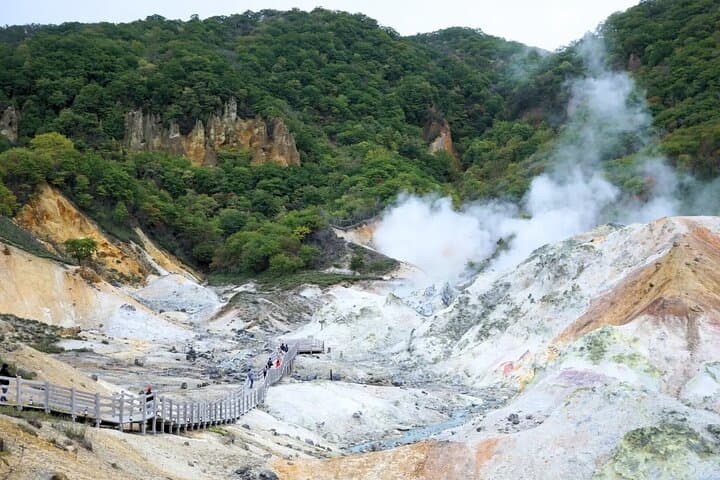
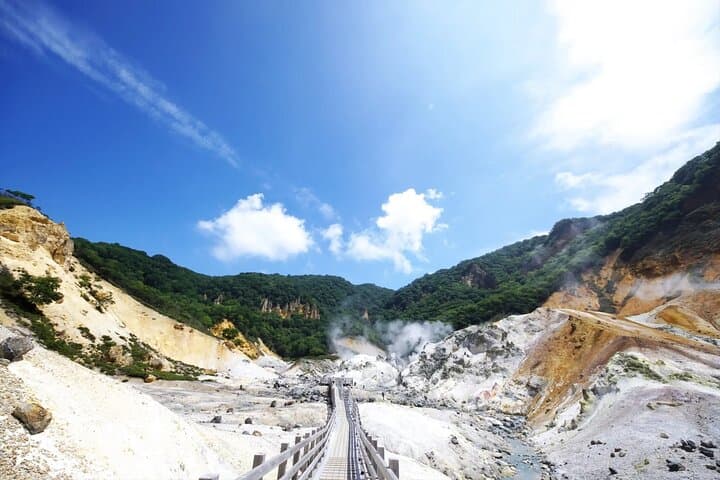
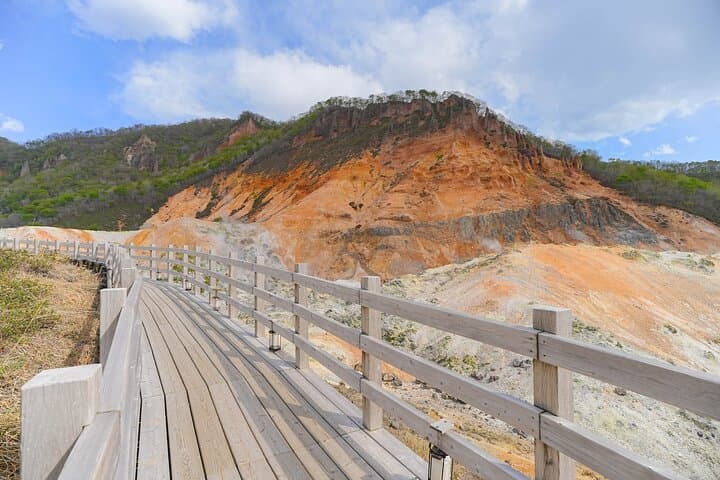
Steam rises like a living thing from the black volcanic rock as your guide leads a tidy line of travelers along a wooden boardwalk. The air smells of sulfur and mineral-rich spring water; vents hiss and small pools shimmer in colors you wouldn't expect. This is Jigokudani — Hell Valley — where the landscape behaves like a slow, warm engine pushing steam toward the sky.
Steam rises like a living thing from the black volcanic rock as your guide leads a tidy line of travelers along a wooden boardwalk. The air smells of sulfur and mineral-rich spring water; vents hiss and small pools shimmer in colors you wouldn't expect. This is Jigokudani — Hell Valley — where the landscape behaves like a slow, warm engine pushing steam toward the sky.
The valley is the visible throat of Hokkaido's geothermal plumbing: groundwater meeting hot rock in the broader Shikotsu-Toya volcanic region. Ainu people long recognized these hot springs as places of healing; later, the town of Noboribetsu grew around the onsen culture, its streets lined with ryokan, souvenir shops, and the towering presence of Dai-ichi Takimotokan with its many communal baths.
On the tour you walk a short but rugged loop (roughly 1–2 km of boardwalks, stairs, and packed volcanic gravel, minimal elevation gain) then move to Oyunuma’s warm river footbath for leg-soothing mineral water. After time for lunch in Noboribetsu Onsen, you can try one of the hotel baths included with admission — mindful that Japanese onsen etiquette and tattoo restrictions apply.
Practicalities: the trip runs about 10.5 hours door-to-door from Sapporo Station (depart ~08:00, return ~18:15) and uses train and local bus. Wear sturdy walking shoes, pack a small towel and cash, and plan for variable weather — volcanic steam can fog cold mornings and amplify sulfur smells. If you want fewer crowds, aim for early spring or late afternoon at the valley; accessibility is limited in parts, so expect uneven surfaces and steps.