THE ADVENTURE COLLECTIVE® · Independent discovery and booking for outdoor travel

Cruise an hour from Kos to Nisyros, then follow a short transfer to the Polivotis crater where sulfur vents and basalt ridges reveal the island’s volcanic past. This full-day tour blends a dramatic geological walk with time in Mandraki’s compact port village.
Cruise an hour from Kos to Nisyros, then follow a short transfer to the Polivotis crater where sulfur vents and basalt ridges reveal the island’s volcanic past. This full-day tour blends a dramatic geological walk with time in Mandraki’s compact port village.
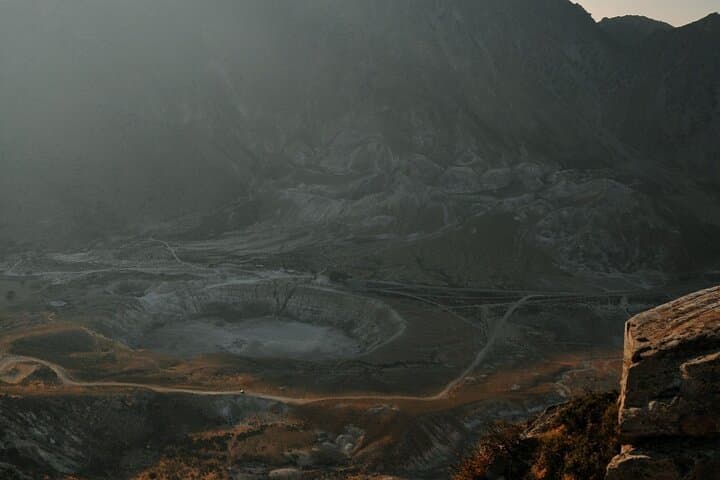
The trip begins in the harbor air off Kos, where a one-hour ferry pushes through Aegean blue and delivers travelers to a compact island that still smells of sulfur and sea. Disembarking at Mandraki, a short transfer climbs into the island’s volcanic heart: the Polivotis crater. On the rim the ground feels alive — faint hisses and warm puffs remind you that the island is geologically young and still breathing.
Verified experiences and guided adventures in the surrounding area.
Operated by Aegeas Travel · Mandraki, South Aegean
The trip begins in the harbor air off Kos, where a one-hour ferry pushes through Aegean blue and delivers travelers to a compact island that still smells of sulfur and sea. Disembarking at Mandraki, a short transfer climbs into the island’s volcanic heart: the Polivotis crater. On the rim the ground feels alive — faint hisses and warm puffs remind you that the island is geologically young and still breathing.
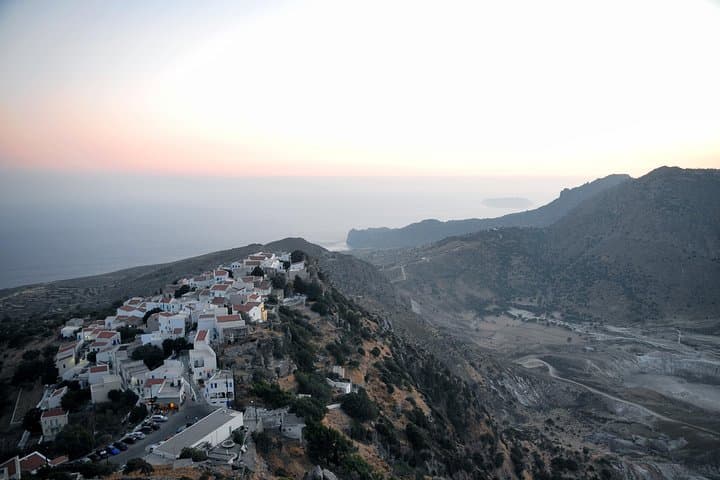
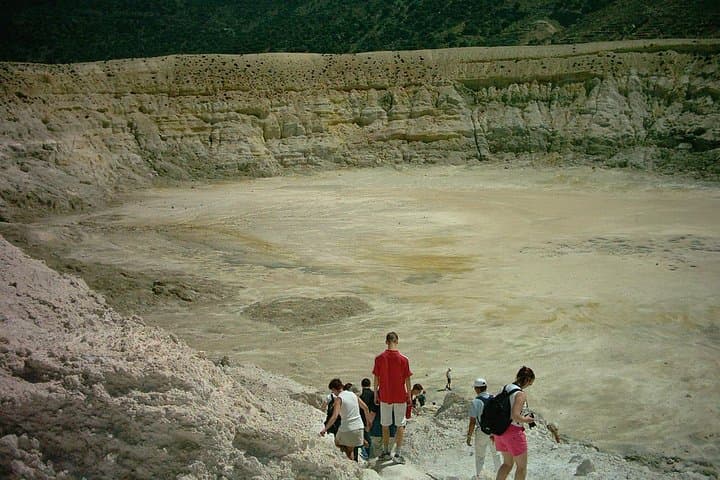
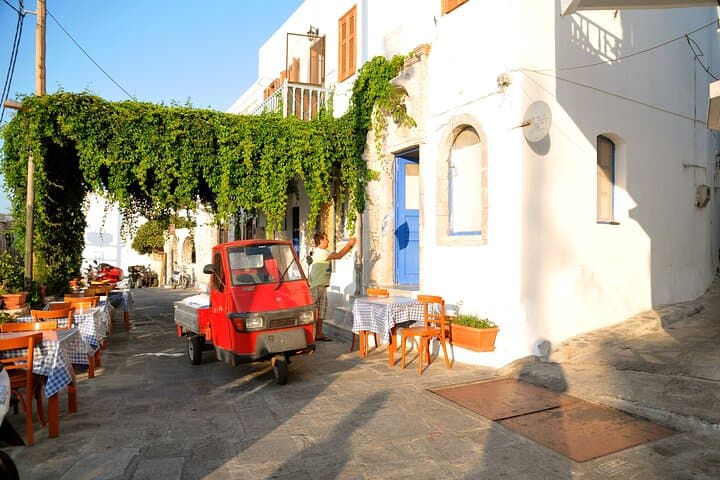
Nisyros formed from repeated eruptions; its lava flows and basalt blocks were later repurposed into local buildings, and the island’s most visible history is written in stone. The giant Polivotis crater (roughly 260 m across and about 30 m deep) sits amid a larger valley carved by ancient eruptions and pyroclastic deposits. Cultural stops include Mandraki’s narrow blue-and-white alleys and the hilltop monastery of Panagia Spiliani, built beside a cave church and offering a quieter counterpoint to the crater’s raw geology.
Practically, the tour runs about eight hours: a 60-minute ferry from Kardamena, time at the crater for guided walking, then free time in town before an afternoon return. Terrain is volcanic: loose scree, compacted ash and stone steps. Comfortable walking shoes, sun protection and a light jacket for wind are sensible. Pregnant travelers and those with serious cardiovascular conditions should avoid close approaches to fumarole areas. Expect basic snack and lunch options in Mandraki but limited services on the crater rim. The tour pairs easy logistics with vividly dramatic landscape — it’s an accessible way to stand where magma once moved and to see an island shaped by fire and sea.
moderate.
8 hours.
Suitable for travelers who can walk 1–2 miles on uneven volcanic terrain and manage short climbs and steps.
The boat crossing from Kardamena (Kos) to Nisyros is about one hour each way on this tour.
The walk is relatively short but uneven; children and older adults can typically participate if mobility is OK, but those with serious heart issues or pregnancy are advised not to approach fumarole areas.
Admissions to the crater area are generally not required; the tour includes transfer to the volcano but lunch and monastery entry (if any) are usually at your own expense.
There are cafés in Mandraki for lunch; bring snacks and water for the crater as facilities on the rim are minimal.
Nisyros is volcanically young; Polivotis and nearby craters were formed by repeated eruptions and local basalt has been used in construction for centuries, shaping village architecture.
The island’s fragile scrub and fumarole zones are vulnerable to trampling; stick to trails, avoid collecting rocks, and support local waste-reduction efforts.
Aegeas Travel operates guided outdoor trips and adventures with an emphasis on safety, stewardship, and memorable experiences.
The trip begins in the harbor air off Kos, where a one-hour ferry pushes through Aegean blue and delivers travelers to a compact island that still smells of sulfur and sea. Disembarking at Mandraki, a short transfer climbs into the island’s volcanic heart: the Polivotis crater. On the rim the ground feels alive — faint hisses and warm puffs remind you that the island is geologically young and still breathing.
The trip begins in the harbor air off Kos, where a one-hour ferry pushes through Aegean blue and delivers travelers to a compact island that still smells of sulfur and sea. Disembarking at Mandraki, a short transfer climbs into the island’s volcanic heart: the Polivotis crater. On the rim the ground feels alive — faint hisses and warm puffs remind you that the island is geologically young and still breathing.
Nisyros formed from repeated eruptions; its lava flows and basalt blocks were later repurposed into local buildings, and the island’s most visible history is written in stone. The giant Polivotis crater (roughly 260 m across and about 30 m deep) sits amid a larger valley carved by ancient eruptions and pyroclastic deposits. Cultural stops include Mandraki’s narrow blue-and-white alleys and the hilltop monastery of Panagia Spiliani, built beside a cave church and offering a quieter counterpoint to the crater’s raw geology.
Practically, the tour runs about eight hours: a 60-minute ferry from Kardamena, time at the crater for guided walking, then free time in town before an afternoon return. Terrain is volcanic: loose scree, compacted ash and stone steps. Comfortable walking shoes, sun protection and a light jacket for wind are sensible. Pregnant travelers and those with serious cardiovascular conditions should avoid close approaches to fumarole areas. Expect basic snack and lunch options in Mandraki but limited services on the crater rim. The tour pairs easy logistics with vividly dramatic landscape — it’s an accessible way to stand where magma once moved and to see an island shaped by fire and sea.