THE ADVENTURE COLLECTIVE® · Independent discovery and booking for outdoor travel

Escape Hanoi for a day of bamboo-boat caves, limestone peaks and countryside cycling in Ninh Binh. This practical guide explains what to expect on the full-day Tam Coc tour and how to prepare for the day’s highlights.
Escape Hanoi for a day of bamboo-boat caves, limestone peaks and countryside cycling in Ninh Binh. This practical guide explains what to expect on the full-day Tam Coc tour and how to prepare for the day’s highlights.
Early morning the bus slides out of Hanoi and the city noise loosens its grip. By mid-morning limestone towers rise from rice paddies, and the Tam Coc river — low and deliberate — nudges a narrow bamboo boat through cave mouths and reed-lined bends.
Verified experiences and guided adventures in the surrounding area.
Operated by Chat Tourist · Ninh Binh, Ninh Binh Province
Early morning the bus slides out of Hanoi and the city noise loosens its grip. By mid-morning limestone towers rise from rice paddies, and the Tam Coc river — low and deliberate — nudges a narrow bamboo boat through cave mouths and reed-lined bends.
This full-day loop moves through layers of history and karst geology: Hoa Lu, Vietnam’s 10th-century capital, sits on eroded limestone foothills scarred by millennia of river action. The karst columns here are young by geological standards but dramatic in their verticality; farmers and buffalo trace their bases while stalactites steady dark cave ceilings.
Culturally the region is agricultural and ritual-rich — pagodas like Bich Dong cling to rock faces and local kitchens serve slow-cooked goat and fragrant rice. The boatmen steer with practiced force, and cyclists follow quiet lanes past stilted houses and seasonal paddies.
Practical guidance: expect an 8–9 hour day with light walking, a 1.5-hour bamboo-boat trip, and roughly 1–2 hours of easy cycling on flat country roads with some short climbs to pagodas. Wear closed-toe shoes for the bike, bring sun protection, and carry a small dry bag for camera gear on the boat. Hydration is included on the bus, but refillable water bottles are handy for the afternoon.
Timing matters: visit in the cooler months for crisp views and in post-monsoon weeks for the greenest paddies. Respect temple areas, take care boarding boats, and leave no trace — the karst landscape is fragile and benefits from careful tourism.
easy.
8–9 hours.
Suitable for most fitness levels; requires ability to sit for several hours, walk short temple steps and cycle short distances on mixed surfaces.
The tour runs about 8–9 hours and typically includes hotel pickup in Hanoi’s Old Quarter or near the Opera House before returning the same evening.
Yes — boats are operated by experienced rowers; children should remain seated and wear life vests if provided or requested.
Basic cycling ability is sufficient — routes are mostly flat country roads with occasional short climbs to pagodas.
A local buffet lunch and bottled water on the bus are included, but bring snacks if you have dietary needs.
Hoa Lu served as Vietnam’s capital under the Dinh and early Le dynasties (10th–11th centuries), with stone temples that reflect early feudal power centers.
Karst formations and wetland fields are sensitive to erosion and pollution; stick to marked paths, avoid single-use plastics, and support local guides to encourage sustainable tourism.
Chat Tourist operates guided outdoor trips and adventures with an emphasis on safety, stewardship, and memorable experiences.


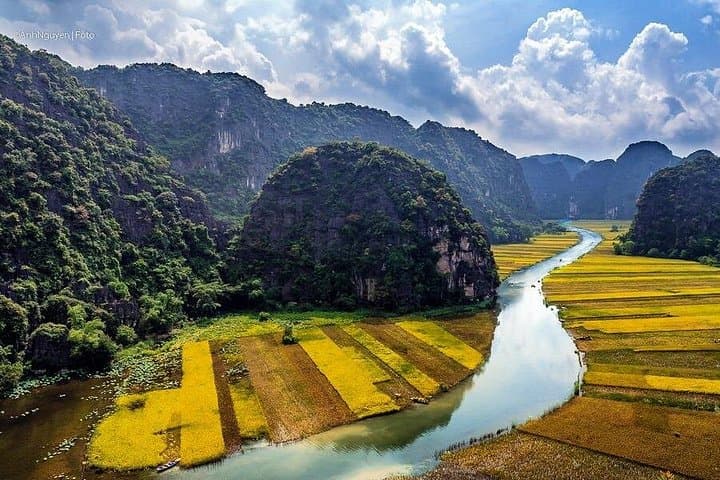
Early morning the bus slides out of Hanoi and the city noise loosens its grip. By mid-morning limestone towers rise from rice paddies, and the Tam Coc river — low and deliberate — nudges a narrow bamboo boat through cave mouths and reed-lined bends.
Early morning the bus slides out of Hanoi and the city noise loosens its grip. By mid-morning limestone towers rise from rice paddies, and the Tam Coc river — low and deliberate — nudges a narrow bamboo boat through cave mouths and reed-lined bends.
This full-day loop moves through layers of history and karst geology: Hoa Lu, Vietnam’s 10th-century capital, sits on eroded limestone foothills scarred by millennia of river action. The karst columns here are young by geological standards but dramatic in their verticality; farmers and buffalo trace their bases while stalactites steady dark cave ceilings.
Culturally the region is agricultural and ritual-rich — pagodas like Bich Dong cling to rock faces and local kitchens serve slow-cooked goat and fragrant rice. The boatmen steer with practiced force, and cyclists follow quiet lanes past stilted houses and seasonal paddies.
Practical guidance: expect an 8–9 hour day with light walking, a 1.5-hour bamboo-boat trip, and roughly 1–2 hours of easy cycling on flat country roads with some short climbs to pagodas. Wear closed-toe shoes for the bike, bring sun protection, and carry a small dry bag for camera gear on the boat. Hydration is included on the bus, but refillable water bottles are handy for the afternoon.
Timing matters: visit in the cooler months for crisp views and in post-monsoon weeks for the greenest paddies. Respect temple areas, take care boarding boats, and leave no trace — the karst landscape is fragile and benefits from careful tourism.