THE ADVENTURE COLLECTIVE® · Independent discovery and booking for outdoor travel

Trade Tokyo’s skyline for a day on Mount Fuji’s flanks: a guided loop that pairs iconic views and clear spring ponds with either outlet shopping or an onsen soak. Perfect for a first-time Fuji overview in one organized day.
Trade Tokyo’s skyline for a day on Mount Fuji’s flanks: a guided loop that pairs iconic views and clear spring ponds with either outlet shopping or an onsen soak. Perfect for a first-time Fuji overview in one organized day.
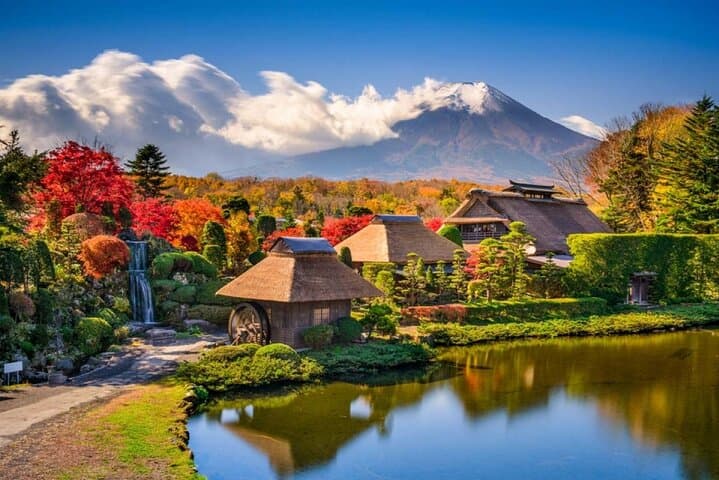
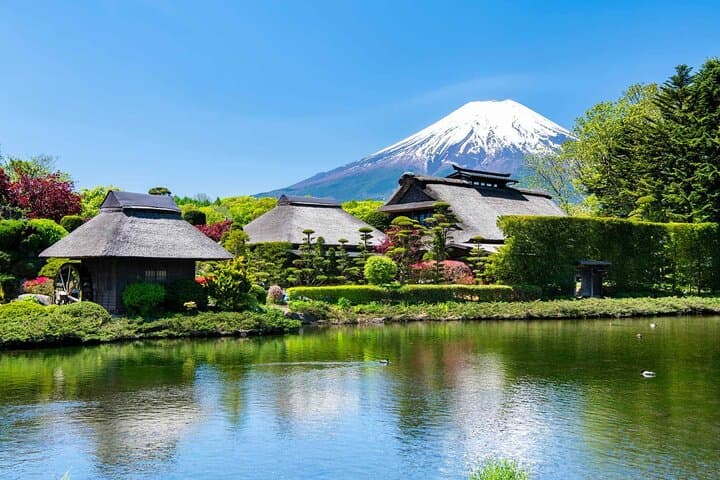
A morning departure from Tokyo follows a highway that eases out of the city’s glass and concrete and toward Mount Fuji’s brooding silhouette. By midmorning the tour reaches vantage points where the mountain’s flanks rise in ordered strata of lava and ash — snow-creased in spring, striped with green in summer, and rimmed with copper in autumn — giving whatever cloud cover is present something to push against.
Verified experiences and guided adventures in the surrounding area.
Operated by Caiyi Travel · Fujinomiya, Shizuoka
A morning departure from Tokyo follows a highway that eases out of the city’s glass and concrete and toward Mount Fuji’s brooding silhouette. By midmorning the tour reaches vantage points where the mountain’s flanks rise in ordered strata of lava and ash — snow-creased in spring, striped with green in summer, and rimmed with copper in autumn — giving whatever cloud cover is present something to push against.
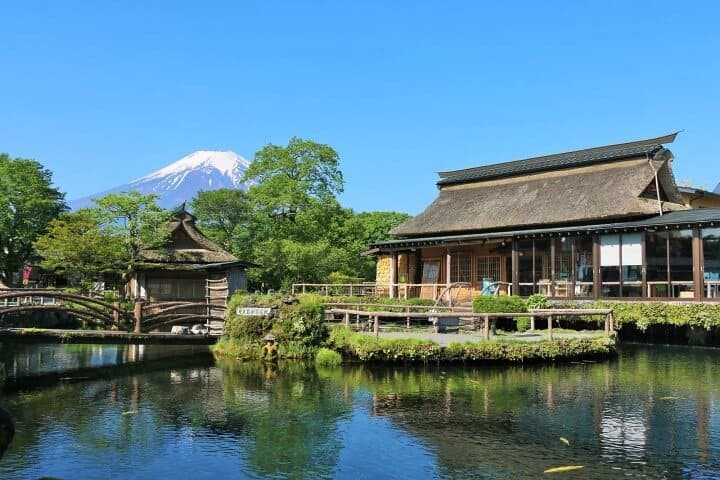
The itinerary threads together geology and culture: a stop at Fuji’s 5th Station or the Chureito Pagoda viewpoint exposes the volcano’s layered history and the Shinto presence that surrounds its slopes. Oshino Hakkai’s eight spring ponds reveal water filtered through centuries of volcanic rock, a living map of Fuji’s aquifer. Gotemba’s outlets offer a modern counterpoint — design and commerce set beneath the same peak.
Local onsen culture appears at the end of the day: open-air baths look directly at the mountain, a practical ritual for muscles and a cultural reset after a day of touring.
Practical guidance: bring layers (conditions change rapidly with elevation), carry cash for small vendors and onsen fees, and time photography for clear-morning light. Expect roughly 10 hours on a coach with short walks at each stop; mobility is generally easy but some sites have stairs or uneven paths. The route is seasonal — snow and visibility affect access to the 5th Station — so check departure details and closures before you book.
easy.
10 hours.
Suitable for most fitness levels; involves short, gentle walks and standing for viewpoints
No — depending on the season and road conditions the tour alternates between the 5th Station (April–November) and Arakurayama Sengen Park (December–April).
Onsen fees are not included; the tour provides drop-off/pick-up but guests pay bathing fees directly at the facility.
Yes — the tour accommodates families, though infants must sit on an adult’s lap and some stops have stairs or uneven footing.
The operator may adjust the itinerary for closures or poor weather; some attractions are substituted (e.g., Lake Yamanaka) and the tour may be canceled in severe conditions.
Mount Fuji has been a sacred site for centuries with Shinto shrines and pilgrimage routes; the Chureito Pagoda area was built in the 20th century as a peace memorial with panoramic views.
Visitors are encouraged to stick to paths, avoid feeding wildlife, and minimize waste; water sources like Oshino Hakkai are sensitive to contamination and require respectful behavior.
Caiyi Travel operates guided outdoor trips and adventures with an emphasis on safety, stewardship, and memorable experiences.

A morning departure from Tokyo follows a highway that eases out of the city’s glass and concrete and toward Mount Fuji’s brooding silhouette. By midmorning the tour reaches vantage points where the mountain’s flanks rise in ordered strata of lava and ash — snow-creased in spring, striped with green in summer, and rimmed with copper in autumn — giving whatever cloud cover is present something to push against.
A morning departure from Tokyo follows a highway that eases out of the city’s glass and concrete and toward Mount Fuji’s brooding silhouette. By midmorning the tour reaches vantage points where the mountain’s flanks rise in ordered strata of lava and ash — snow-creased in spring, striped with green in summer, and rimmed with copper in autumn — giving whatever cloud cover is present something to push against.
The itinerary threads together geology and culture: a stop at Fuji’s 5th Station or the Chureito Pagoda viewpoint exposes the volcano’s layered history and the Shinto presence that surrounds its slopes. Oshino Hakkai’s eight spring ponds reveal water filtered through centuries of volcanic rock, a living map of Fuji’s aquifer. Gotemba’s outlets offer a modern counterpoint — design and commerce set beneath the same peak.
Local onsen culture appears at the end of the day: open-air baths look directly at the mountain, a practical ritual for muscles and a cultural reset after a day of touring.
Practical guidance: bring layers (conditions change rapidly with elevation), carry cash for small vendors and onsen fees, and time photography for clear-morning light. Expect roughly 10 hours on a coach with short walks at each stop; mobility is generally easy but some sites have stairs or uneven paths. The route is seasonal — snow and visibility affect access to the 5th Station — so check departure details and closures before you book.