THE ADVENTURE COLLECTIVE® · Independent discovery and booking for outdoor travel

Spend a day between steam and river—morning on Europe’s most active volcano, then an afternoon walking beside the basalt-carved Alcantara Gorge. This full-day from Catania pairs crater trekking, a lava cave visit, local tastings and optional cable-car ascent.
Spend a day between steam and river—morning on Europe’s most active volcano, then an afternoon walking beside the basalt-carved Alcantara Gorge. This full-day from Catania pairs crater trekking, a lava cave visit, local tastings and optional cable-car ascent.
You step off the shuttle into a wind that smells like sulfur and pine—Etna announces itself with a low, volcanic breath. The trail ahead is a mix of compacted ash and jagged baked lava; black rock crunches underfoot like old bones. From this slope the plain of Catania unfurls toward the Ionian Sea while lava flows stitch darker veins down the mountain. Later in the afternoon the scene shifts: the Alcantara River appears unassuming, then suddenly cleaves into a basalt canyon where water has carved smooth pools and secret riffles.
Verified experiences and guided adventures in the surrounding area.
Operated by EtnaTribe · Catania, Sicily
You step off the shuttle into a wind that smells like sulfur and pine—Etna announces itself with a low, volcanic breath. The trail ahead is a mix of compacted ash and jagged baked lava; black rock crunches underfoot like old bones. From this slope the plain of Catania unfurls toward the Ionian Sea while lava flows stitch darker veins down the mountain. Later in the afternoon the scene shifts: the Alcantara River appears unassuming, then suddenly cleaves into a basalt canyon where water has carved smooth pools and secret riffles.
Etna is Europe’s most active volcano and a landscape that refuses to stay still. Its profile is the result of millennia of eruptions—strata of basalt, andesite and ash stacked like a geological chronicle. Local farmers have long coaxed life from volcanic soil; vineyards and citrus groves thrive where lava once ran. The Alcantara Gorge, by contrast, is a story of cooling and cracking: basalt columns formed by slowed lava have been sculpted by persistent river action into the geometric walls you’ll walk beside.
Culturally, this day tour blends natural drama with Sicilian hospitality. Guides from Etna Tribe weave geology with local flavors: you’ll sample honey, cheese and wines nurtured on volcanic minerals. Small farms dot the slopes and their producers are proud to explain how Etna’s eruptions changed land ownership and livelihoods over generations.
Practically, the day is long—expect about nine hours including transfers from Catania. The route includes guided treks across crater rims and lava fields, a visit inside a lava cave (helmets and lamps provided), and an afternoon walk along the Alcantara’s shaded banks to the Gurne, the small river pools below the Gorges. There’s an optional cable-car and 4x4 ascent for higher-altitude views if you prefer less hiking.
What you’ll need: sturdy hiking shoes with good grip, layered clothing to handle cool winds higher on Etna and warmer conditions down in the valley, sun protection and a full water bottle. The terrain alternates between firm trail and uneven volcanic rock; balance matters more than speed. Cameras will be busy—sunlight picks out columnar basalt in high contrast and the river pools mirror the canyon walls.
Timing matters: morning on Etna often brings clearer views before afternoon haze; the Alcantara is at its most photogenic in softer late-afternoon light. Respect the environment—stick to marked paths and avoid disturbing fragile vegetation in the lava fields. By day’s end you’ll feel the mountain’s pull: Etna gives and takes, its ancient heat shaping the land and the people who live beside it.
moderate.
8–9 hours.
Suitable for people with regular fitness who can handle several hours of walking on uneven terrain and brief elevation changes
The tour runs about nine hours and includes guided treks on Etna, a lava-cave visit with safety kit, tasting at a local farm, shuttle transport and a guided walk through the Alcantara Gorges.
Yes—infants can join but must sit on an adult’s lap; there are infant seats and baby carriers available on request.
Yes—there’s an altitude option using cable car and 4x4 vehicles for less strenuous access to higher viewpoints (may be subject to weather and availability).
Closed-toe hiking shoes with good traction and ankle support are recommended; trainers are not advised on loose or sharp volcanic terrain.
Local tastings at a biological farm are included; bring extra snacks if you have specific dietary needs as full meals aren’t guaranteed on the trail.
For a full refund cancel at least 24 hours prior; operators may alter the itinerary for safety if high winds, snow or heavy rain affect access.
Etna has shaped local culture for millennia—ancient Greeks recorded eruptions, and fertile volcanic soils led to centuries of specialized agriculture in surrounding towns.
Stay on marked paths to protect fragile pioneer vegetation on lava fields; the Alcantara Reserve manages visitor flows to reduce erosion and safeguard river habitats.
EtnaTribe operates guided outdoor trips and adventures with an emphasis on safety, stewardship, and memorable experiences.
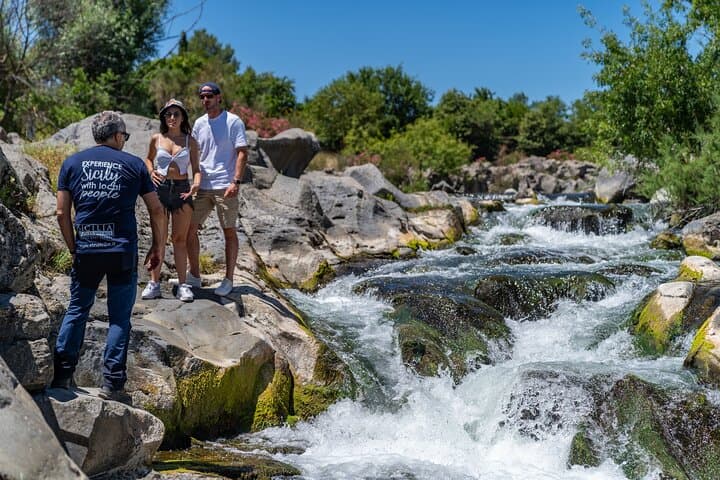
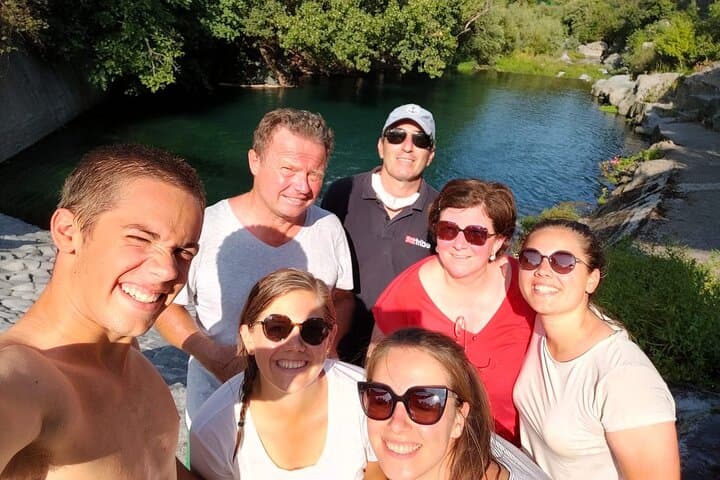
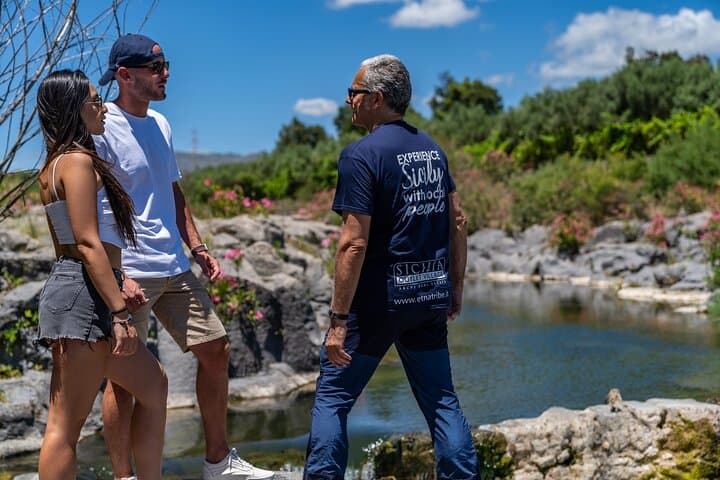
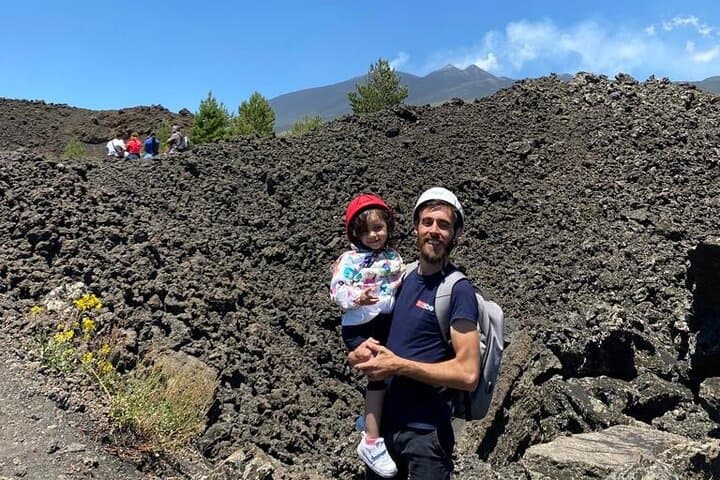
You step off the shuttle into a wind that smells like sulfur and pine—Etna announces itself with a low, volcanic breath. The trail ahead is a mix of compacted ash and jagged baked lava; black rock crunches underfoot like old bones. From this slope the plain of Catania unfurls toward the Ionian Sea while lava flows stitch darker veins down the mountain. Later in the afternoon the scene shifts: the Alcantara River appears unassuming, then suddenly cleaves into a basalt canyon where water has carved smooth pools and secret riffles.
You step off the shuttle into a wind that smells like sulfur and pine—Etna announces itself with a low, volcanic breath. The trail ahead is a mix of compacted ash and jagged baked lava; black rock crunches underfoot like old bones. From this slope the plain of Catania unfurls toward the Ionian Sea while lava flows stitch darker veins down the mountain. Later in the afternoon the scene shifts: the Alcantara River appears unassuming, then suddenly cleaves into a basalt canyon where water has carved smooth pools and secret riffles.
Etna is Europe’s most active volcano and a landscape that refuses to stay still. Its profile is the result of millennia of eruptions—strata of basalt, andesite and ash stacked like a geological chronicle. Local farmers have long coaxed life from volcanic soil; vineyards and citrus groves thrive where lava once ran. The Alcantara Gorge, by contrast, is a story of cooling and cracking: basalt columns formed by slowed lava have been sculpted by persistent river action into the geometric walls you’ll walk beside.
Culturally, this day tour blends natural drama with Sicilian hospitality. Guides from Etna Tribe weave geology with local flavors: you’ll sample honey, cheese and wines nurtured on volcanic minerals. Small farms dot the slopes and their producers are proud to explain how Etna’s eruptions changed land ownership and livelihoods over generations.
Practically, the day is long—expect about nine hours including transfers from Catania. The route includes guided treks across crater rims and lava fields, a visit inside a lava cave (helmets and lamps provided), and an afternoon walk along the Alcantara’s shaded banks to the Gurne, the small river pools below the Gorges. There’s an optional cable-car and 4x4 ascent for higher-altitude views if you prefer less hiking.
What you’ll need: sturdy hiking shoes with good grip, layered clothing to handle cool winds higher on Etna and warmer conditions down in the valley, sun protection and a full water bottle. The terrain alternates between firm trail and uneven volcanic rock; balance matters more than speed. Cameras will be busy—sunlight picks out columnar basalt in high contrast and the river pools mirror the canyon walls.
Timing matters: morning on Etna often brings clearer views before afternoon haze; the Alcantara is at its most photogenic in softer late-afternoon light. Respect the environment—stick to marked paths and avoid disturbing fragile vegetation in the lava fields. By day’s end you’ll feel the mountain’s pull: Etna gives and takes, its ancient heat shaping the land and the people who live beside it.