THE ADVENTURE COLLECTIVE® · Independent discovery and booking for outdoor travel

Experience Meteora’s towering sandstone pillars and cliff-top monasteries on a single-day tour from Thessaloniki. This full-day trip pairs geological spectacle with living Orthodox tradition—and practical guidance for stairs, dress codes and entrance fees.
Experience Meteora’s towering sandstone pillars and cliff-top monasteries on a single-day tour from Thessaloniki. This full-day trip pairs geological spectacle with living Orthodox tradition—and practical guidance for stairs, dress codes and entrance fees.
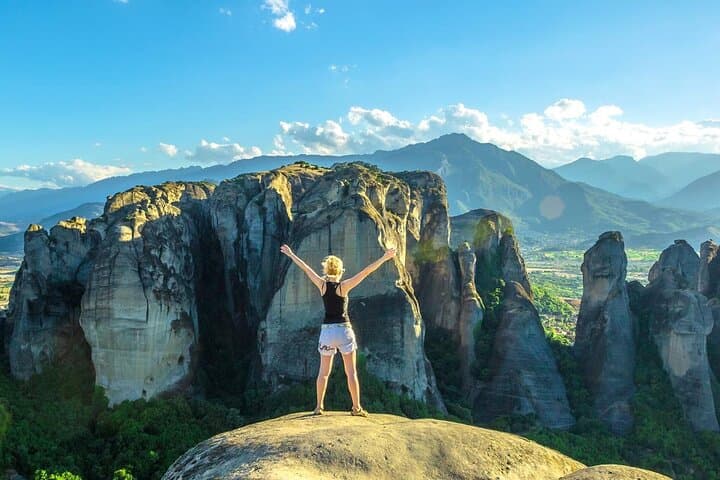
On the road before dawn, the bus slips out of Thessaloniki and the plain opens until abrupt towers of stone rise ahead—Meteora’s cliffs cut straight from a river plain, their faces scored and weathered by 65 million years of wind and water.
Verified experiences and guided adventures in the surrounding area.
Operated by Ammon Express · Kalabaka, Thessaly
On the road before dawn, the bus slips out of Thessaloniki and the plain opens until abrupt towers of stone rise ahead—Meteora’s cliffs cut straight from a river plain, their faces scored and weathered by 65 million years of wind and water.
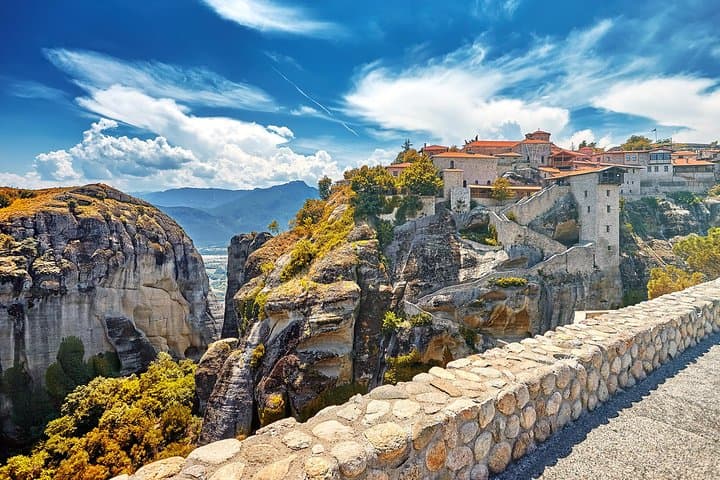
This day trip concentrates the site’s geology, history and devotional intensity into a single full day. Meteora’s sandstone pillars are the remnants of an ancient delta; over millions of years streams and tectonics carved columns that medieval hermits used as natural fortresses. By the 14th century monks built monasteries atop these summits, accessing them originally by ropes and ladders. Today six monasteries remain active and two are typically visited on this route, each offering frescoed chapels, small museums and stair-stepped approaches that reward careful attention.
Culturally the area blends Orthodox monastic practice with local Kalampaka village life—expect handwritten entrance fees, strict dress codes and simple tavernas serving grilled lamb and dakos in nearby Kastraki.
Practical notes: the full loop includes about 3–4 hours on foot across paved steps and uneven rock paths; comfortable footwear and modest clothing are required for monastery entry. Bring cash for entrance fees (around €5 per monastery), water and layers—the weather can shift quickly on exposed viewpoints. Photographs are welcome in most public areas but restricted inside chapels. Time your visit for mid-morning or late afternoon light to avoid crowds and get the best views for photography and short walks between viewpoints.
easy.
10–11 hours.
Basic fitness for climbing stairs and short walks at altitude; comfortable standing for museum visits.
Expect about 6–7 hours round-trip driving with a full day (around 11 hours total) including stops and monastery visits.
No — entrance fees (~€5 per monastery) are paid locally in cash and are not included in the tour price.
Yes—transport and moderate walking make it accessible, but stairs can be steep; plan for slower pace if mobility is limited.
Photography is usually allowed outside and in museum areas but often restricted inside chapels; follow posted signs and staff directions.
Meteora became a major monastic center from the 11th–14th centuries; its cliff-top monasteries were built as refuges and centers of Orthodox learning.
Visitors are asked to stick to paths, respect monastery rules and avoid climbing on fragile rock surfaces; supporting local businesses helps sustain the area's cultural landscape.
Ammon Express operates guided outdoor trips and adventures with an emphasis on safety, stewardship, and memorable experiences.


On the road before dawn, the bus slips out of Thessaloniki and the plain opens until abrupt towers of stone rise ahead—Meteora’s cliffs cut straight from a river plain, their faces scored and weathered by 65 million years of wind and water.
On the road before dawn, the bus slips out of Thessaloniki and the plain opens until abrupt towers of stone rise ahead—Meteora’s cliffs cut straight from a river plain, their faces scored and weathered by 65 million years of wind and water.
This day trip concentrates the site’s geology, history and devotional intensity into a single full day. Meteora’s sandstone pillars are the remnants of an ancient delta; over millions of years streams and tectonics carved columns that medieval hermits used as natural fortresses. By the 14th century monks built monasteries atop these summits, accessing them originally by ropes and ladders. Today six monasteries remain active and two are typically visited on this route, each offering frescoed chapels, small museums and stair-stepped approaches that reward careful attention.
Culturally the area blends Orthodox monastic practice with local Kalampaka village life—expect handwritten entrance fees, strict dress codes and simple tavernas serving grilled lamb and dakos in nearby Kastraki.
Practical notes: the full loop includes about 3–4 hours on foot across paved steps and uneven rock paths; comfortable footwear and modest clothing are required for monastery entry. Bring cash for entrance fees (around €5 per monastery), water and layers—the weather can shift quickly on exposed viewpoints. Photographs are welcome in most public areas but restricted inside chapels. Time your visit for mid-morning or late afternoon light to avoid crowds and get the best views for photography and short walks between viewpoints.