THE ADVENTURE COLLECTIVE® · Independent discovery and booking for outdoor travel

Spend a full day exploring Meteora’s clifftop monasteries with a private guide, moving between ancient churches, observation decks, and panoramic viewpoints. This tour combines geological wonder, Byzantine history, and practical travel logistics for a compact, accessible experience.
Spend a full day exploring Meteora’s clifftop monasteries with a private guide, moving between ancient churches, observation decks, and panoramic viewpoints. This tour combines geological wonder, Byzantine history, and practical travel logistics for a compact, accessible experience.
You step out of the van and the rocks greet you like an ancient crowd — sheer pillars of sandstone and conglomerate rising from the plain, wind having chipped them into ridges and ledges over millions of years.
Verified experiences and guided adventures in the surrounding area.
Operated by Epirus Traveller · Kalambaka, Thessaly
You step out of the van and the rocks greet you like an ancient crowd — sheer pillars of sandstone and conglomerate rising from the plain, wind having chipped them into ridges and ledges over millions of years.
Meteora’s monasteries sit on these columns, human dwellings perched where ascetics sought solitude from the 11th century onward. By the 14th century the area became a major monastic center; today it’s UNESCO protected for its unique cultural landscape. The geology is plain in its mystery: layered river deposits cemented and lifted, then carved by time into vertical cliffs. Cultural traces — frescoed katholika, simple refectories, narrow stone steps — reveal a rhythm of prayer and self-sufficiency that shaped local life for centuries.
This guided full-day tour moves between three monasteries and several viewpoints, offering photo-ready panoramas and short walks to cliff edges and observation decks. Expect paved paths, stepped approaches at each monastery, and intermittent roadside overlooks where the plain opens to mountain ranges beyond.
Practicalities matter: modest dress is enforced for entry; many sites close on specific weekdays, so check the itinerary. The tour covers 6–8 hours with private transport, bottled water, guiding, and time for a lunch break in Meteora. Wear sturdy shoes for uneven steps, bring sun protection and a light layer — weather can shift quickly at elevation. Move deliberately at viewpoints, respect ropes and signage, and leave no trace. The day is as much about quiet observation as it is about dramatic scenery — arrive ready to listen to the wind as it pushes across the rocks.
moderate.
6–8 hours.
Suitable for travelers with basic stamina who can manage repeated short climbs and standing at viewpoints for photos.
Entrance fees are typically not included; the guide will advise which monasteries require a small ticket or donation.
Yes — the tour is classed as suitable for most fitness levels, but expect stairs and short steep sections that may be challenging for very young children or those with limited mobility.
Photography policies vary; interior photography is often restricted in chapels or where frescoes require conservation—follow onsite signs and the guide’s instructions.
Each monastery has a specific weekday closure and variable hours; a reliable operator will plan visits around closures but confirm the day’s schedule before booking.
Hermits moved into Meteora’s caves around the 11th century; by the 14th–16th centuries communal monasticism created the cliff-top monasteries seen today.
High visitor numbers stress fragile paths and frescoes—stay on marked trails, avoid touching painted surfaces, and support local conservation efforts through donations.
Epirus Traveller operates guided outdoor trips and adventures with an emphasis on safety, stewardship, and memorable experiences.
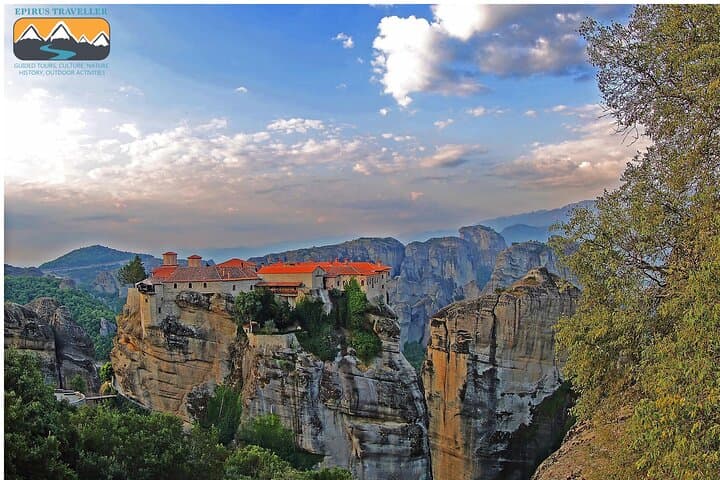


You step out of the van and the rocks greet you like an ancient crowd — sheer pillars of sandstone and conglomerate rising from the plain, wind having chipped them into ridges and ledges over millions of years.
You step out of the van and the rocks greet you like an ancient crowd — sheer pillars of sandstone and conglomerate rising from the plain, wind having chipped them into ridges and ledges over millions of years.
Meteora’s monasteries sit on these columns, human dwellings perched where ascetics sought solitude from the 11th century onward. By the 14th century the area became a major monastic center; today it’s UNESCO protected for its unique cultural landscape. The geology is plain in its mystery: layered river deposits cemented and lifted, then carved by time into vertical cliffs. Cultural traces — frescoed katholika, simple refectories, narrow stone steps — reveal a rhythm of prayer and self-sufficiency that shaped local life for centuries.
This guided full-day tour moves between three monasteries and several viewpoints, offering photo-ready panoramas and short walks to cliff edges and observation decks. Expect paved paths, stepped approaches at each monastery, and intermittent roadside overlooks where the plain opens to mountain ranges beyond.
Practicalities matter: modest dress is enforced for entry; many sites close on specific weekdays, so check the itinerary. The tour covers 6–8 hours with private transport, bottled water, guiding, and time for a lunch break in Meteora. Wear sturdy shoes for uneven steps, bring sun protection and a light layer — weather can shift quickly at elevation. Move deliberately at viewpoints, respect ropes and signage, and leave no trace. The day is as much about quiet observation as it is about dramatic scenery — arrive ready to listen to the wind as it pushes across the rocks.