THE ADVENTURE COLLECTIVE® · Independent discovery and booking for outdoor travel

Explore Tulum’s cliffside temples, climb Coba’s Nohoch Mul, and swim in a jungle cenote on a single day trip from Cancun. This full-day route blends coastal ruins, inland pyramids, and subterranean waters with practical guidance on fees, gear, and logistics.
Explore Tulum’s cliffside temples, climb Coba’s Nohoch Mul, and swim in a jungle cenote on a single day trip from Cancun. This full-day route blends coastal ruins, inland pyramids, and subterranean waters with practical guidance on fees, gear, and logistics.
You step off the bus into heat that smells of salt and jungle; limestone cliffs drop away to a band of Caribbean blue, and stone temples seem to watch the water like ancient sentinels. The day unfurls quickly: Tulum’s cliffside ruins first, then inland into the dense green toward Coba, a jungle of steles and an upward reach to Nohoch Mul, and finally the cool, shadowed stillness of a cenote where sunlight fractures into the water.
Verified experiences and guided adventures in the surrounding area.
Operated by Stap Travel · Tulum, Quintana Roo
You step off the bus into heat that smells of salt and jungle; limestone cliffs drop away to a band of Caribbean blue, and stone temples seem to watch the water like ancient sentinels. The day unfurls quickly: Tulum’s cliffside ruins first, then inland into the dense green toward Coba, a jungle of steles and an upward reach to Nohoch Mul, and finally the cool, shadowed stillness of a cenote where sunlight fractures into the water.
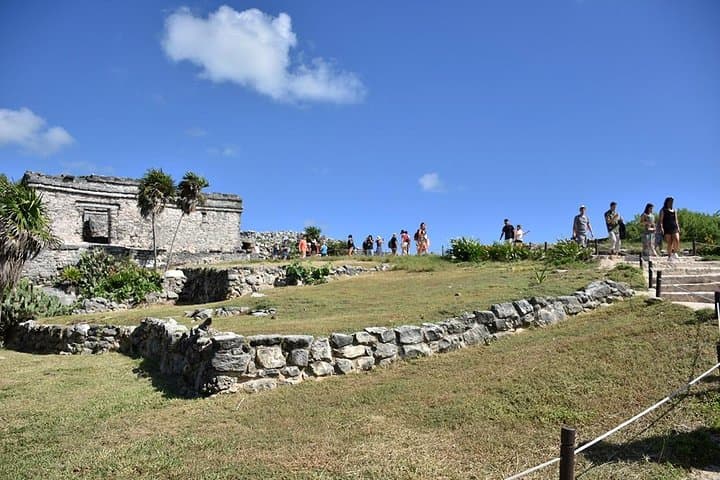
History here is physical. Tulum was a maritime stronghold and observatory, a port for traders and a marker of coastal power for the late Postclassic Maya. Coba’s sacbés (white roads) and the tall Nohoch Mul pyramid tell a different story — a networked polity where agricultural terraces and causeways linked distant villages. Geologically, cenotes are sinkholes formed by collapsed limestone and subterranean rivers; the Maya treated them as sacred portals to the underworld.
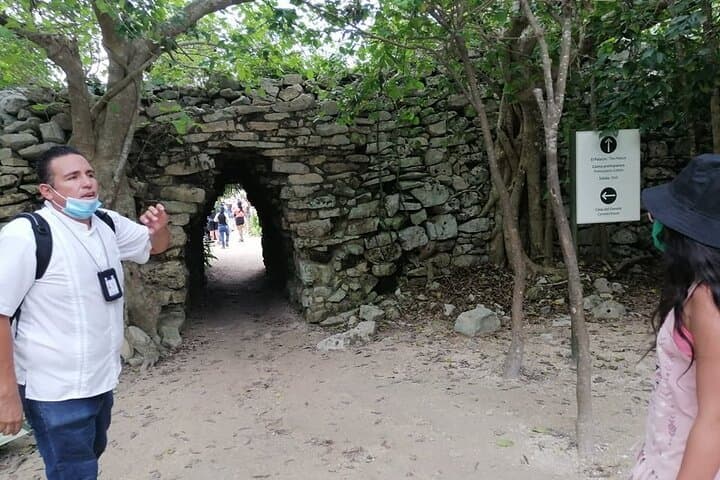
Culturally expect bilingual guides at Tulum, a local buffet for lunch, and a short Mayan village visit near Coba. Practical details matter: there’s a preservation tax for the ruins (~$32 USD), life vests are mandatory for cenote swims, and pick-up times must be confirmed with the operator.
For the day bring a small daypack, reef-safe sunscreen, water, and quick-dry swimwear; wear sturdy walking shoes and be ready for stairs, uneven stone, and muddy jungle paths. Plan for 10–11 hours, carry cash for on-site fees and tips, and schedule the ride home if you choose to disembark in Playa del Carmen — the bus won’t return you to Cancun from there.
moderate.
10–11 hours.
Good for travelers who can walk several miles, manage stairs and uneven terrain, and tolerate a full day of activity in heat.
The tour includes access to some sites but the Tulum preservation tax (~$32 USD) and any optional fees (like life jackets) are typically paid on-site by travelers.
Coba’s Nohoch Mul has historically been climbable, but access can change for safety or conservation reasons; follow the on-site signage and guide updates.
Round transportation from Cancun is provided, but you must confirm the exact pickup time with the supplier before the tour day.
Life jackets are mandatory for cenote swims; jackets may not be included in the base price and are paid at the cenote — bring swimwear and a towel.
Tulum served as a fortified coastal trading port for the late Postclassic Maya, while Coba’s network of sacbés connected it to satellite settlements across the Yucatán.
Sites face erosion and visitor pressure; stick to paths, avoid climbing restricted structures, and use reef-safe sunscreen to protect coastal ecosystems.
Stap Travel operates guided outdoor trips and adventures with an emphasis on safety, stewardship, and memorable experiences.
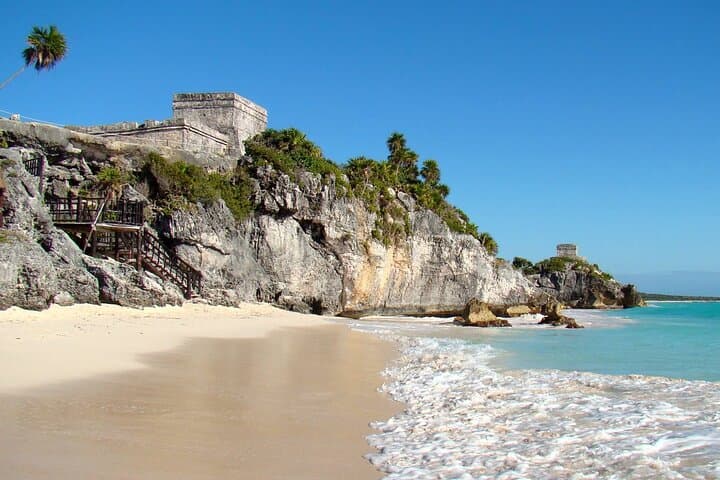
You step off the bus into heat that smells of salt and jungle; limestone cliffs drop away to a band of Caribbean blue, and stone temples seem to watch the water like ancient sentinels. The day unfurls quickly: Tulum’s cliffside ruins first, then inland into the dense green toward Coba, a jungle of steles and an upward reach to Nohoch Mul, and finally the cool, shadowed stillness of a cenote where sunlight fractures into the water.
You step off the bus into heat that smells of salt and jungle; limestone cliffs drop away to a band of Caribbean blue, and stone temples seem to watch the water like ancient sentinels. The day unfurls quickly: Tulum’s cliffside ruins first, then inland into the dense green toward Coba, a jungle of steles and an upward reach to Nohoch Mul, and finally the cool, shadowed stillness of a cenote where sunlight fractures into the water.
History here is physical. Tulum was a maritime stronghold and observatory, a port for traders and a marker of coastal power for the late Postclassic Maya. Coba’s sacbés (white roads) and the tall Nohoch Mul pyramid tell a different story — a networked polity where agricultural terraces and causeways linked distant villages. Geologically, cenotes are sinkholes formed by collapsed limestone and subterranean rivers; the Maya treated them as sacred portals to the underworld.
Culturally expect bilingual guides at Tulum, a local buffet for lunch, and a short Mayan village visit near Coba. Practical details matter: there’s a preservation tax for the ruins (~$32 USD), life vests are mandatory for cenote swims, and pick-up times must be confirmed with the operator.
For the day bring a small daypack, reef-safe sunscreen, water, and quick-dry swimwear; wear sturdy walking shoes and be ready for stairs, uneven stone, and muddy jungle paths. Plan for 10–11 hours, carry cash for on-site fees and tips, and schedule the ride home if you choose to disembark in Playa del Carmen — the bus won’t return you to Cancun from there.