THE ADVENTURE COLLECTIVE® · Independent discovery and booking for outdoor travel

Drive the Glenn Highway and step onto the accessible expanse of Matanuska Glacier on this full-day guided hike from Anchorage. Expect four hours of glacier time, expert crampon instruction, and vivid ice formations framed by Alaska’s broad valley landscape.
Drive the Glenn Highway and step onto the accessible expanse of Matanuska Glacier on this full-day guided hike from Anchorage. Expect four hours of glacier time, expert crampon instruction, and vivid ice formations framed by Alaska’s broad valley landscape.
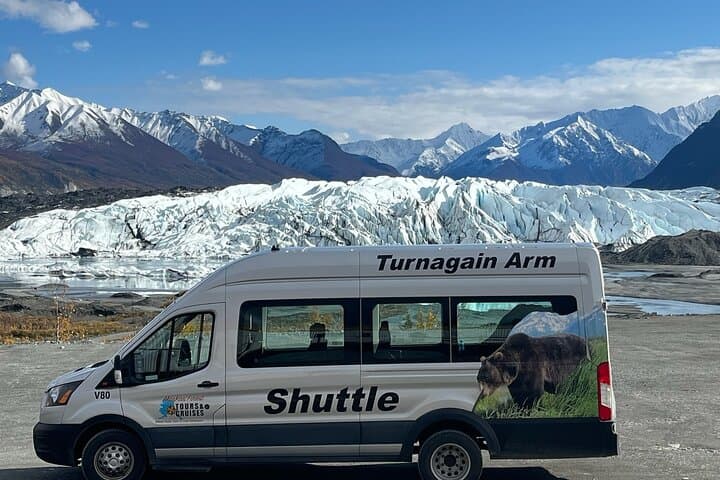
The van slides out of Anchorage before dawn, headlights cutting shallow cones through the hulking shoulders of the Chugach Mountains. As pavement thins into the Glenn Highway, the landscape opens—rivers braid and then narrow, foothills sharpen, and eventually the glacier appears: a blue-white river of ice pressed between steep moraines, moving slower than the eye expects but with an unmistakable force.
Verified experiences and guided adventures in the surrounding area.
Operated by Alaska's Finest Tours & Cruises · Palmer, Alaska
The van slides out of Anchorage before dawn, headlights cutting shallow cones through the hulking shoulders of the Chugach Mountains. As pavement thins into the Glenn Highway, the landscape opens—rivers braid and then narrow, foothills sharpen, and eventually the glacier appears: a blue-white river of ice pressed between steep moraines, moving slower than the eye expects but with an unmistakable force.
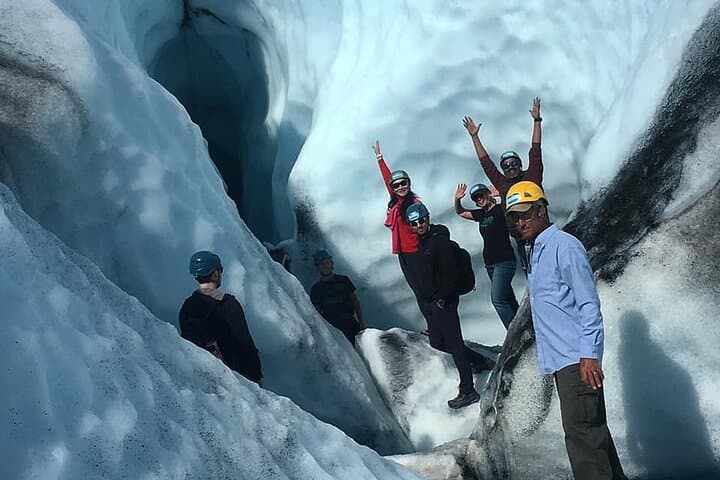
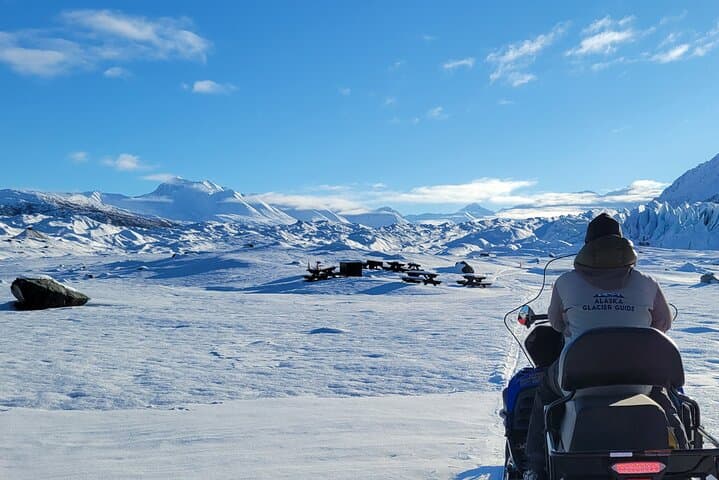
This full-day tour is built around that presence. Travelers spend roughly two hours each way on the road, a scenic drive that follows the Matanuska River and offers a primer in Alaska’s glacial geography: U-shaped valleys, jumbled moraines and slabs of bedrock scoured smooth by centuries of ice. After a stop in Palmer for supplies and a short orientation, guides fit participants with crampons and basic glacier-safe gear, then ferry everyone the last stretch to the glacier edge via an all-terrain vehicle. The guided walk itself commonly covers one to three miles across hummocked ice, rhythmically punctuated by explanations of crevasse formation, blue ice lenses and the glacier’s seasonal ebb and flow.
Matanuska is one of the largest valley glaciers reachable by car in the U.S.—about 27 miles long and several miles wide at its broadest—and its terminus makes the mechanics of ice visible in everyday scale. Indigenous Dena’ina and Ahtna peoples have long known this landscape, and later settlers relied on glacial melt for irrigation in the Palmer agricultural flats. Modern guides blend natural history with hands-on technique, showing how meltwater tunnels and seracs form, and teaching safe movement with crampons and short roped sections when necessary.
Practical notes matter. Expect an 8–9 hour excursion from pickup to drop-off, with roughly four hours on or near the ice. The walking is physical but non-technical; the guide supplies crampons and instruction, but good ankle support and sure footing are essential. Weather on the glacier changes fast—bright sun can magnify cold, while wind off the ice bites. Bring layered clothing, waterproof outerwear, sun protection and sturdy boots.
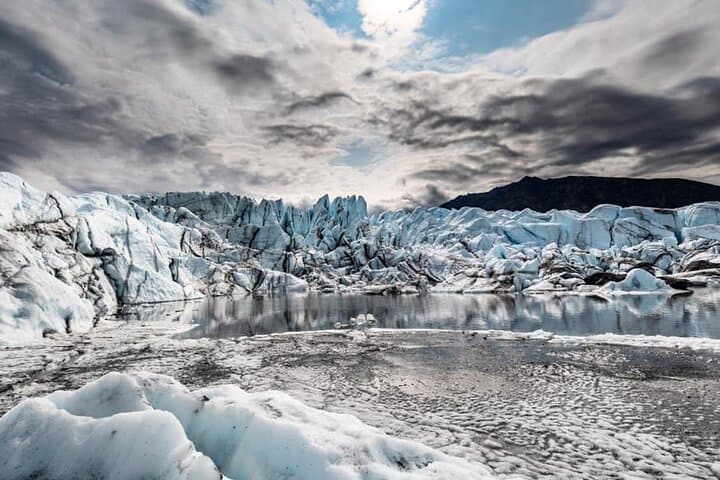
For photographers and curious travelers alike, the payoff is immediate: blue ice that seems lit from within, skylines framed by serrated ridgelines, and a tactile sense of scale—ice that creaks and sighs under your feet. The return to Anchorage feels softer, with the Glenn Highway unspooling familiar landmarks and the tactile memory of an environment that both humbles and teaches.
moderate.
8–9 hours.
Moderately fit: able to walk 2–4 miles on uneven, icy terrain and handle intermittent scrambling.
The round-trip shuttle is about 4 hours driving total—approximately two hours each way along the Glenn Highway, depending on traffic and weather.
Yes—guides supply crampons and basic glacier-walking equipment; helmets may be used on steeper sections as determined by the guide.
Children may join if they meet the physical requirements and are supervised; check operator age policies when booking.
No prior glacier experience is required; guides provide instruction on crampon use and safe movement on ice.
Tours may be cancelled for safety due to severe weather or unsafe ice conditions; you'll be offered a refund if cancelled at least 24 hours prior or by the operator for safety reasons.
Cameras are welcome—bring protective cases—but drones are typically prohibited without prior permission due to safety and wildlife regulations.
Matanuska Glacier sits in a valley shaped by repeated glacial advances since the last ice age; the area later supported local Indigenous travel and modern agricultural development in the Palmer flats.
The glacier has been retreating in recent decades; operators emphasize staying on guided routes, packing out waste, and minimizing impact on fragile moraines and meltwater channels.
Alaska's Finest Tours & Cruises operates guided outdoor trips and adventures with an emphasis on safety, stewardship, and memorable experiences.
The van slides out of Anchorage before dawn, headlights cutting shallow cones through the hulking shoulders of the Chugach Mountains. As pavement thins into the Glenn Highway, the landscape opens—rivers braid and then narrow, foothills sharpen, and eventually the glacier appears: a blue-white river of ice pressed between steep moraines, moving slower than the eye expects but with an unmistakable force.
The van slides out of Anchorage before dawn, headlights cutting shallow cones through the hulking shoulders of the Chugach Mountains. As pavement thins into the Glenn Highway, the landscape opens—rivers braid and then narrow, foothills sharpen, and eventually the glacier appears: a blue-white river of ice pressed between steep moraines, moving slower than the eye expects but with an unmistakable force.
This full-day tour is built around that presence. Travelers spend roughly two hours each way on the road, a scenic drive that follows the Matanuska River and offers a primer in Alaska’s glacial geography: U-shaped valleys, jumbled moraines and slabs of bedrock scoured smooth by centuries of ice. After a stop in Palmer for supplies and a short orientation, guides fit participants with crampons and basic glacier-safe gear, then ferry everyone the last stretch to the glacier edge via an all-terrain vehicle. The guided walk itself commonly covers one to three miles across hummocked ice, rhythmically punctuated by explanations of crevasse formation, blue ice lenses and the glacier’s seasonal ebb and flow.
Matanuska is one of the largest valley glaciers reachable by car in the U.S.—about 27 miles long and several miles wide at its broadest—and its terminus makes the mechanics of ice visible in everyday scale. Indigenous Dena’ina and Ahtna peoples have long known this landscape, and later settlers relied on glacial melt for irrigation in the Palmer agricultural flats. Modern guides blend natural history with hands-on technique, showing how meltwater tunnels and seracs form, and teaching safe movement with crampons and short roped sections when necessary.
Practical notes matter. Expect an 8–9 hour excursion from pickup to drop-off, with roughly four hours on or near the ice. The walking is physical but non-technical; the guide supplies crampons and instruction, but good ankle support and sure footing are essential. Weather on the glacier changes fast—bright sun can magnify cold, while wind off the ice bites. Bring layered clothing, waterproof outerwear, sun protection and sturdy boots.
For photographers and curious travelers alike, the payoff is immediate: blue ice that seems lit from within, skylines framed by serrated ridgelines, and a tactile sense of scale—ice that creaks and sighs under your feet. The return to Anchorage feels softer, with the Glenn Highway unspooling familiar landmarks and the tactile memory of an environment that both humbles and teaches.