THE ADVENTURE COLLECTIVE® · Independent discovery and booking for outdoor travel

Explore Marrakech’s walled medina on a full-day walking tour that connects the Koutoubia, souks, and the ornate Medrassa ben Youssef. Expect packed alleys, artisan workshops, and a mix of history, architecture, and practical city navigation tips to make the most of your day.
Explore Marrakech’s walled medina on a full-day walking tour that connects the Koutoubia, souks, and the ornate Medrassa ben Youssef. Expect packed alleys, artisan workshops, and a mix of history, architecture, and practical city navigation tips to make the most of your day.
The first steps through Marrakech's medina feel like entering a living map: narrow alleys open and close, tile and plaster reflect the sun, and the Koutoubia's tower watches over the orange roofs.
Verified experiences and guided adventures in the surrounding area.
The first steps through Marrakech's medina feel like entering a living map: narrow alleys open and close, tile and plaster reflect the sun, and the Koutoubia's tower watches over the orange roofs.
This full-day sightseeing tour threads you through centuries — from the Almohad era that raised the mosque and set the medina's grid to the 16th–19th century crafts that shaped the souks. Geologically, Marrakech sits at the plain beneath the High Atlas; the city’s soils and palm groves owe their character to seasonal runoff from those ranges, which still push down winds that polish the streets.
Culturally the medina is pragmatic and performative: artisans work in open-front shops, bakers fire communal ovens, and fountain courtyards invite pause. The Medrassa ben Youssef (Ben Youssef) illustrates Morocco’s scholarly past — carved cedar and geometric tilework that frame student cells and a courtyard where silence had purpose.
Expect uneven cobblestone, tight passageways, and bustling market life. Photographers will find dramatic contrasts — shadowed doorways next to brightly dyed textiles — while food lovers can sample fresh flatbreads and orange juice at street stalls.
Practical guidance: plan for 3–6 hours on foot, start in the morning or late afternoon to avoid peak heat, carry a refillable water bottle, and wear sturdy shoes for cobbles and occasional stairs. Bring small bills for tipping and purchases and be prepared to give way in crowded lanes. A guided walk adds historical context and shortcuts through the maze; independent travelers should download an offline map and note major gates for orientation.
moderate.
3–6 hours.
Good for travelers who can walk several miles over uneven, cobbled surfaces and climb short staircases.
The tour runs about 3–6 hours depending on pace, number of stops, and whether you include a lunch break.
Most Moroccan mosques, including the Koutoubia, are not open to non-Muslims; exterior photography and respectful dress are recommended.
Many alleys have uneven cobblestones and steps; accessibility is limited—contact providers about specific routes and support.
Bring cash (Moroccan dirham) for souks and small purchases; many stalls are cash-only and ATMs are outside the medina.
Marrakech was founded in the 11th century and rose under the Almoravid and Almohad dynasties; the medina’s walls and Koutoubia tower date to that formative period.
The medina faces pressures from tourism, so support local artisans directly and limit single-use plastics; preserving water and historic fabric is a local priority.
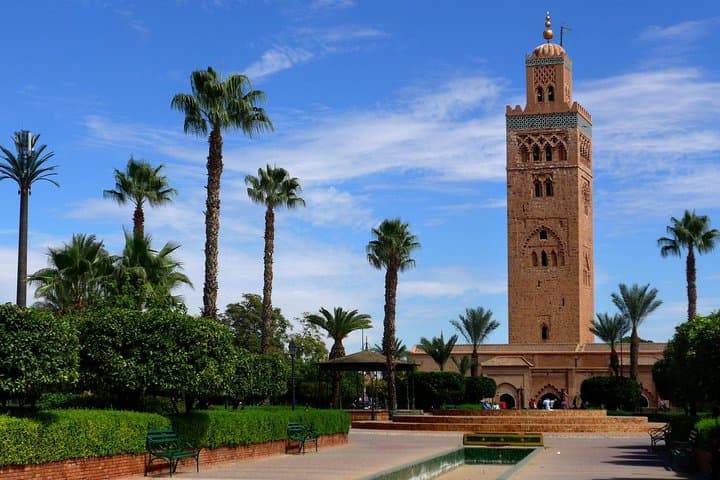
The first steps through Marrakech's medina feel like entering a living map: narrow alleys open and close, tile and plaster reflect the sun, and the Koutoubia's tower watches over the orange roofs.
The first steps through Marrakech's medina feel like entering a living map: narrow alleys open and close, tile and plaster reflect the sun, and the Koutoubia's tower watches over the orange roofs.
This full-day sightseeing tour threads you through centuries — from the Almohad era that raised the mosque and set the medina's grid to the 16th–19th century crafts that shaped the souks. Geologically, Marrakech sits at the plain beneath the High Atlas; the city’s soils and palm groves owe their character to seasonal runoff from those ranges, which still push down winds that polish the streets.
Culturally the medina is pragmatic and performative: artisans work in open-front shops, bakers fire communal ovens, and fountain courtyards invite pause. The Medrassa ben Youssef (Ben Youssef) illustrates Morocco’s scholarly past — carved cedar and geometric tilework that frame student cells and a courtyard where silence had purpose.
Expect uneven cobblestone, tight passageways, and bustling market life. Photographers will find dramatic contrasts — shadowed doorways next to brightly dyed textiles — while food lovers can sample fresh flatbreads and orange juice at street stalls.
Practical guidance: plan for 3–6 hours on foot, start in the morning or late afternoon to avoid peak heat, carry a refillable water bottle, and wear sturdy shoes for cobbles and occasional stairs. Bring small bills for tipping and purchases and be prepared to give way in crowded lanes. A guided walk adds historical context and shortcuts through the maze; independent travelers should download an offline map and note major gates for orientation.