THE ADVENTURE COLLECTIVE® · Independent discovery and booking for outdoor travel

Spend a full day exploring the marble karst peaks and cave pagodas above Da Nang, then step back into the Champa era at My Son Sanctuary. Expect stairs, wide views, and guided history that brings ancient brick towers to life.
Spend a full day exploring the marble karst peaks and cave pagodas above Da Nang, then step back into the Champa era at My Son Sanctuary. Expect stairs, wide views, and guided history that brings ancient brick towers to life.
Morning light breaks over the South China Sea as the minivan slips through Da Nang’s coastal road and the first limestone ridges of the Marble Mountains rise like rough sculptures from the plain. Stairs and narrow paths cut into stone lead through caverns where incense smoke hangs and carved shrines peer out; the climb rewards with open terraces and coastal views that stretch toward Da Nang’s beaches.
Verified experiences and guided adventures in the surrounding area.
Operated by Local guide in Da Nang city, Vietnam · Da Nang, Da Nang
Morning light breaks over the South China Sea as the minivan slips through Da Nang’s coastal road and the first limestone ridges of the Marble Mountains rise like rough sculptures from the plain. Stairs and narrow paths cut into stone lead through caverns where incense smoke hangs and carved shrines peer out; the climb rewards with open terraces and coastal views that stretch toward Da Nang’s beaches.
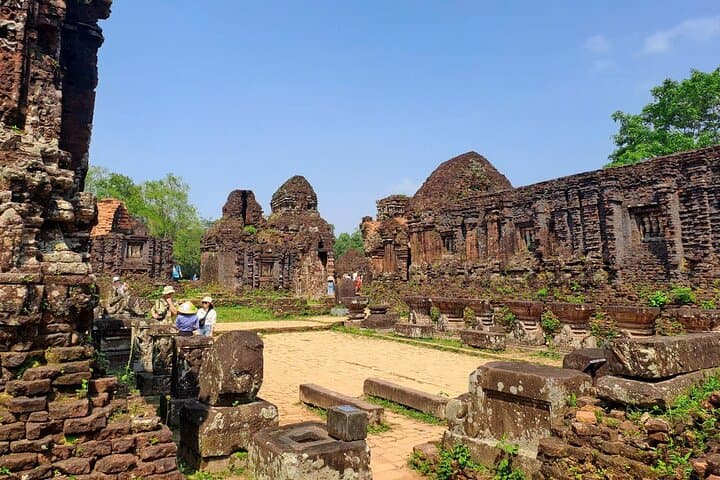
The Marble Mountains are a cluster of five marble and limestone hills named for the elements—each layered with caves and pagodas used by Cham, Buddhist and later Vietnamese worshippers. Centuries later, at My Son, you’ll find the brick towers of the Champa Kingdom—red, fired brick standing in quiet courtyards, scarred but still holding carvings and lintels that hint at Hindu rites and cross-ocean trade.
Geologically, limestone and marble here record ancient marine deposits lifted by tectonic forces; historically, the sites map a crossroads of religion, warfare and reconstruction—My Son was heavily damaged in the 20th century but remains a vital archaeological site.
Practical side: expect 7–8 hours on the road with two main stops—bring sturdy, closed-toe shoes for uneven steps, a hat and water, and modest clothing for temple entry. Local guides translate Champa iconography and point out hidden grotto shrines. Peak sunlight is mid-day; schedule early to avoid the heat and larger tour groups.
This is part cultural archaeology, part short-hike day out—rewarding for anyone who wants tangible history paired with tactile mountain walks and open coastal views.
moderate.
7–8 hours.
Moderate fitness—able to climb stairs, walk on uneven terrain and tolerate several hours of touring.
The tour runs about 7–8 hours (420–480 minutes), including transport between Da Nang, Marble Mountains and My Son.
This tour lists admission tickets as included, but confirm with the operator if any special exhibits or extras require additional payment.
It requires moderate fitness—expect stair climbs, uneven paths and several hours on your feet; not recommended for those with serious back problems.
Smart, modest clothing is requested for temples—cover shoulders and knees; avoid sportswear, joggers or torn jeans per operator guidance.
My Son was the religious and political center of the Champa Kingdom from the 4th to 13th centuries; many towers were restored after wartime damage in the 20th century.
Both sites are managed with archaeological protection and visitor rules; stay on paths and avoid touching carvings to minimize wear and help ongoing preservation.
Local guide in Da Nang city, Vietnam operates guided outdoor trips and adventures with an emphasis on safety, stewardship, and memorable experiences.


Morning light breaks over the South China Sea as the minivan slips through Da Nang’s coastal road and the first limestone ridges of the Marble Mountains rise like rough sculptures from the plain. Stairs and narrow paths cut into stone lead through caverns where incense smoke hangs and carved shrines peer out; the climb rewards with open terraces and coastal views that stretch toward Da Nang’s beaches.
Morning light breaks over the South China Sea as the minivan slips through Da Nang’s coastal road and the first limestone ridges of the Marble Mountains rise like rough sculptures from the plain. Stairs and narrow paths cut into stone lead through caverns where incense smoke hangs and carved shrines peer out; the climb rewards with open terraces and coastal views that stretch toward Da Nang’s beaches.
The Marble Mountains are a cluster of five marble and limestone hills named for the elements—each layered with caves and pagodas used by Cham, Buddhist and later Vietnamese worshippers. Centuries later, at My Son, you’ll find the brick towers of the Champa Kingdom—red, fired brick standing in quiet courtyards, scarred but still holding carvings and lintels that hint at Hindu rites and cross-ocean trade.
Geologically, limestone and marble here record ancient marine deposits lifted by tectonic forces; historically, the sites map a crossroads of religion, warfare and reconstruction—My Son was heavily damaged in the 20th century but remains a vital archaeological site.
Practical side: expect 7–8 hours on the road with two main stops—bring sturdy, closed-toe shoes for uneven steps, a hat and water, and modest clothing for temple entry. Local guides translate Champa iconography and point out hidden grotto shrines. Peak sunlight is mid-day; schedule early to avoid the heat and larger tour groups.
This is part cultural archaeology, part short-hike day out—rewarding for anyone who wants tangible history paired with tactile mountain walks and open coastal views.