THE ADVENTURE COLLECTIVE® · Independent discovery and booking for outdoor travel

Make Machu Picchu in a single, well-coordinated day from Cusco: a panoramic train, a shuttle through cloud forest and a focused guided tour of the citadel. This trip pairs efficient logistics with local guides who explain the site’s history, engineering, and landscape.
Make Machu Picchu in a single, well-coordinated day from Cusco: a panoramic train, a shuttle through cloud forest and a focused guided tour of the citadel. This trip pairs efficient logistics with local guides who explain the site’s history, engineering, and landscape.
You step onto a crisp Andean morning in Cusco before dawn, the city lights thinning behind the van as the road drops into the Urubamba Valley. The train rocks forward, glass catching river and cloud-forest slopes; by the time the valley opens you’re already moving toward the humming village of Aguas Calientes and the stone terraces above it.
Verified experiences and guided adventures in the surrounding area.
Operated by Machupicchu Peru Journeys · Aguas Calientes, Cusco
You step onto a crisp Andean morning in Cusco before dawn, the city lights thinning behind the van as the road drops into the Urubamba Valley. The train rocks forward, glass catching river and cloud-forest slopes; by the time the valley opens you’re already moving toward the humming village of Aguas Calientes and the stone terraces above it.
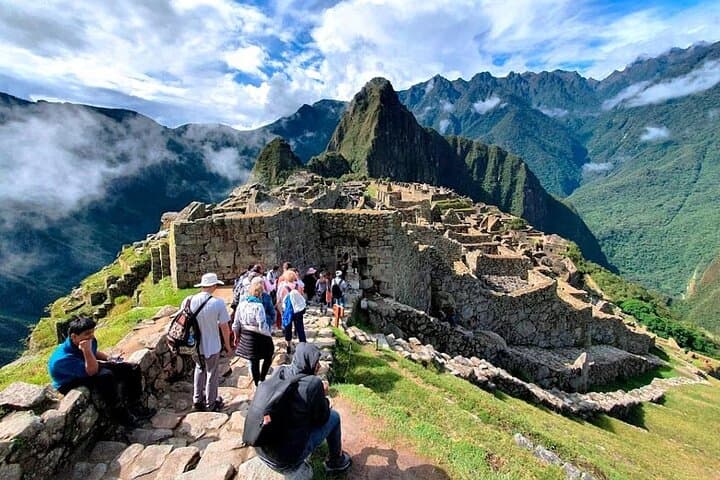
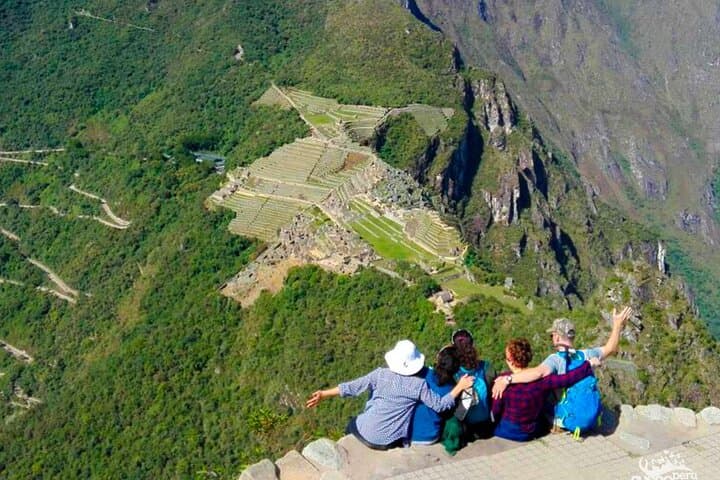
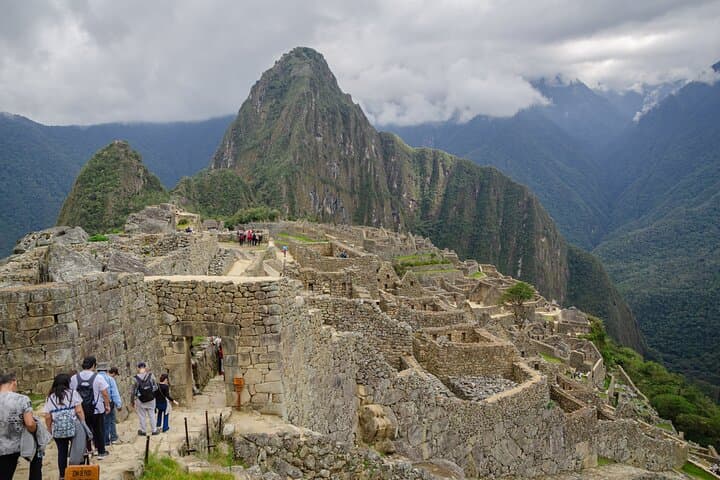
Machu Picchu sits at about 2,430 m on a ridge carved by millennia of river action and Inca engineering. The guided circuit highlights imperial plazas, agricultural terraces and the Intihuatana observatory—sites that reveal Inca astronomical practice and mountain-based agriculture. Geologically, the citadel perches on metamorphic bedrock sculpted by the Urubamba; culturally, it’s one endpoint of the Inca road network radiating from Cusco, the former empire’s capital.
This full-day itinerary coordinates an early hotel transfer, a panoramic train through the Sacred Valley, the official shuttle up to the citadel and a 2.5-hour expert-led tour inside Machu Picchu. Expect a 10–14 hour day including transfers; groups are kept small and the tour avoids forced commercial stops.
Practical things matter: carry your passport (entry requirement), layer for rapid weather swings between Cusco’s high altitude and the warmer cloud forest, and allow time for photos at the main viewpoints. Hydrate well before departure—altitude between Cusco (~3,400 m) and Machu Picchu (~2,430 m) affects energy.
Book early for train and park time slots, bring stable footwear for stepped terraces and respect site rules so future travelers can experience the same clarity and power of this Andean place.
moderate.
10–14 hours.
Moderate fitness—able to stand and walk on uneven stone for 2–3 hours, handle stairs and short climbs.
Yes—this itinerary is structured as a long day (10–14 hours) with coordinated transfers, train and shuttle; expect an early start.
Yes—official entry requires the original passport; copies are not accepted for admission.
There are limited food options in Aguas Calientes before or after your visit; inside the citadel bring snacks and water as services are minimal.
Those climbs require separate timed tickets and additional time; confirm availability and book in advance if you plan to add a summit.
Machu Picchu was an administrative and ceremonial site within the Inca state, rediscovered for the outside world in 1911; its terraces and stonework reflect centuries of Andean engineering.
Visitor numbers and foot traffic are tightly managed with timed entry and regulated circuits—follow routes, avoid touching stonework and pack out waste to protect fragile soils and archaeology.
Machupicchu Peru Journeys operates guided outdoor trips and adventures with an emphasis on safety, stewardship, and memorable experiences.
You step onto a crisp Andean morning in Cusco before dawn, the city lights thinning behind the van as the road drops into the Urubamba Valley. The train rocks forward, glass catching river and cloud-forest slopes; by the time the valley opens you’re already moving toward the humming village of Aguas Calientes and the stone terraces above it.
You step onto a crisp Andean morning in Cusco before dawn, the city lights thinning behind the van as the road drops into the Urubamba Valley. The train rocks forward, glass catching river and cloud-forest slopes; by the time the valley opens you’re already moving toward the humming village of Aguas Calientes and the stone terraces above it.
Machu Picchu sits at about 2,430 m on a ridge carved by millennia of river action and Inca engineering. The guided circuit highlights imperial plazas, agricultural terraces and the Intihuatana observatory—sites that reveal Inca astronomical practice and mountain-based agriculture. Geologically, the citadel perches on metamorphic bedrock sculpted by the Urubamba; culturally, it’s one endpoint of the Inca road network radiating from Cusco, the former empire’s capital.
This full-day itinerary coordinates an early hotel transfer, a panoramic train through the Sacred Valley, the official shuttle up to the citadel and a 2.5-hour expert-led tour inside Machu Picchu. Expect a 10–14 hour day including transfers; groups are kept small and the tour avoids forced commercial stops.
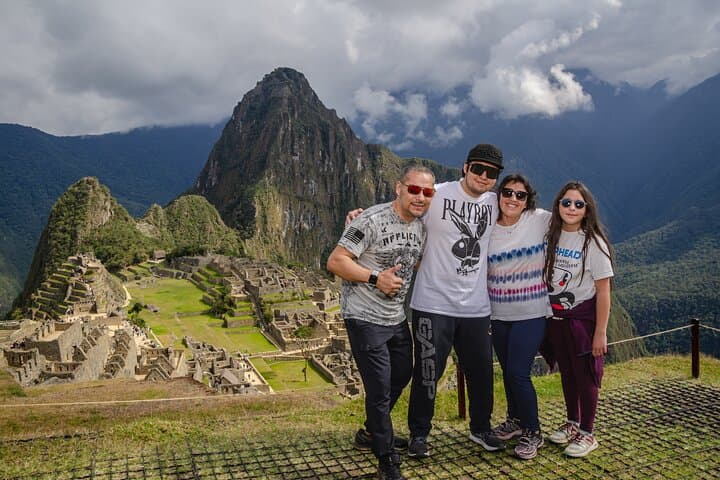
Practical things matter: carry your passport (entry requirement), layer for rapid weather swings between Cusco’s high altitude and the warmer cloud forest, and allow time for photos at the main viewpoints. Hydrate well before departure—altitude between Cusco (~3,400 m) and Machu Picchu (~2,430 m) affects energy.
Book early for train and park time slots, bring stable footwear for stepped terraces and respect site rules so future travelers can experience the same clarity and power of this Andean place.