THE ADVENTURE COLLECTIVE® · Independent discovery and booking for outdoor travel

Spend a full day moving between Luxor’s greatest monuments: Karnak’s vast columns, Luxor Temple’s processional route, Hatshepsut’s cliff-top terraces and the painted tombs of the Valley of the Kings. This small-group tour pairs accessible logistics with an Egyptology guide to make ten hours of history easy to navigate.
Spend a full day moving between Luxor’s greatest monuments: Karnak’s vast columns, Luxor Temple’s processional route, Hatshepsut’s cliff-top terraces and the painted tombs of the Valley of the Kings. This small-group tour pairs accessible logistics with an Egyptology guide to make ten hours of history easy to navigate.
The morning air in Luxor smells faintly of dust and sweet palm sap as your minivan eases away from the riverfront. You step from cool shade into sunlit stone: rows of columns, painted reliefs, and the low murmur of a guide translating millennia into minutes.
Verified experiences and guided adventures in the surrounding area.
Operated by Here Egypt Tours · Luxor, Luxor Governorate
The morning air in Luxor smells faintly of dust and sweet palm sap as your minivan eases away from the riverfront. You step from cool shade into sunlit stone: rows of columns, painted reliefs, and the low murmur of a guide translating millennia into minutes.
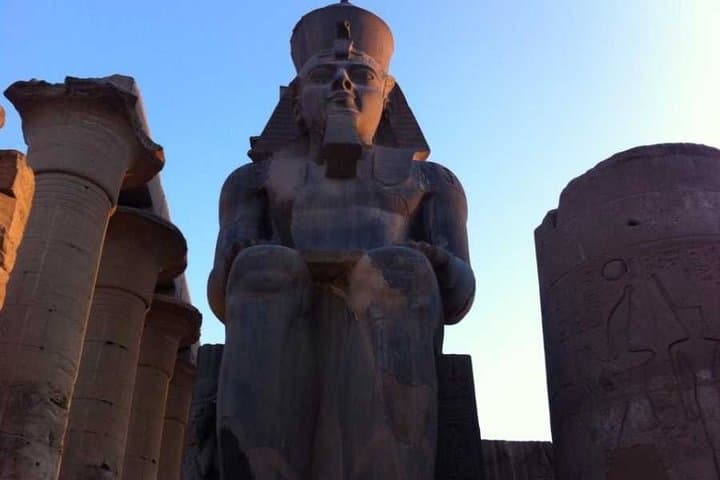
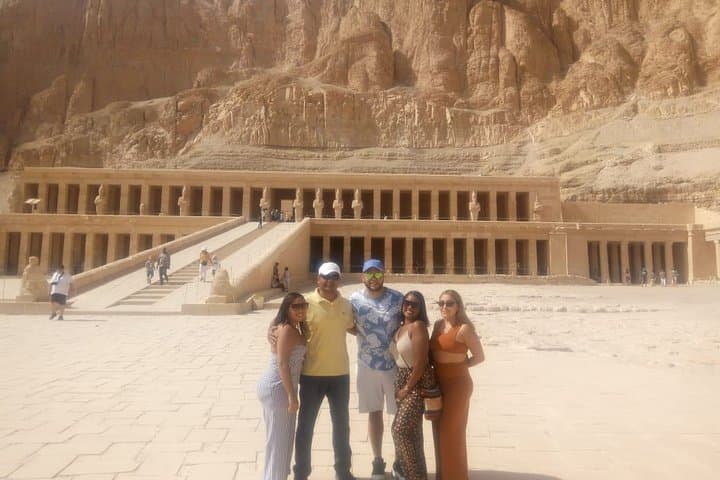
This full-day route stitches together Egypt’s New Kingdom heart — the colossal pylons of Karnak built and rebuilt over centuries, Luxor Temple’s intimate processional axis, the funerary terraces of Queen Hatshepsut carved into limestone cliffs, and the painted tombs of the Valley of the Kings. Geologically, you move from the fertile Nile floodplain to the arid limestone scarps that cradled royal burial chambers; those cliffs have protected painted reliefs for 3,000 years.
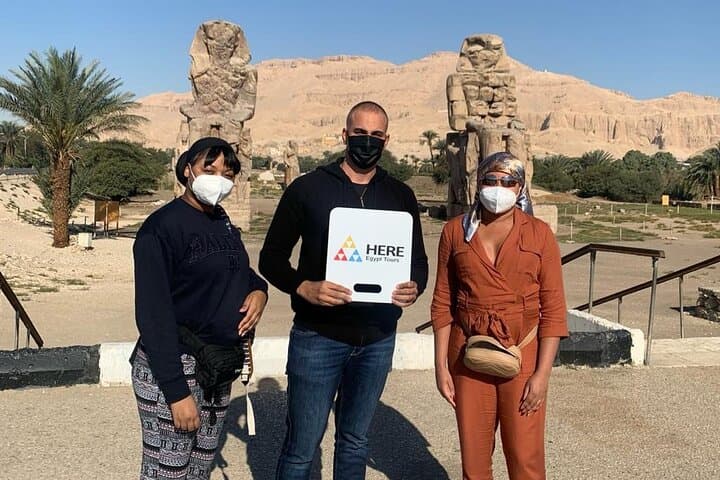
Expect a cultural rhythm of quick arrivals, focused walks and shaded rests: priests’ cartouches at Karnak, Hatshepsut’s clean terraces, the quiet, cool air inside select royal tombs. Local insights: visit Medinet Habu’s less-crowded reliefs for sharper colors, and time the Colossi of Memnon stop for changing light on weathered stone.
Practical guidance: the day runs about 10 hours with door-to-door pickup, so start hydrated, wear closed-toe walking shoes for uneven flagstones, and bring layered sun protection. Photography rules vary by tomb—ask your guide. Carry small Egyptian pounds for entrance fees not covered and tips for your Egyptology guide. Pace yourself: sit in shaded courtyards between stops, and save energy for the stairs and slopes at some sites. This is a long, sensory day where history keeps pace with the heat; prepare practically and the monuments reward close attention.
easy.
10 hours.
Suitable for most fitness levels; requires standing, short hikes up ramps/stairs and walking on uneven surfaces
Yes — door-to-door pickup and drop-off from Luxor hotels or cruise docks is included in the tour price.
Some major sites are included but individual tomb entry fees and optional chamber surcharges (e.g., certain tombs in the Valley of the Kings) may not be covered; confirm with the operator before departure.
The tour notes indicate wheelchair accessibility for transportation and some areas, but several sites have steps and uneven terrain; contact the operator to plan accessible routing and assistance.
Tipping is customary in Egypt; 50–150 EGP for the guide and 20–50 EGP for the driver per person is a common range depending on service.
Luxor and Thebes were the political and religious heart of Egypt’s New Kingdom (circa 1550–1069 BCE); Karnak and Luxor temples grew across successive pharaohs' reigns.
High visitor volume affects fragile painted surfaces and tomb microclimates; follow guide instructions, avoid flash photography in protected tombs and support local conservation fees when available.
Here Egypt Tours operates guided outdoor trips and adventures with an emphasis on safety, stewardship, and memorable experiences.
The morning air in Luxor smells faintly of dust and sweet palm sap as your minivan eases away from the riverfront. You step from cool shade into sunlit stone: rows of columns, painted reliefs, and the low murmur of a guide translating millennia into minutes.
The morning air in Luxor smells faintly of dust and sweet palm sap as your minivan eases away from the riverfront. You step from cool shade into sunlit stone: rows of columns, painted reliefs, and the low murmur of a guide translating millennia into minutes.
This full-day route stitches together Egypt’s New Kingdom heart — the colossal pylons of Karnak built and rebuilt over centuries, Luxor Temple’s intimate processional axis, the funerary terraces of Queen Hatshepsut carved into limestone cliffs, and the painted tombs of the Valley of the Kings. Geologically, you move from the fertile Nile floodplain to the arid limestone scarps that cradled royal burial chambers; those cliffs have protected painted reliefs for 3,000 years.
Expect a cultural rhythm of quick arrivals, focused walks and shaded rests: priests’ cartouches at Karnak, Hatshepsut’s clean terraces, the quiet, cool air inside select royal tombs. Local insights: visit Medinet Habu’s less-crowded reliefs for sharper colors, and time the Colossi of Memnon stop for changing light on weathered stone.
Practical guidance: the day runs about 10 hours with door-to-door pickup, so start hydrated, wear closed-toe walking shoes for uneven flagstones, and bring layered sun protection. Photography rules vary by tomb—ask your guide. Carry small Egyptian pounds for entrance fees not covered and tips for your Egyptology guide. Pace yourself: sit in shaded courtyards between stops, and save energy for the stairs and slopes at some sites. This is a long, sensory day where history keeps pace with the heat; prepare practically and the monuments reward close attention.