THE ADVENTURE COLLECTIVE® · Independent discovery and booking for outdoor travel

Spend a private day from Luxor exploring two of Egypt’s most intact temple complexes: the shadowed reliefs of Abydos and the color‑rich halls of Dendera. This full‑day tour pairs archaeological context with practical logistics—ideal for history-minded travelers.
Spend a private day from Luxor exploring two of Egypt’s most intact temple complexes: the shadowed reliefs of Abydos and the color‑rich halls of Dendera. This full‑day tour pairs archaeological context with practical logistics—ideal for history-minded travelers.
You leave Luxor before sunrise, the city’s minarets shrinking behind the windscreen as the road stretches into the pale desert. The air sharpens; the driver eases the A/C and the guide begins a steady narration that will thread the day—kings, gods and stone that has outlived empires. By midmorning you stand at Abydos, where carved figures and chapels cling to cool, shadowed walls and the reliefs still push stories across millennia.
Verified experiences and guided adventures in the surrounding area.
Operated by Get Egypt Vacation · Luxor, Luxor Governorate
You leave Luxor before sunrise, the city’s minarets shrinking behind the windscreen as the road stretches into the pale desert. The air sharpens; the driver eases the A/C and the guide begins a steady narration that will thread the day—kings, gods and stone that has outlived empires. By midmorning you stand at Abydos, where carved figures and chapels cling to cool, shadowed walls and the reliefs still push stories across millennia.
Abydos is a center of Osiris worship and home to the mortuary temple of Seti I, completed by Ramses II—its painted scenes and the famous king list map dynasties in incised order. Later the route bends north to Dendera, where the Temple of Hathor opens with floral columns and surprisingly vivid pigments on ceilings; the famed Dendera Zodiac began here in the Greco‑Roman period (a cast and fragments now in museums).
Geologically, these sites sit on the Nile’s eastern valley, carved from limestone shelves that made durable building blocks and sheltered pigments from total erosion. Culturally, both temples remain active reminders of layered Egyptian belief—ancient ritual sites that evolved through pharaonic and Greco‑Roman eras.
Practicalities are straightforward: expect an 8‑hour private day with hotel pickup, a mix of walking on uneven stone, some low steps, and limited shade. Bring sun protection, at least 2 liters of water, modest clothing for temple access, small change for toilets and tips, and a camera with charged batteries. The pace is unhurried but packed—plan to arrive rested, keep to the guide’s timings, and let the desert wind nudge you from one carved story to the next.
easy.
8 hours.
Suitable for travelers in average condition able to walk several miles across uneven ground and climb low steps.
The tour runs roughly 8 hours with a typical pickup around 7:00 a.m. from Luxor hotels or Nile cruises; exact pickup is confirmed at booking.
The itinerary lists admissions as included for Dendera and Abydos; confirm details at reservation since options can vary by booking package.
The tour is rated easy physically, but temple grounds have uneven surfaces and steps—families and those with limited mobility should plan accordingly and ask about alternative routing.
Photography is generally allowed in open areas; check with your guide for any restricted spots and be respectful of ongoing religious practices.
Abydos was a major cult center for Osiris and contains Seti I’s mortuary complex; Dendera’s Temple of Hathor includes architectural work spanning pharaonic to Greco‑Roman eras.
Sites suffer from exposure to humidity, pollution and visitor wear—stick to marked paths, avoid touching reliefs, and use toilet facilities in town to limit onsite impact.
Get Egypt Vacation operates guided outdoor trips and adventures with an emphasis on safety, stewardship, and memorable experiences.
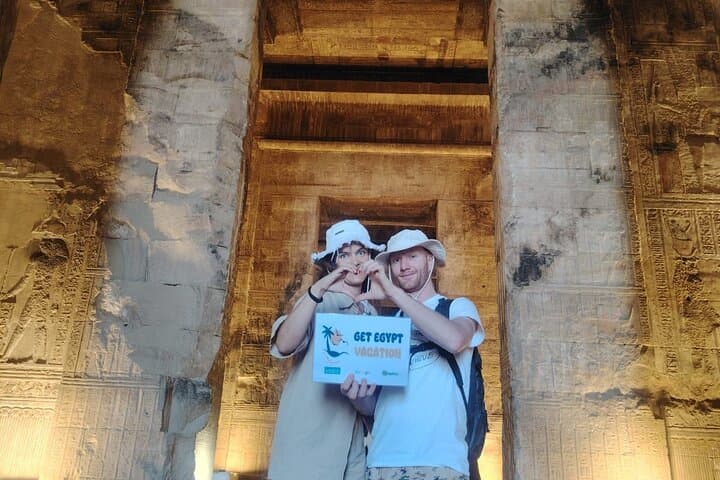
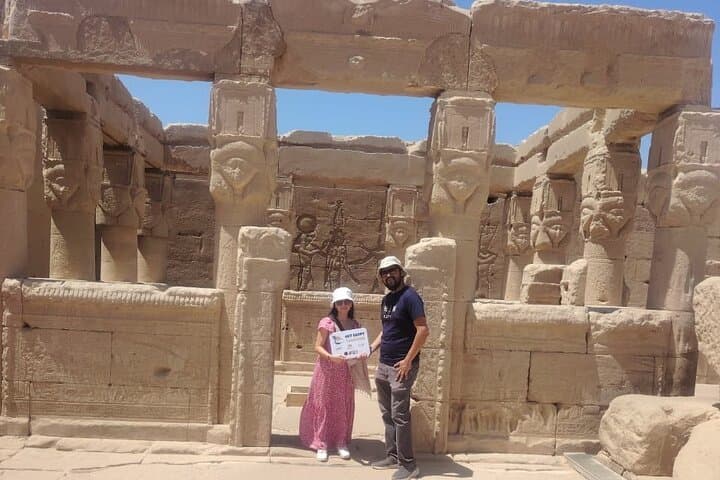
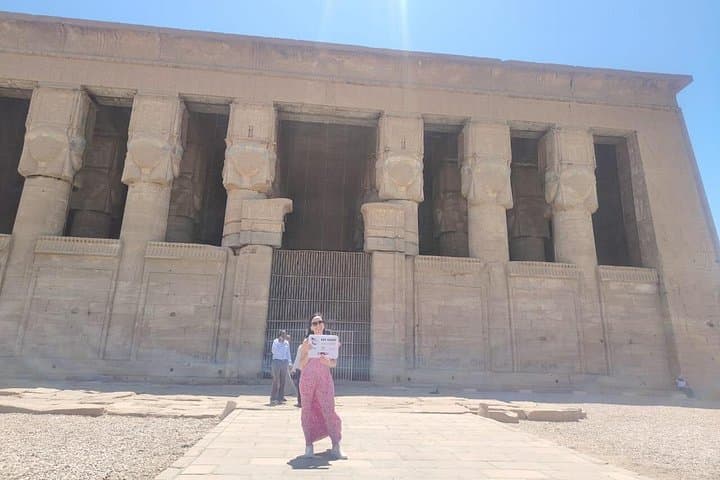
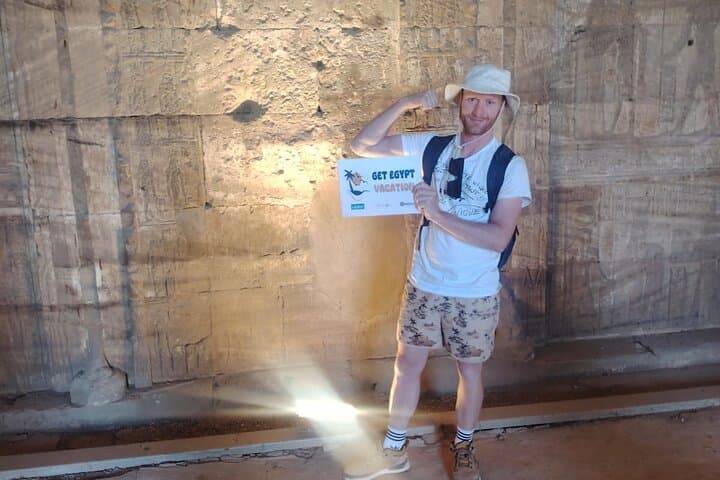
You leave Luxor before sunrise, the city’s minarets shrinking behind the windscreen as the road stretches into the pale desert. The air sharpens; the driver eases the A/C and the guide begins a steady narration that will thread the day—kings, gods and stone that has outlived empires. By midmorning you stand at Abydos, where carved figures and chapels cling to cool, shadowed walls and the reliefs still push stories across millennia.
You leave Luxor before sunrise, the city’s minarets shrinking behind the windscreen as the road stretches into the pale desert. The air sharpens; the driver eases the A/C and the guide begins a steady narration that will thread the day—kings, gods and stone that has outlived empires. By midmorning you stand at Abydos, where carved figures and chapels cling to cool, shadowed walls and the reliefs still push stories across millennia.
Abydos is a center of Osiris worship and home to the mortuary temple of Seti I, completed by Ramses II—its painted scenes and the famous king list map dynasties in incised order. Later the route bends north to Dendera, where the Temple of Hathor opens with floral columns and surprisingly vivid pigments on ceilings; the famed Dendera Zodiac began here in the Greco‑Roman period (a cast and fragments now in museums).
Geologically, these sites sit on the Nile’s eastern valley, carved from limestone shelves that made durable building blocks and sheltered pigments from total erosion. Culturally, both temples remain active reminders of layered Egyptian belief—ancient ritual sites that evolved through pharaonic and Greco‑Roman eras.
Practicalities are straightforward: expect an 8‑hour private day with hotel pickup, a mix of walking on uneven stone, some low steps, and limited shade. Bring sun protection, at least 2 liters of water, modest clothing for temple access, small change for toilets and tips, and a camera with charged batteries. The pace is unhurried but packed—plan to arrive rested, keep to the guide’s timings, and let the desert wind nudge you from one carved story to the next.