THE ADVENTURE COLLECTIVE® · Independent discovery and booking for outdoor travel

Rise with the balloon over the Nile, explore the Valley of the Kings and Karnak with an Egyptologist, and enjoy a sit-down lunch—this full-day private tour blends aerial perspective with archaeological depth. Practical transfers and included tomb entries make it an efficient way to experience Luxor’s highlights.
Rise with the balloon over the Nile, explore the Valley of the Kings and Karnak with an Egyptologist, and enjoy a sit-down lunch—this full-day private tour blends aerial perspective with archaeological depth. Practical transfers and included tomb entries make it an efficient way to experience Luxor’s highlights.
Before dawn the hot air balloon inflates like a slow breath over the Nile, lifting you above the East Bank’s minarets and the West Bank’s ochre cliffs. From the basket the river cuts the desert into two living faces—one of temples and daily markets, the other of tombs and carved rock—each daring you to read its history.
Verified experiences and guided adventures in the surrounding area.
Operated by Egypt for you Tours · Luxor, Luxor Governorate
Before dawn the hot air balloon inflates like a slow breath over the Nile, lifting you above the East Bank’s minarets and the West Bank’s ochre cliffs. From the basket the river cuts the desert into two living faces—one of temples and daily markets, the other of tombs and carved rock—each daring you to read its history.
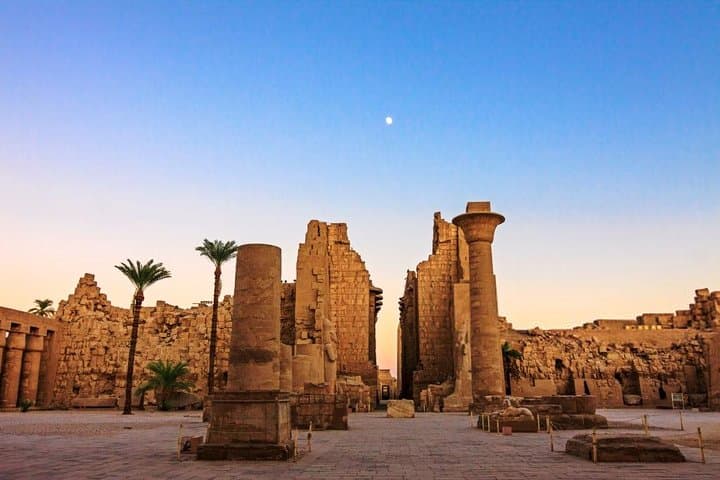
Luxor sits on the site of ancient Thebes, a city-state that shaped pharaonic Egypt. The Valley of the Kings is a slab of limestone scars and painted corridors; Karnak is a deliberate forest of columns raised for Amun-Ra. Local culture still orients around the Nile’s pulse—ferry crossings, feluccas at sunset, tea stalls near temple gates. Geologically, soft sandstone and limestone yield tombs that must be conserved, which is why some chambers rotate closures.
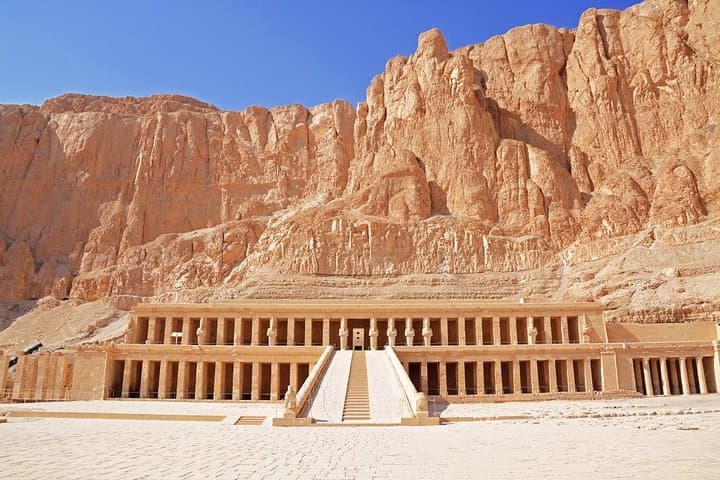
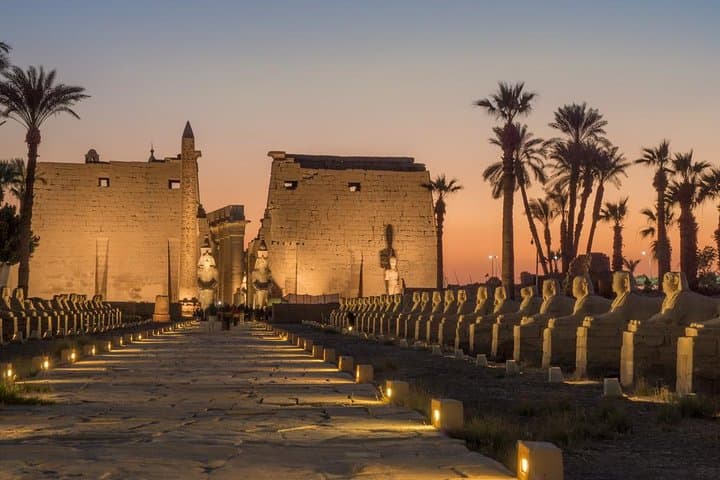
Practical guidance: the day runs about 8–9 hours, beginning with a sunrise balloon lift then continuing by air-conditioned vehicle across the West and East Banks. The itinerary typically includes entry to three tombs, Hatshepsut’s mortuary temple, the Colossi of Memnon, lunch at a 4-star restaurant, and visits to Karnak and Luxor Temple. Hotel pickup and drop-off are included; the tour is wheelchair accessible though some temple surfaces are uneven.
Bring high-SPF sun protection, a refillable water bottle, comfortable walking shoes, and a lightweight layer for early-morning balloon chill. Expect hot, sun-exposed walking, short stair climbs into tombs, and variable tomb access depending on conservation rules and crew decisions.
easy.
8–9 hours.
Suitable for most fitness levels; involves several short walks, stair descents into tombs, and standing at sites.
Yes—the itinerary specifies the hot air balloon ride is included along with transfers and lunch.
The tour typically includes entry to three tombs, but which tombs are open can change due to conservation closures.
Yes—round-trip hotel transfers by air-conditioned car and a restaurant lunch are included in the tour price.
The tour lists wheelchair-accessible transportation and surfaces where possible, but some tombs and temple areas have steps and narrow passages that limit full access.
Luxor occupies the site of ancient Thebes, once the political and religious capital of Egypt where pharaohs built monumental funerary and temple complexes.
Site managers rotate tomb access and limit touching to protect painted surfaces; visitors should avoid flash photography in sensitive chambers and carry out all trash.
Egypt for you Tours operates guided outdoor trips and adventures with an emphasis on safety, stewardship, and memorable experiences.

Before dawn the hot air balloon inflates like a slow breath over the Nile, lifting you above the East Bank’s minarets and the West Bank’s ochre cliffs. From the basket the river cuts the desert into two living faces—one of temples and daily markets, the other of tombs and carved rock—each daring you to read its history.
Before dawn the hot air balloon inflates like a slow breath over the Nile, lifting you above the East Bank’s minarets and the West Bank’s ochre cliffs. From the basket the river cuts the desert into two living faces—one of temples and daily markets, the other of tombs and carved rock—each daring you to read its history.
Luxor sits on the site of ancient Thebes, a city-state that shaped pharaonic Egypt. The Valley of the Kings is a slab of limestone scars and painted corridors; Karnak is a deliberate forest of columns raised for Amun-Ra. Local culture still orients around the Nile’s pulse—ferry crossings, feluccas at sunset, tea stalls near temple gates. Geologically, soft sandstone and limestone yield tombs that must be conserved, which is why some chambers rotate closures.
Practical guidance: the day runs about 8–9 hours, beginning with a sunrise balloon lift then continuing by air-conditioned vehicle across the West and East Banks. The itinerary typically includes entry to three tombs, Hatshepsut’s mortuary temple, the Colossi of Memnon, lunch at a 4-star restaurant, and visits to Karnak and Luxor Temple. Hotel pickup and drop-off are included; the tour is wheelchair accessible though some temple surfaces are uneven.
Bring high-SPF sun protection, a refillable water bottle, comfortable walking shoes, and a lightweight layer for early-morning balloon chill. Expect hot, sun-exposed walking, short stair climbs into tombs, and variable tomb access depending on conservation rules and crew decisions.