THE ADVENTURE COLLECTIVE® · Independent discovery and booking for outdoor travel

Explore two of northern Thailand’s most important temple complexes on a single-day small-group tour from Chiang Mai. Visit 9th-century Hariphunchai in Lamphun and the Lanna masterpiece Wat Phra That Lampang Luang, with a horse-cart ride through Lampang’s old town.
Explore two of northern Thailand’s most important temple complexes on a single-day small-group tour from Chiang Mai. Visit 9th-century Hariphunchai in Lamphun and the Lanna masterpiece Wat Phra That Lampang Luang, with a horse-cart ride through Lampang’s old town.
You step out of the air-conditioned van into a sun-warmed courtyard where gilded roofs throw sharp shadows and the scent of incense threads through the morning air.
Verified experiences and guided adventures in the surrounding area.
Operated by TripGuru Thailand · Chiang Mai, Chiang Mai Province
You step out of the air-conditioned van into a sun-warmed courtyard where gilded roofs throw sharp shadows and the scent of incense threads through the morning air.
This full-day trip moves between two provincial centers of northern Thailand: Lamphun, whose Hariphunchai complex preserves 9th-century Mon architecture, and Lampang, anchored by Wat Phra That Lampang Luang, a prime example of 13th-century Lanna craftsmanship. Jamdevi’s stepped-pyramid chedi hints at the earlier Dvaravati presence; stone and brick here map centuries of shifting kingdoms. The low river valleys between Chiang Mai, Lamphun and Lampang sit on alluvial plains carved by the Wang River—fertile land that supported early urban centers and continues to shape local markets and rice paddies.
Culturally the day balances devotional practice and daily life: monks in saffron, vendors with grilled river fish, and horse-drawn carts still tracing old trade routes through Lampang’s teak-lined streets. Local guides explain inscriptions, funerary ashes attributed to Queen Chama Devi, and the layered iconography inside vihara walls.
Practical guidance: expect long stretches of walking on flagstones and temple courtyards—flat but sometimes uneven—and minimal shade between sites. Dress respectfully (shoulders and knees covered), carry sun protection and modest footwear you can slip off for temple entry. The tour includes pickup, bottled water and entrance fees; aim for morning departures to avoid afternoon heat and allow time for the horse-cart ride through Lampang’s old town.
easy.
9 hours.
Suitable for most fitness levels; requires ability to walk and stand for extended periods on flat but uneven surfaces.
The tour is approximately 9 hours and typically includes hotel pickup/drop-off in Chiang Mai, bottled water, entrance fees, an English-speaking guide and air-conditioned transport.
Yes; the itinerary is low-impact with short walks, but participants should be able to walk on uneven surfaces and remove shoes for temple visits.
Shoulders and knees should be covered; avoid sleeveless tops or short shorts. Bring a lightweight scarf or sarong if needed.
Yes, the itinerary allows time for photography at major sites and brief stops at local markets; respect any temple rules about photography near relics or inside certain buildings.
Lamphun and Lampang sit on the borderlands of the Mon and later Lanna kingdoms; the temples reflect Dvaravati, Mon and Lanna influence spanning the 9th–13th centuries.
Temples are managed with local custodians and monks—minimize waste, avoid taking loose artifacts, and support local vendors to keep tourism benefits in the community.
TripGuru Thailand operates guided outdoor trips and adventures with an emphasis on safety, stewardship, and memorable experiences.
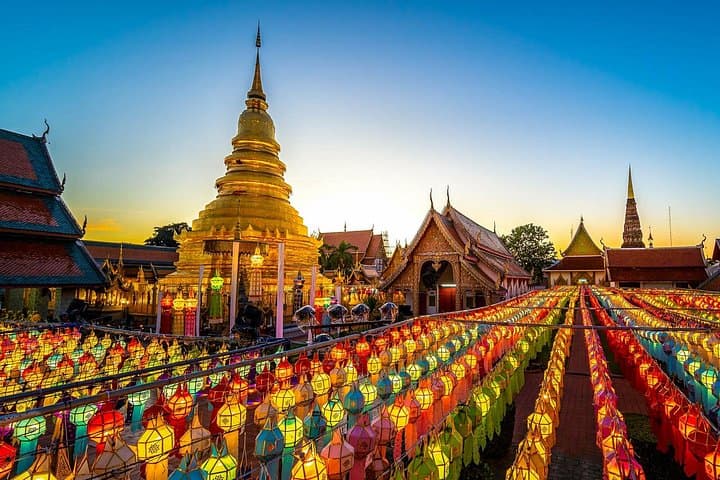
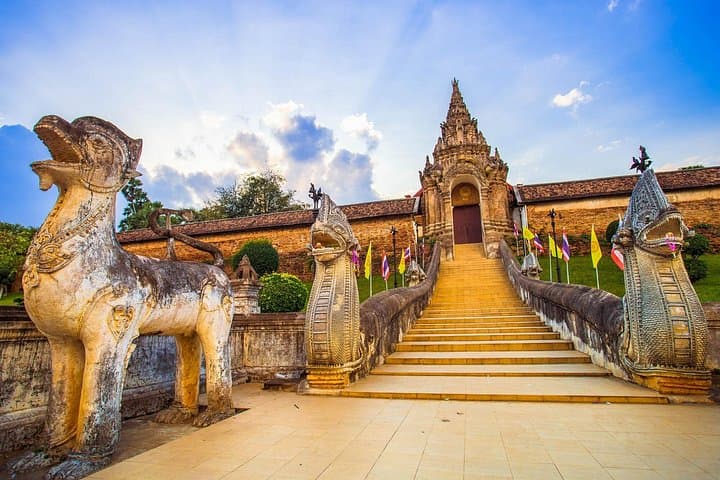
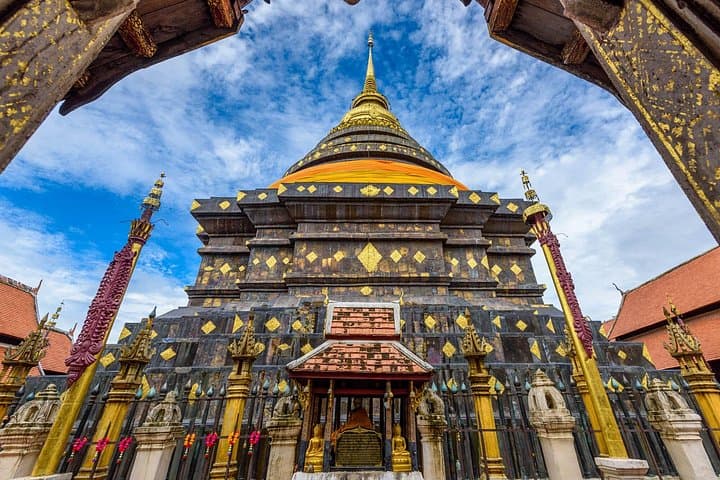
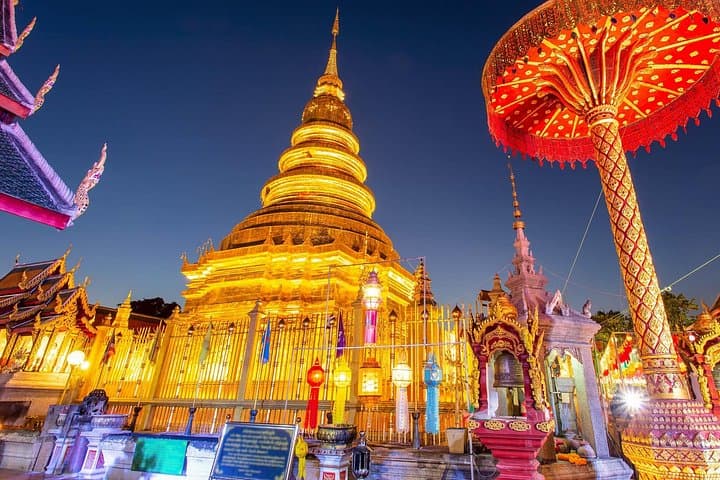
You step out of the air-conditioned van into a sun-warmed courtyard where gilded roofs throw sharp shadows and the scent of incense threads through the morning air.
You step out of the air-conditioned van into a sun-warmed courtyard where gilded roofs throw sharp shadows and the scent of incense threads through the morning air.
This full-day trip moves between two provincial centers of northern Thailand: Lamphun, whose Hariphunchai complex preserves 9th-century Mon architecture, and Lampang, anchored by Wat Phra That Lampang Luang, a prime example of 13th-century Lanna craftsmanship. Jamdevi’s stepped-pyramid chedi hints at the earlier Dvaravati presence; stone and brick here map centuries of shifting kingdoms. The low river valleys between Chiang Mai, Lamphun and Lampang sit on alluvial plains carved by the Wang River—fertile land that supported early urban centers and continues to shape local markets and rice paddies.
Culturally the day balances devotional practice and daily life: monks in saffron, vendors with grilled river fish, and horse-drawn carts still tracing old trade routes through Lampang’s teak-lined streets. Local guides explain inscriptions, funerary ashes attributed to Queen Chama Devi, and the layered iconography inside vihara walls.
Practical guidance: expect long stretches of walking on flagstones and temple courtyards—flat but sometimes uneven—and minimal shade between sites. Dress respectfully (shoulders and knees covered), carry sun protection and modest footwear you can slip off for temple entry. The tour includes pickup, bottled water and entrance fees; aim for morning departures to avoid afternoon heat and allow time for the horse-cart ride through Lampang’s old town.