THE ADVENTURE COLLECTIVE® · Independent discovery and booking for outdoor travel

Spend a full day exploring Lalibela’s extraordinary rock‑hewn churches on a private guided tour. Walk carved trenches, learn the 12th‑century history and get practical tips for navigating uneven stone, highland sun and local customs.
Spend a full day exploring Lalibela’s extraordinary rock‑hewn churches on a private guided tour. Walk carved trenches, learn the 12th‑century history and get practical tips for navigating uneven stone, highland sun and local customs.
You step out of an air‑conditioned vehicle into a town shaped by stone and sky: flat rooftops, narrow alleys and the low hum of prayer. The sun slides across the volcanic rock as you descend into trenches cut by hands centuries ago; the air has the dry, brisk quality of Ethiopian highlands and the bells inside the churches answer like a call.
Verified experiences and guided adventures in the surrounding area.
Operated by Ethio Travel And Tours · Lalibela, Amhara
You step out of an air‑conditioned vehicle into a town shaped by stone and sky: flat rooftops, narrow alleys and the low hum of prayer. The sun slides across the volcanic rock as you descend into trenches cut by hands centuries ago; the air has the dry, brisk quality of Ethiopian highlands and the bells inside the churches answer like a call.
Lalibela’s eleven principal rock‑hewn churches date to the 12th and 13th centuries and were carved from volcanic tuff under the patronage of King Lalibela. Geologically, the buildings are monoliths—each hewn down from the living rock and connected by tunnels and trenches that channel light and footsteps. The site remains an active center of Ethiopian Orthodox worship; you’ll encounter frescoes, carved bas‑reliefs and pilgrims moving with purpose.
Expect roughly 7–10 hours on a private guided itinerary, with several kilometers of walking over uneven stone and many stair climbs at about 2,500 m elevation. Practicalities matter: modest clothing and a head covering inside certain chapels, good‑grip shoes for slick stone, and cash for small donations and local crafts. Hydrate—highland sun can be deceptive—and time your visit for morning light in Bete Giyorgis or late afternoon when shadows emphasize the carved forms.
Your guide will handle tickets and local protocol; you provide curiosity and respect. Photography is usually allowed but follow signs and requests from clergy. This is a cultural, geological and spiritual landscape that rewards slow, observant movement—let the stone guide your pace.
easy.
7–10 hours.
Able to handle several kilometers of walking, stairs and short climbs on uneven terrain; basic stamina required
The full day lasts about 7–10 hours and includes a private guide, entrance to the churches, lunch, bottled water and transportation in an air‑conditioned vehicle.
Children can join but expect many stairs and uneven surfaces; mobility limitations may restrict access to some churches and tunnels—ask about alternatives when booking.
Photography rules vary by chapel—many allow photography but avoid flash, and always follow instructions from clergy and your guide.
Tipping is customary in Ethiopia; a modest tip for the guide and driver is appreciated for good service and local support.
Commissioned by King Lalibela in the 12th–13th centuries, the rock‑hewn churches were created as a devotional and political project and remain central to Ethiopian Orthodox pilgrimage.
The churches are fragile: avoid touching frescoes, follow paths to limit erosion, and support licensed guides and local conservation fees to preserve the site.
Ethio Travel And Tours operates guided outdoor trips and adventures with an emphasis on safety, stewardship, and memorable experiences.


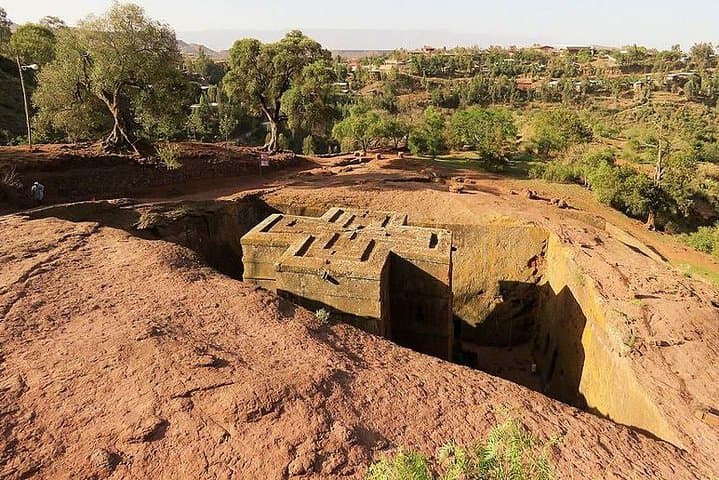

You step out of an air‑conditioned vehicle into a town shaped by stone and sky: flat rooftops, narrow alleys and the low hum of prayer. The sun slides across the volcanic rock as you descend into trenches cut by hands centuries ago; the air has the dry, brisk quality of Ethiopian highlands and the bells inside the churches answer like a call.
You step out of an air‑conditioned vehicle into a town shaped by stone and sky: flat rooftops, narrow alleys and the low hum of prayer. The sun slides across the volcanic rock as you descend into trenches cut by hands centuries ago; the air has the dry, brisk quality of Ethiopian highlands and the bells inside the churches answer like a call.
Lalibela’s eleven principal rock‑hewn churches date to the 12th and 13th centuries and were carved from volcanic tuff under the patronage of King Lalibela. Geologically, the buildings are monoliths—each hewn down from the living rock and connected by tunnels and trenches that channel light and footsteps. The site remains an active center of Ethiopian Orthodox worship; you’ll encounter frescoes, carved bas‑reliefs and pilgrims moving with purpose.
Expect roughly 7–10 hours on a private guided itinerary, with several kilometers of walking over uneven stone and many stair climbs at about 2,500 m elevation. Practicalities matter: modest clothing and a head covering inside certain chapels, good‑grip shoes for slick stone, and cash for small donations and local crafts. Hydrate—highland sun can be deceptive—and time your visit for morning light in Bete Giyorgis or late afternoon when shadows emphasize the carved forms.
Your guide will handle tickets and local protocol; you provide curiosity and respect. Photography is usually allowed but follow signs and requests from clergy. This is a cultural, geological and spiritual landscape that rewards slow, observant movement—let the stone guide your pace.