THE ADVENTURE COLLECTIVE® · Independent discovery and booking for outdoor travel

From the limestone steps of Batu Caves to the skybridge of the Petronas Towers, this full-day shore excursion covers Kuala Lumpur’s cultural and architectural high points with port pickup included. Expect stairs, short urban walks, and guided context at each stop.
From the limestone steps of Batu Caves to the skybridge of the Petronas Towers, this full-day shore excursion covers Kuala Lumpur’s cultural and architectural high points with port pickup included. Expect stairs, short urban walks, and guided context at each stop.
You step off the tender at Port Klang and the humid air of the Klang River pushes you toward the city's edge, where limestone cliffs and street markets contend with glass towers. The day opens with the ascending rhythm of Batu Caves: 272 painted steps, the gold Murugan statue towering like a city guardian, and limestone chambers whose striations record millions of years of uplift.
Verified experiences and guided adventures in the surrounding area.
Operated by RIYAS TRAVEL MALAYSIA · Kuala Lumpur, Kuala Lumpur
You step off the tender at Port Klang and the humid air of the Klang River pushes you toward the city's edge, where limestone cliffs and street markets contend with glass towers. The day opens with the ascending rhythm of Batu Caves: 272 painted steps, the gold Murugan statue towering like a city guardian, and limestone chambers whose striations record millions of years of uplift.
Kuala Lumpur grew where tin and trade met—British colonial architecture and Malay, Chinese and Indian communities layered the streets. The Petronas Twin Towers, once the world’s tallest twin buildings, mirror Malaysia’s late-20th-century ambition; nearby KL Tower crowns Bukit Nanas, a remnant tropical hill with secondary forest. Cultural nodes—from the incense-thick corridors of Sri Mahamariamman to the bazaars of Central Market—reveal daily life as much as heritage.
Expect a mix of short walks, steps, and guided stops: temple courtyards, a pewter workshop, Merdeka Square and the Sultan Abdul Samad building. Monkeys at Batu and pockets of urban greenery give the city a wild edge between ceremonies of commerce and prayer.
Practical edge: wear comfortable walking shoes with traction for the Batu steps, dress respectfully for religious sites (shoulders and knees covered; women may be asked to wear a scarf at mosques), and carry a refillable bottle—the day runs about six to seven hours with several outdoor exposures. Plan photo breaks at the Skybridge and KLCC park; traffic can be heavy, so the included port pickup/drop-off and air-conditioned vehicle keep transit predictable. Bring cash for small purchases and keep valuables close when walking crowded markets.
easy.
6–7 hours.
Suitable for most fitness levels; requires ability to climb stairs and stand for short periods
Yes—many visitors of all ages go, but the main shrine requires climbing 272 steps; you can still enjoy the base area and smaller cave without climbing.
Yes; the tour includes entrance fees to listed attractions such as the Petronas Skybridge and museums as described in the itinerary.
The tour runs about 6–7 hours (390 minutes) and includes port pickup and drop-off in an air-conditioned vehicle with an English-speaking driver.
Carry small cash for market purchases, tips, and optional snacks—many attractions accept cards but small vendors often prefer cash.
Kuala Lumpur grew in the 19th century as a tin-mining outpost; colonial-era buildings around Merdeka Square reflect that mercantile past alongside Malay sultanate sites.
Urban green pockets like Bukit Nanas are protected fragments of lowland rainforest; visitors should avoid feeding wildlife and minimise plastic use to reduce litter in culturally sensitive sites.
RIYAS TRAVEL MALAYSIA operates guided outdoor trips and adventures with an emphasis on safety, stewardship, and memorable experiences.

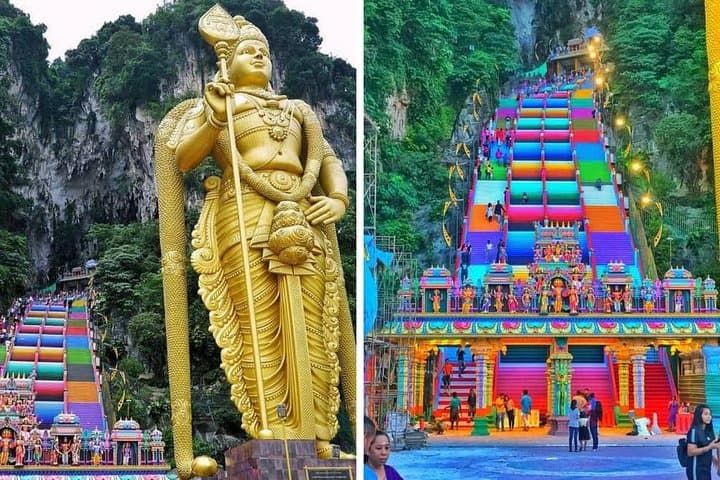


You step off the tender at Port Klang and the humid air of the Klang River pushes you toward the city's edge, where limestone cliffs and street markets contend with glass towers. The day opens with the ascending rhythm of Batu Caves: 272 painted steps, the gold Murugan statue towering like a city guardian, and limestone chambers whose striations record millions of years of uplift.
You step off the tender at Port Klang and the humid air of the Klang River pushes you toward the city's edge, where limestone cliffs and street markets contend with glass towers. The day opens with the ascending rhythm of Batu Caves: 272 painted steps, the gold Murugan statue towering like a city guardian, and limestone chambers whose striations record millions of years of uplift.
Kuala Lumpur grew where tin and trade met—British colonial architecture and Malay, Chinese and Indian communities layered the streets. The Petronas Twin Towers, once the world’s tallest twin buildings, mirror Malaysia’s late-20th-century ambition; nearby KL Tower crowns Bukit Nanas, a remnant tropical hill with secondary forest. Cultural nodes—from the incense-thick corridors of Sri Mahamariamman to the bazaars of Central Market—reveal daily life as much as heritage.
Expect a mix of short walks, steps, and guided stops: temple courtyards, a pewter workshop, Merdeka Square and the Sultan Abdul Samad building. Monkeys at Batu and pockets of urban greenery give the city a wild edge between ceremonies of commerce and prayer.
Practical edge: wear comfortable walking shoes with traction for the Batu steps, dress respectfully for religious sites (shoulders and knees covered; women may be asked to wear a scarf at mosques), and carry a refillable bottle—the day runs about six to seven hours with several outdoor exposures. Plan photo breaks at the Skybridge and KLCC park; traffic can be heavy, so the included port pickup/drop-off and air-conditioned vehicle keep transit predictable. Bring cash for small purchases and keep valuables close when walking crowded markets.