THE ADVENTURE COLLECTIVE® · Independent discovery and booking for outdoor travel

Spend a full day exploring Kruger’s central region from Phalaborwa Gate, traveling mopane thickets to open Letaba plains in search of the Big Five. Expect a long, vehicle-based safari with guided stops, a sit-down lunch, and strong chances for elephant and lion sightings.
Spend a full day exploring Kruger’s central region from Phalaborwa Gate, traveling mopane thickets to open Letaba plains in search of the Big Five. Expect a long, vehicle-based safari with guided stops, a sit-down lunch, and strong chances for elephant and lion sightings.
Dust rises like a promise as the open safari vehicle clears Phalaborwa Gate and the mopane thickets close in. Early light paints trunks gold while elephant bulls push through the brush, and the guide’s voice—calm, practiced—points a scope at a distant shoulder that could be lion or rock. The day moves between ecosystems: dense mopane where elephants and buffalo favor shade, broad riverine plains around Letaba where lion prides and cheetah hunt across grass, and the mopani-willow mosaics nearer Mopani Camp that reveal secretive species like the honey badger.
Verified experiences and guided adventures in the surrounding area.
Operated by Wild World Tours · Phalaborwa, Limpopo
Dust rises like a promise as the open safari vehicle clears Phalaborwa Gate and the mopane thickets close in. Early light paints trunks gold while elephant bulls push through the brush, and the guide’s voice—calm, practiced—points a scope at a distant shoulder that could be lion or rock. The day moves between ecosystems: dense mopane where elephants and buffalo favor shade, broad riverine plains around Letaba where lion prides and cheetah hunt across grass, and the mopani-willow mosaics nearer Mopani Camp that reveal secretive species like the honey badger.
Kruger was consolidated into one national park in the 1920s and sits on ancient granite and gneiss bedrock shaped by long erosion; seasonal rivers carve floodplains that concentrate wildlife. Local communities around Phalaborwa have long coexisted with this landscape—guides often blend western natural history with Tsonga and Sotho place-knowledge when explaining animal behavior.
Practicalities matter: this is a long, vehicle-based day—expect 10–12 hours with stops at Letaba and Mopani and a sit-down lunch. Wear breathable layers, bring 1.5–2 liters of water, a wide-brim hat, sunscreen, and quiet binoculars. Cameras with long lenses perform best from the raised seat of an open safari truck; keep motion moderate when animals are nearby. Respect park rules—stay seated, keep limbs inside the vehicle, and follow your guide’s instructions.
Timing tip: dawn and late afternoon drive windows concentrate sightings. If you want pangolins or honey badgers, patience and silence are as important as optics.
easy.
12 hours.
No advanced fitness required; comfortable sitting and short walks at rest stops are expected
The tour runs a full day—approximately 12 hours—and typically begins at or shortly after gate opening to maximize morning wildlife activity.
Guides aim for the Big Five and the central Kruger has excellent populations, but sightings cannot be guaranteed—wildlife moves and viewing depends on timing and luck.
The tour is vehicle-based and listed as wheelchair accessible; however, short steps on and off open safari vehicles may be required—check with the operator for specific assistance needs.
Stay seated in the vehicle, keep hands and heads inside, avoid loud noises, and never feed or approach wildlife; follow your guide’s directions at all times.
Kruger National Park was formally established in 1926 from earlier game reserves and protects a landscape with centuries of human and wildlife interaction.
Managed by SANParks, Kruger emphasizes anti-poaching operations and low-impact tourism—stay on roads and follow rules to minimize disturbance.
Wild World Tours operates guided outdoor trips and adventures with an emphasis on safety, stewardship, and memorable experiences.
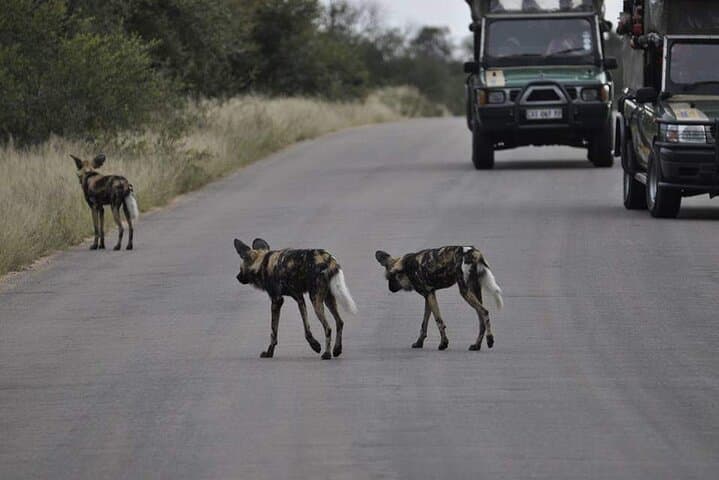


Dust rises like a promise as the open safari vehicle clears Phalaborwa Gate and the mopane thickets close in. Early light paints trunks gold while elephant bulls push through the brush, and the guide’s voice—calm, practiced—points a scope at a distant shoulder that could be lion or rock. The day moves between ecosystems: dense mopane where elephants and buffalo favor shade, broad riverine plains around Letaba where lion prides and cheetah hunt across grass, and the mopani-willow mosaics nearer Mopani Camp that reveal secretive species like the honey badger.
Dust rises like a promise as the open safari vehicle clears Phalaborwa Gate and the mopane thickets close in. Early light paints trunks gold while elephant bulls push through the brush, and the guide’s voice—calm, practiced—points a scope at a distant shoulder that could be lion or rock. The day moves between ecosystems: dense mopane where elephants and buffalo favor shade, broad riverine plains around Letaba where lion prides and cheetah hunt across grass, and the mopani-willow mosaics nearer Mopani Camp that reveal secretive species like the honey badger.
Kruger was consolidated into one national park in the 1920s and sits on ancient granite and gneiss bedrock shaped by long erosion; seasonal rivers carve floodplains that concentrate wildlife. Local communities around Phalaborwa have long coexisted with this landscape—guides often blend western natural history with Tsonga and Sotho place-knowledge when explaining animal behavior.
Practicalities matter: this is a long, vehicle-based day—expect 10–12 hours with stops at Letaba and Mopani and a sit-down lunch. Wear breathable layers, bring 1.5–2 liters of water, a wide-brim hat, sunscreen, and quiet binoculars. Cameras with long lenses perform best from the raised seat of an open safari truck; keep motion moderate when animals are nearby. Respect park rules—stay seated, keep limbs inside the vehicle, and follow your guide’s instructions.
Timing tip: dawn and late afternoon drive windows concentrate sightings. If you want pangolins or honey badgers, patience and silence are as important as optics.