THE ADVENTURE COLLECTIVE® · Independent discovery and booking for outdoor travel

Head off the beaten track from Siem Reap to two of Angkor's most remote ruins—Beng Mealea's forest-swallowed galleries and Koh Ker's towering Prasat Thom pyramid. This full-day join-in tour offers a quieter, hands-on look at 10th–12th century architecture and jungle scenery.
Head off the beaten track from Siem Reap to two of Angkor's most remote ruins—Beng Mealea's forest-swallowed galleries and Koh Ker's towering Prasat Thom pyramid. This full-day join-in tour offers a quieter, hands-on look at 10th–12th century architecture and jungle scenery.
Morning light slices through the canopy as the van leaves Siem Reap and the road narrows into dirt—you're moving away from temple crowds and into a quieter, greener Angkor.
Verified experiences and guided adventures in the surrounding area.
Operated by Trippest Travel · Siem Reap, Siem Reap Province
Morning light slices through the canopy as the van leaves Siem Reap and the road narrows into dirt—you're moving away from temple crowds and into a quieter, greener Angkor.
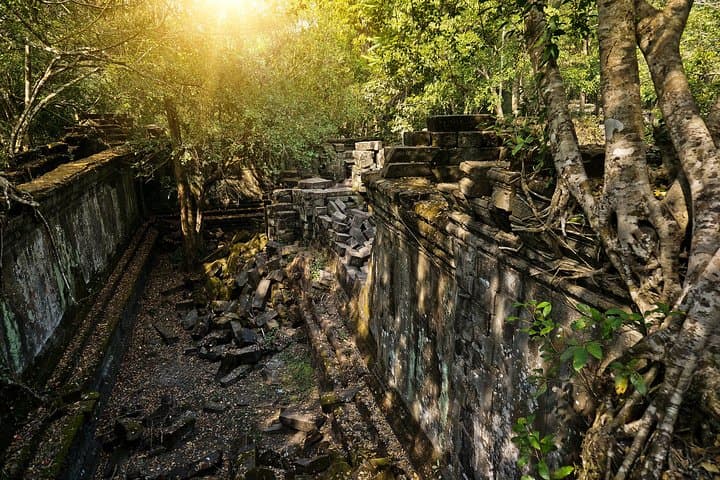
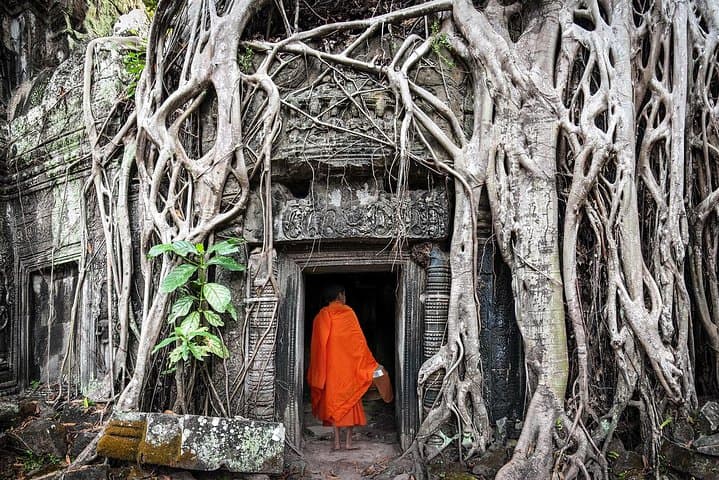
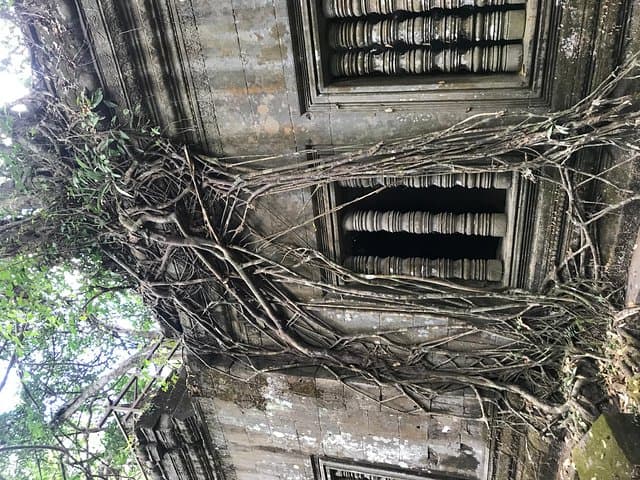
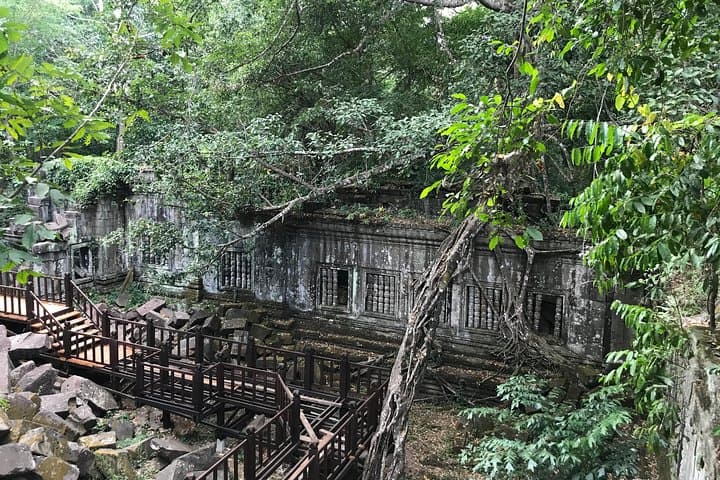
At Beng Mealea you step into a ruined complex that the forest is still claiming. Fallen galleries, root-wrapped stones and hidden archways create a ruin that invites cautious exploration; moss and lichen give the carvings a softened edge while monkeys call from the trees. Koh Ker, farther north, was briefly Angkor's capital in the 10th century; its Prasat Thom pyramid rises in layered sandstone, offering a rare panorama over an ocean of treetops when you climb its terraces.
Both sites reflect shifting religious and political currents—Hindu foundations later overlaid with Buddhist motifs—and they show the region's sandstone geology and ancient engineering. Local communities around the sites are small and agriculturally based; you'll see rice paddies and village life between temples.
Practical guidance: this is a full-day, join-in tour with hotel pickup in Siem Reap, an English-speaking guide, and bottled water provided; entrance fees are not included. Wear sturdy, closed-toe shoes for uneven, often slippery ruins, and bring sun protection and insect repellent. Respect temple rules—shoulders covered and knees covered at some shrines—and move slowly through fragile masonry. Timing matters: start early to avoid heat and maximize light for photos.
Expect dusty roads, moments of quiet forest, and two very different ruined complexes—one a collapsed maze in the jungle, the other a dramatic pyramidal summit—both rewarding for history-minded explorers.
easy.
8 hours.
Suitable for most fitness levels; requires walking on uneven terrain and some short climbs
No. Entrance tickets are not included in the tour price; purchase them on-site or arrange in advance where available.
The tour is a full day (about 8 hours) and includes pickup and drop-off from Siem Reap hotels.
Children are allowed and the tour is rated easy, but the sites have uneven terrain and some steep steps—supervise children and plan for limited mobility.
Visitors can climb terraces at Koh Ker, but follow guide instructions and avoid fragile masonry; restrictions may change for conservation reasons.
Koh Ker served as Angkor's capital in the 10th century under Jayavarman IV, while Beng Mealea is a large 12th-century temple built in sandstone with both Hindu and later Buddhist imagery.
Both complexes are vulnerable to weathering and visitor impact; stick to paths, avoid touching fragile carvings, and carry out any trash to reduce pressure on these remote sites.
Trippest Travel operates guided outdoor trips and adventures with an emphasis on safety, stewardship, and memorable experiences.
Morning light slices through the canopy as the van leaves Siem Reap and the road narrows into dirt—you're moving away from temple crowds and into a quieter, greener Angkor.
Morning light slices through the canopy as the van leaves Siem Reap and the road narrows into dirt—you're moving away from temple crowds and into a quieter, greener Angkor.
At Beng Mealea you step into a ruined complex that the forest is still claiming. Fallen galleries, root-wrapped stones and hidden archways create a ruin that invites cautious exploration; moss and lichen give the carvings a softened edge while monkeys call from the trees. Koh Ker, farther north, was briefly Angkor's capital in the 10th century; its Prasat Thom pyramid rises in layered sandstone, offering a rare panorama over an ocean of treetops when you climb its terraces.
Both sites reflect shifting religious and political currents—Hindu foundations later overlaid with Buddhist motifs—and they show the region's sandstone geology and ancient engineering. Local communities around the sites are small and agriculturally based; you'll see rice paddies and village life between temples.
Practical guidance: this is a full-day, join-in tour with hotel pickup in Siem Reap, an English-speaking guide, and bottled water provided; entrance fees are not included. Wear sturdy, closed-toe shoes for uneven, often slippery ruins, and bring sun protection and insect repellent. Respect temple rules—shoulders covered and knees covered at some shrines—and move slowly through fragile masonry. Timing matters: start early to avoid heat and maximize light for photos.
Expect dusty roads, moments of quiet forest, and two very different ruined complexes—one a collapsed maze in the jungle, the other a dramatic pyramidal summit—both rewarding for history-minded explorers.