THE ADVENTURE COLLECTIVE® · Independent discovery and booking for outdoor travel

Spend a day with a local guide visiting Kathmandu’s top World Heritage Sites—Pashupatinath, Boudhanath, Swayambhunath, Durbar Square and Narayanhiti—with hotel pickup and private transport. Expect stair climbs, sacred rituals, and sweeping valley views.
Spend a day with a local guide visiting Kathmandu’s top World Heritage Sites—Pashupatinath, Boudhanath, Swayambhunath, Durbar Square and Narayanhiti—with hotel pickup and private transport. Expect stair climbs, sacred rituals, and sweeping valley views.
A morning in Kathmandu arrives in a rush: prayer flags snap on the wind, incense threads up from temple courtyards, and stone steps warmed by sun lead toward stupas and palace courtyards. On this full-day guided route, travelers move from the saffron-clad ghats of Pashupatinath to the whitewashed dome of Boudhanath, climb the hill to Swayambhunath for valley views, and walk the carved courtyards of Kathmandu Durbar Square and Narayanhiti Museum.
Verified experiences and guided adventures in the surrounding area.
Operated by AM Travels and Tours · Kathmandu, Bagmati Province
A morning in Kathmandu arrives in a rush: prayer flags snap on the wind, incense threads up from temple courtyards, and stone steps warmed by sun lead toward stupas and palace courtyards. On this full-day guided route, travelers move from the saffron-clad ghats of Pashupatinath to the whitewashed dome of Boudhanath, climb the hill to Swayambhunath for valley views, and walk the carved courtyards of Kathmandu Durbar Square and Narayanhiti Museum.
The valley holds layers of history—Newar artisans shaped the medieval piazzas and palaces, Hindu and Buddhist practices grew side-by-side, and successive earthquakes rewrote facades while leaving ritual life intact. Geology is visible in the compact basin: ringed by hills of ancient terai sediments and fluvial terraces, clear days offer Himalayan silhouettes; monsoon skies can hide them.
Culturally, the tour is a study in living heritage—priests perform rites at open-air ghats, monks file around stupas, and courtyards remain venues for daily commerce. Local insights: expect incense, discreet photography at sacred rites, and lively markets where spices and dried chilies reclaim the senses.
Practically, the route is low-impact but active: a private vehicle shuttles between sites and involves stairs and short uphill walks (Swayambhunath’s hill is the most strenuous). Bring sun protection, comfortable closed shoes for temple courtyards, a respectful dress layer for sacred sites, and bottled water (provided by many operators). Plan for 5–6 hours, check temple hours and festival closures, and allow the guide to explain cultural protocols—respect multiplies the quality of the visit.
easy.
5–6 hours.
Suitable for most fitness levels; requires ability to climb stone stairs and walk several city blocks.
This tour’s description notes admission is not included; expect to pay separate entry fees at some sites such as Narayanhiti Museum.
The tour is rated easy but includes stairs and short uphill walks; those with limited mobility should mention it at booking for pickup/route adjustments.
Yes—views of the burning ghats are part of the visit; photography is sensitive and guided etiquette should be followed.
Yes—the experience is a private tour with an English-speaking guide and private vehicle transfers included.
Kathmandu Valley’s core grew under Newar city-states; centuries of Hindu-Buddhist practice and royal courts produced the palace courtyards and stupas now designated UNESCO World Heritage sites.
Heritage conservation is ongoing after major earthquakes; visitors can help by avoiding plastic waste, following guide instructions, and keeping to established paths to reduce wear.
AM Travels and Tours operates guided outdoor trips and adventures with an emphasis on safety, stewardship, and memorable experiences.
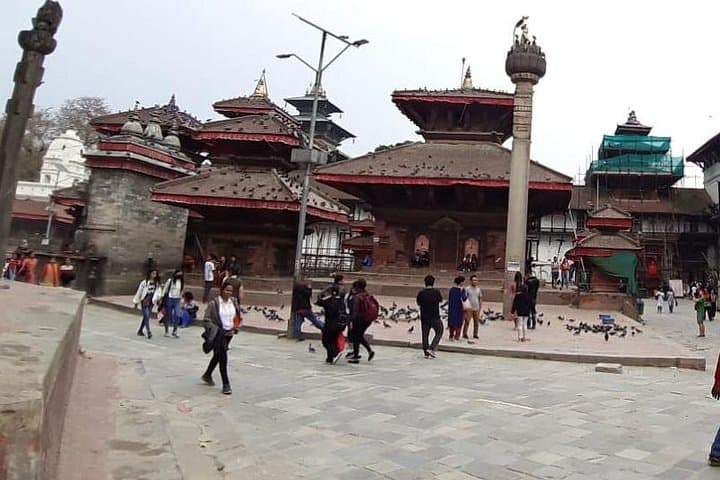
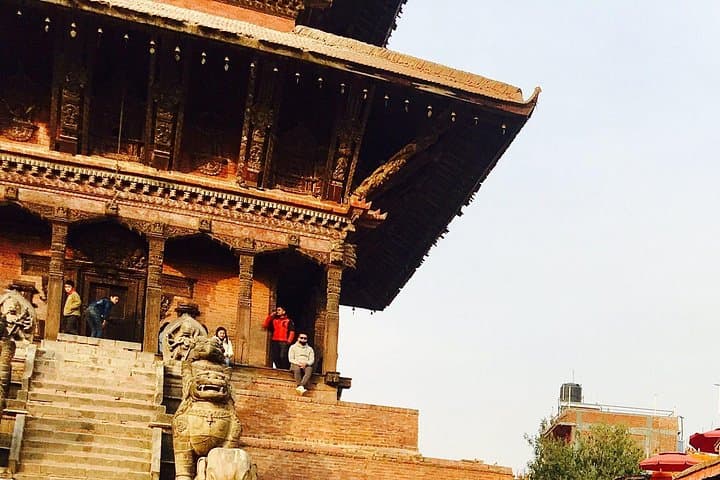
A morning in Kathmandu arrives in a rush: prayer flags snap on the wind, incense threads up from temple courtyards, and stone steps warmed by sun lead toward stupas and palace courtyards. On this full-day guided route, travelers move from the saffron-clad ghats of Pashupatinath to the whitewashed dome of Boudhanath, climb the hill to Swayambhunath for valley views, and walk the carved courtyards of Kathmandu Durbar Square and Narayanhiti Museum.
A morning in Kathmandu arrives in a rush: prayer flags snap on the wind, incense threads up from temple courtyards, and stone steps warmed by sun lead toward stupas and palace courtyards. On this full-day guided route, travelers move from the saffron-clad ghats of Pashupatinath to the whitewashed dome of Boudhanath, climb the hill to Swayambhunath for valley views, and walk the carved courtyards of Kathmandu Durbar Square and Narayanhiti Museum.
The valley holds layers of history—Newar artisans shaped the medieval piazzas and palaces, Hindu and Buddhist practices grew side-by-side, and successive earthquakes rewrote facades while leaving ritual life intact. Geology is visible in the compact basin: ringed by hills of ancient terai sediments and fluvial terraces, clear days offer Himalayan silhouettes; monsoon skies can hide them.
Culturally, the tour is a study in living heritage—priests perform rites at open-air ghats, monks file around stupas, and courtyards remain venues for daily commerce. Local insights: expect incense, discreet photography at sacred rites, and lively markets where spices and dried chilies reclaim the senses.
Practically, the route is low-impact but active: a private vehicle shuttles between sites and involves stairs and short uphill walks (Swayambhunath’s hill is the most strenuous). Bring sun protection, comfortable closed shoes for temple courtyards, a respectful dress layer for sacred sites, and bottled water (provided by many operators). Plan for 5–6 hours, check temple hours and festival closures, and allow the guide to explain cultural protocols—respect multiplies the quality of the visit.