THE ADVENTURE COLLECTIVE® · Independent discovery and booking for outdoor travel

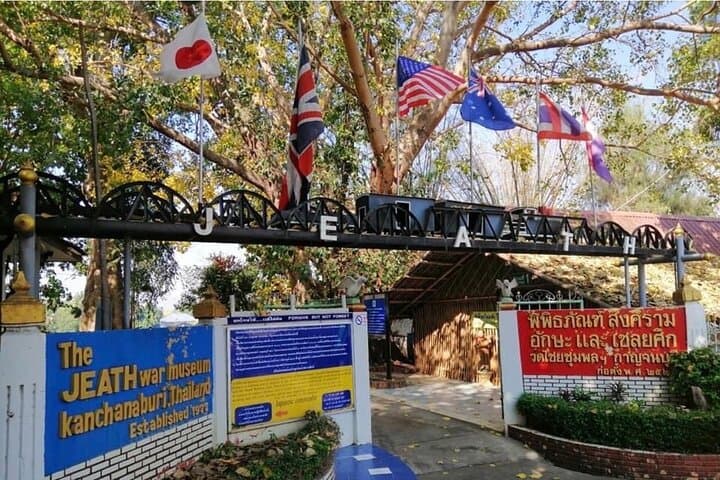
Spend a day from Bangkok tracing the Thailand–Burma ‘Death Railway’: visit the Kanchanaburi War Cemetery, the JEATH Museum, ride the historic rail and cross the famous Bridge over the River Kwai. This full-day tour combines heavy history with striking riverfront scenery.
Spend a day from Bangkok tracing the Thailand–Burma ‘Death Railway’: visit the Kanchanaburi War Cemetery, the JEATH Museum, ride the historic rail and cross the famous Bridge over the River Kwai. This full-day tour combines heavy history with striking riverfront scenery.
Morning light finds the train clinging to the river’s edge as Thailand’s central plains give way to limestone bluffs and rubber plantations. The tour drops travelers into Kanchanaburi’s cool riverside air: teak houses, a low-lying bridge that has seen more history than traffic, and a stretch of rail that seems to dare the current with every sleeper.
Verified experiences and guided adventures in the surrounding area.
Operated by My Trip Maker · Kanchanaburi, Kanchanaburi
Morning light finds the train clinging to the river’s edge as Thailand’s central plains give way to limestone bluffs and rubber plantations. The tour drops travelers into Kanchanaburi’s cool riverside air: teak houses, a low-lying bridge that has seen more history than traffic, and a stretch of rail that seems to dare the current with every sleeper.
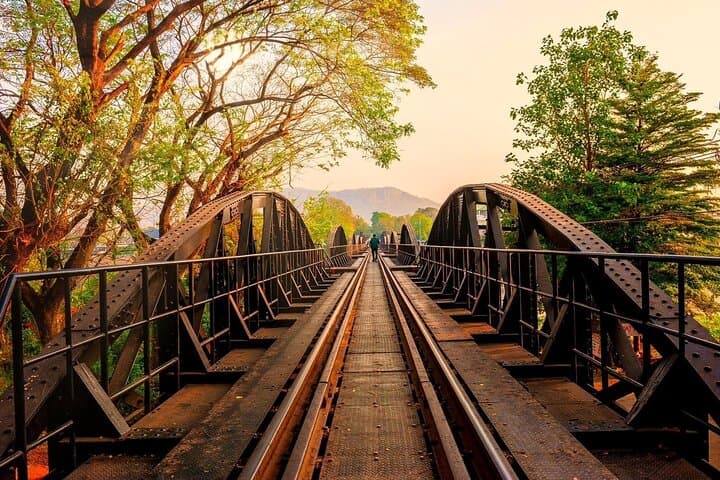
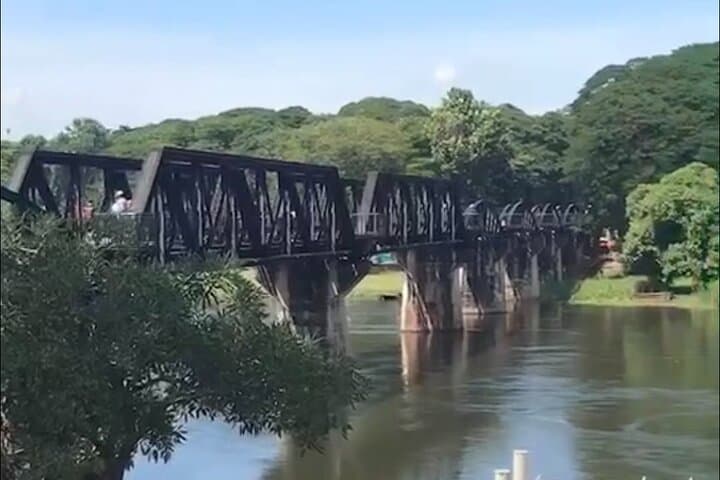
This route traces the Thailand–Burma Railway built in 1942–43, known as the “Death Railway” for the tens of thousands of Allied and Asian laborers who died during its construction. The Kanchanaburi War Cemetery and JEATH Museum tell the human story; the bridge itself is both engineering relic and public focal point. Geologically, the region is defined by Permian limestone ridges cut by the Khwae Noi and Mae Klong rivers, creating caves and overhangs used historically by local communities and prisoners alike.
Culturally, the town mixes Mon and Thai influences; local markets near the bridge sell grilled river fish and sticky rice—simple, grounding food after a heavy morning of remembrance.
Practical guidance: expect a long, full day (roughly 13 hours) with hotel pickup in Bangkok, several short walks on mostly flat surfaces, and a scenic train segment along the old railway. Bring sun protection and a refillable water bottle; wear comfortable shoes for platform-level walking and a light layer for riverside breezes. Respect memorial areas: photography is allowed but maintain quiet and decorum at the cemetery and shrine sites.
Timing tip: arrive early at the bridge to avoid midday crowds and catch the train when light is best for photography.
easy.
13 hours.
Suitable for most fitness levels; requires ability to walk short distances and stand for museum visits
Pickup is arranged from most Bangkok hotels between 06:00–07:00 with return to Bangkok around 17:30–18:00.
Train admission, the JEATH Museum entry and a buffet lunch at Wang Po station are included in the tour price.
The tour involves short, mostly flat walks and some uneven surfaces; it is not recommended for those with serious spinal or mobility limitations.
Stops are scheduled for about 30–90 minutes depending on the site—enough for a focused visit but not extended exploration.
The Thailand–Burma Railway was built by forced labor during World War II; the Kanchanaburi War Cemetery contains thousands of Allied POW graves.
Visitors should avoid disturbing riverbanks and monuments; support local guides and vendors to help sustain the town’s heritage economy.
My Trip Maker operates guided outdoor trips and adventures with an emphasis on safety, stewardship, and memorable experiences.
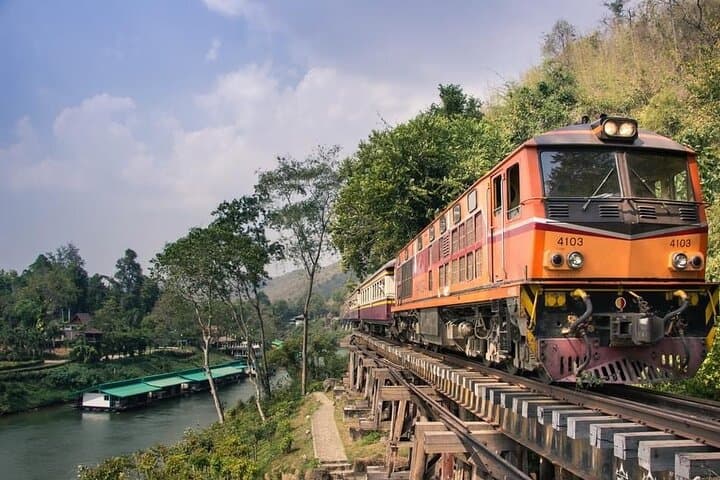
Morning light finds the train clinging to the river’s edge as Thailand’s central plains give way to limestone bluffs and rubber plantations. The tour drops travelers into Kanchanaburi’s cool riverside air: teak houses, a low-lying bridge that has seen more history than traffic, and a stretch of rail that seems to dare the current with every sleeper.
Morning light finds the train clinging to the river’s edge as Thailand’s central plains give way to limestone bluffs and rubber plantations. The tour drops travelers into Kanchanaburi’s cool riverside air: teak houses, a low-lying bridge that has seen more history than traffic, and a stretch of rail that seems to dare the current with every sleeper.
This route traces the Thailand–Burma Railway built in 1942–43, known as the “Death Railway” for the tens of thousands of Allied and Asian laborers who died during its construction. The Kanchanaburi War Cemetery and JEATH Museum tell the human story; the bridge itself is both engineering relic and public focal point. Geologically, the region is defined by Permian limestone ridges cut by the Khwae Noi and Mae Klong rivers, creating caves and overhangs used historically by local communities and prisoners alike.
Culturally, the town mixes Mon and Thai influences; local markets near the bridge sell grilled river fish and sticky rice—simple, grounding food after a heavy morning of remembrance.
Practical guidance: expect a long, full day (roughly 13 hours) with hotel pickup in Bangkok, several short walks on mostly flat surfaces, and a scenic train segment along the old railway. Bring sun protection and a refillable water bottle; wear comfortable shoes for platform-level walking and a light layer for riverside breezes. Respect memorial areas: photography is allowed but maintain quiet and decorum at the cemetery and shrine sites.
Timing tip: arrive early at the bridge to avoid midday crowds and catch the train when light is best for photography.