THE ADVENTURE COLLECTIVE® · Independent discovery and booking for outdoor travel

Spend a full day exploring northern Jordan’s layered past: stroll Jerash’s colonnades, ascend Ajloun Castle’s battlements, and linger at Umm Qais for sweeping views over the Sea of Galilee. This guided route blends archaeology, forested slopes and authentic local food.
Spend a full day exploring northern Jordan’s layered past: stroll Jerash’s colonnades, ascend Ajloun Castle’s battlements, and linger at Umm Qais for sweeping views over the Sea of Galilee. This guided route blends archaeology, forested slopes and authentic local food.
You step into a different Jordan as the air cools and the highway drops north from Amman: olive-studded hills, stone villages, and a skyline punctuated by ancient masonry. The first light catches column capitals at Jerash, where a broad colonnaded avenue invites slow footing and attention to detail. Later the road climbs into pine-scented Ajloun, where a medieval fortress watches the valleys, and the day closes with the basalt theatres and panoramic views at Umm Qais looking toward the Sea of Galilee.
Verified experiences and guided adventures in the surrounding area.
Operated by Jordan Landmarks Tours · Jerash, Jerash Governorate
You step into a different Jordan as the air cools and the highway drops north from Amman: olive-studded hills, stone villages, and a skyline punctuated by ancient masonry. The first light catches column capitals at Jerash, where a broad colonnaded avenue invites slow footing and attention to detail. Later the road climbs into pine-scented Ajloun, where a medieval fortress watches the valleys, and the day closes with the basalt theatres and panoramic views at Umm Qais looking toward the Sea of Galilee.
Jerash is Gerasa of the Decapolis, a largely intact Greco-Roman city with plazas, temples and an oval forum laid out in stone. Ajloun Castle is an Ayyubid-era stronghold built to control trade routes in the 12th century; its walls are carved into wooded slopes and limestone outcrops. Umm Qais (Gadara) sits on black-basalt foundations with dramatic overlooks—its west theatre’s acoustics remain remarkable.
Expect uneven antiquity: cobbled streets, stairways without rails, and short, sharp climbs for viewpoints. Cultural highlights include traditional Jordanian hospitality—markets and roadside cafes where a simple mezze meal feels earned.
Practical guidance: wear sturdy shoes with good grip, bring a reusable water bottle and sun protection, and plan for 8–9 hours including driving time. Mornings are best for Jerash to avoid midday crowds and heat; Ajloun’s shaded castle and Umm Qais’ breezy terraces make good bookends. Respect marked paths at ruins, carry cash for small purchases, and allow time for photography—the light changes fast over the northern plains.
moderate.
8–9 hours.
Light to moderate fitness; able to walk on uneven ground and climb short flights of stone steps.
Admission is not included by default; some booking options may include tickets—confirm at booking and bring cash or card for onsite tickets.
Yes—this tour offers hotel pickup and drop-off within Amman; provide your pickup point when booking.
Yes—physical demands are moderate and the itinerary notes suitability for all fitness levels, but expect some walking on uneven ground.
Smart-casual, modest clothing is appropriate for cultural sites; comfortable walking shoes and a hat are recommended.
Jerash (Gerasa) flourished under Roman rule as part of the Decapolis; Ajloun Castle was built in the 12th century by Ayyubid forces to protect routes linking Syria and Jerusalem.
Sites are vulnerable to erosion and visitor wear—stick to marked paths, avoid touching fragile masonry, and support local businesses to benefit conservation efforts.
Jordan Landmarks Tours operates guided outdoor trips and adventures with an emphasis on safety, stewardship, and memorable experiences.
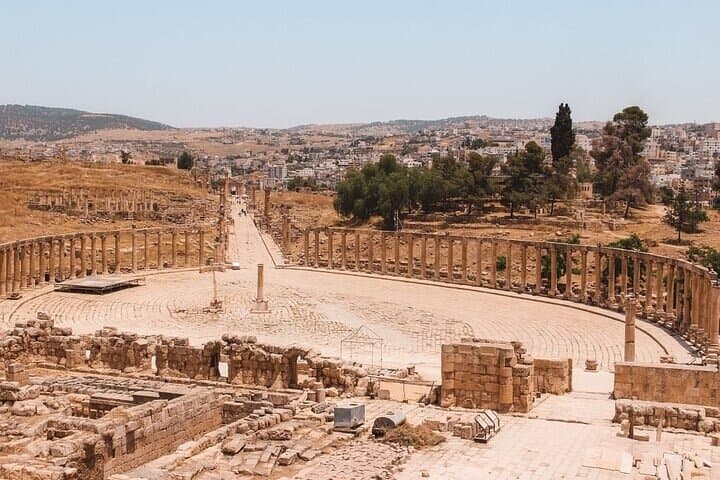
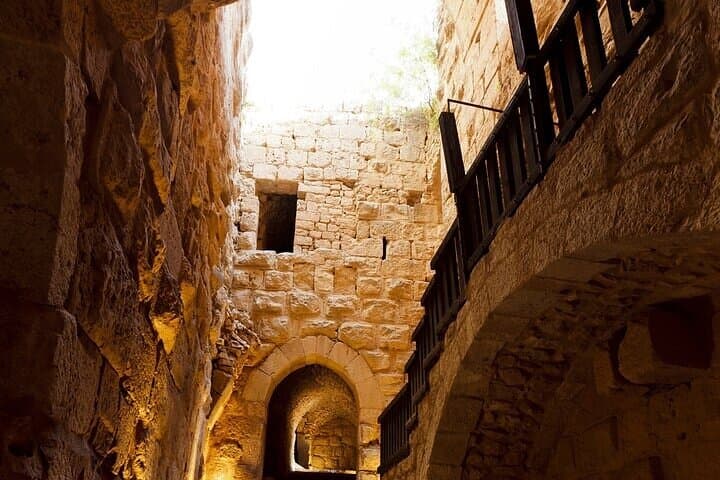
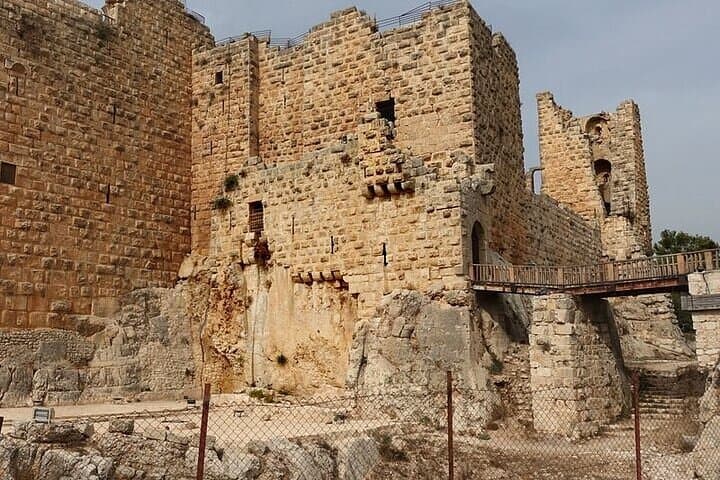
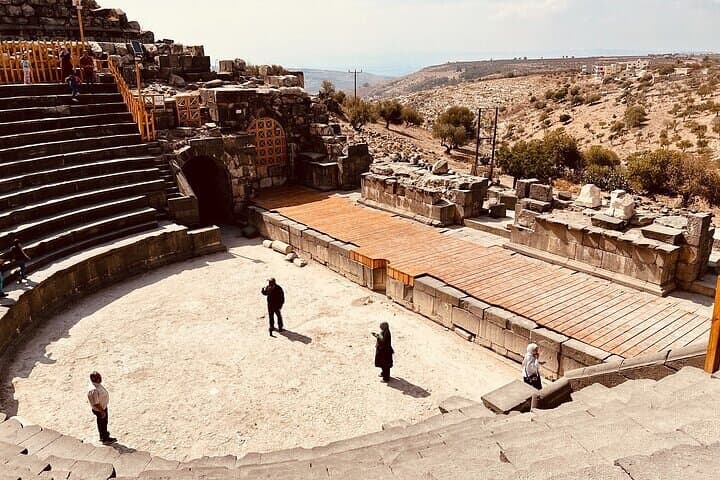
You step into a different Jordan as the air cools and the highway drops north from Amman: olive-studded hills, stone villages, and a skyline punctuated by ancient masonry. The first light catches column capitals at Jerash, where a broad colonnaded avenue invites slow footing and attention to detail. Later the road climbs into pine-scented Ajloun, where a medieval fortress watches the valleys, and the day closes with the basalt theatres and panoramic views at Umm Qais looking toward the Sea of Galilee.
You step into a different Jordan as the air cools and the highway drops north from Amman: olive-studded hills, stone villages, and a skyline punctuated by ancient masonry. The first light catches column capitals at Jerash, where a broad colonnaded avenue invites slow footing and attention to detail. Later the road climbs into pine-scented Ajloun, where a medieval fortress watches the valleys, and the day closes with the basalt theatres and panoramic views at Umm Qais looking toward the Sea of Galilee.
Jerash is Gerasa of the Decapolis, a largely intact Greco-Roman city with plazas, temples and an oval forum laid out in stone. Ajloun Castle is an Ayyubid-era stronghold built to control trade routes in the 12th century; its walls are carved into wooded slopes and limestone outcrops. Umm Qais (Gadara) sits on black-basalt foundations with dramatic overlooks—its west theatre’s acoustics remain remarkable.
Expect uneven antiquity: cobbled streets, stairways without rails, and short, sharp climbs for viewpoints. Cultural highlights include traditional Jordanian hospitality—markets and roadside cafes where a simple mezze meal feels earned.
Practical guidance: wear sturdy shoes with good grip, bring a reusable water bottle and sun protection, and plan for 8–9 hours including driving time. Mornings are best for Jerash to avoid midday crowds and heat; Ajloun’s shaded castle and Umm Qais’ breezy terraces make good bookends. Respect marked paths at ruins, carry cash for small purchases, and allow time for photography—the light changes fast over the northern plains.