THE ADVENTURE COLLECTIVE® · Independent discovery and booking for outdoor travel

Climb into a 4x4 and cross the ruby sands of Wadi Rum with a Bedouin guide—visit Lawrence Spring, Khazali Canyon, sandboard, and finish with tea at sunset. This full-day tour blends geology, local culture, and hands-on desert time.
Climb into a 4x4 and cross the ruby sands of Wadi Rum with a Bedouin guide—visit Lawrence Spring, Khazali Canyon, sandboard, and finish with tea at sunset. This full-day tour blends geology, local culture, and hands-on desert time.
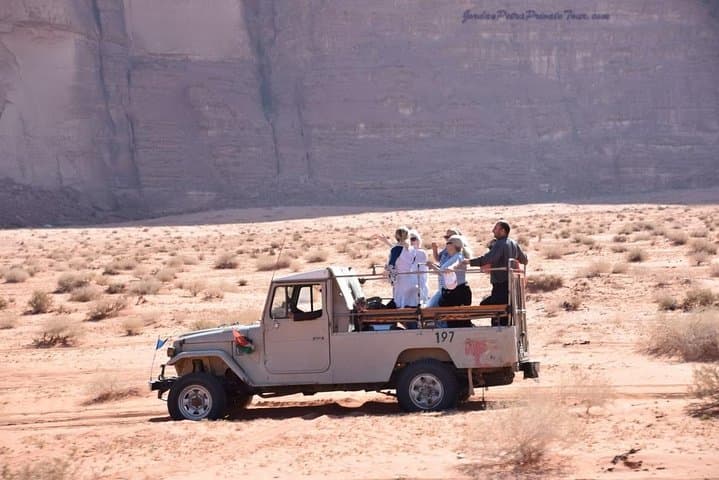
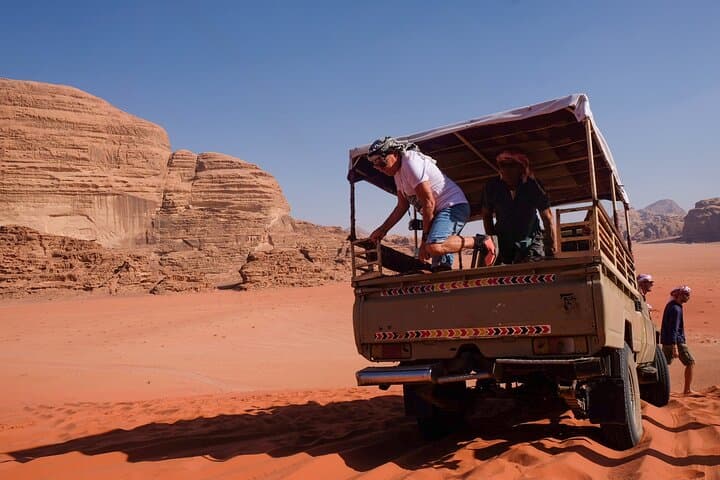
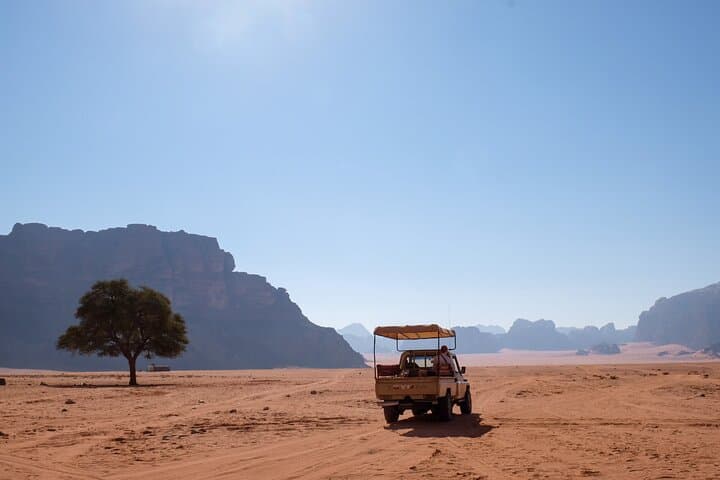
The jeep rises and falls over dunes like a living thing, tires spitting red sand as the sun cuts a hard line across the sandstone faces. Your Bedouin guide—hands quick with a kettle, voice even when pointing out an ancient petroglyph—pulls the 4x4 to a stop at Lawrence Spring. Water has pooled in a rock basin for centuries; camels still lean down to drink where empires once passed.
Verified experiences and guided adventures in the surrounding area.
Operated by Desert Moon Camp · Wadi Rum Village, Ma'an
The jeep rises and falls over dunes like a living thing, tires spitting red sand as the sun cuts a hard line across the sandstone faces. Your Bedouin guide—hands quick with a kettle, voice even when pointing out an ancient petroglyph—pulls the 4x4 to a stop at Lawrence Spring. Water has pooled in a rock basin for centuries; camels still lean down to drink where empires once passed.
Wadi Rum is a desert of oversized geology: towering sandstone and granite cliffs carved by wind and sudden rains, canyons cut deep enough to feel like another planet. The day’s route threads between Khazali Canyon’s engraved walls, where petroglyphs and Nabataean inscriptions mark the slow, human history of this place, and the Red Sand Dune, where you climb to a rim that offers a 360-degree panorama of scarlet ripples and distant plateaus.
This is as much a cultural ride as a scenic one. Guides are usually members of local Bedouin families who grew up among these rocks; the lunch served in the shade of an overhang is simple—flatbread, stewed vegetables, and strong tea brewed over hot coals—and a chance to ask about desert life, seasonal grazing patterns, and the legacy of T.E. Lawrence, whose name lingers here in stories and in the ruins marked as “Lawrence’s House.”
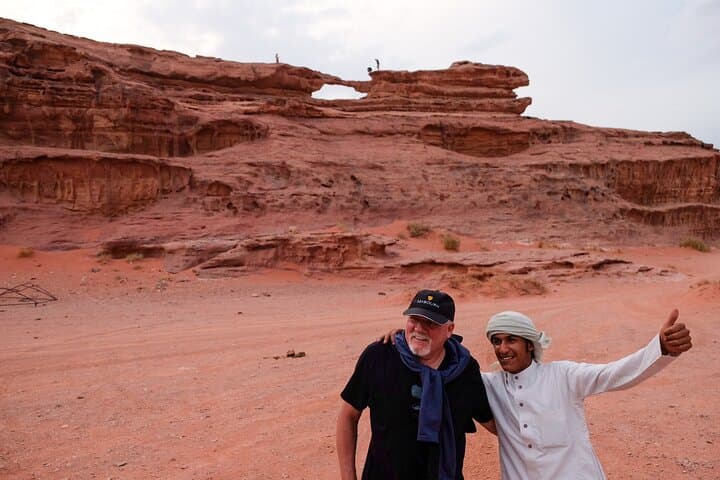
Geology fans will find the landscape instructive: wind-polished arches, mushroom rocks formed by differential erosion, and layered strata that tell of ancient seas. For active travelers the tour combines short walks—scrambling on a small arch, a 30–45 minute walk through Abu Khashaba Canyon—and a chance to sandboard on soft slopes.
Practicalities: the tour meets at Wadi Rum Village parking lot and lasts about six hours. Terrain is soft sand and rocky trails; wear sturdy shoes with good ankle support. Temperatures can swing wildly—plan for sun at midday and chill after sunset. Bring plenty of water (although bottled water is provided), sun protection, and a light layer for evening. If you want the best photos, time your visit for sunrise or late afternoon; the low light carves texture into the cliffs and warms the sand’s tones.
Safety and conservation are straightforward: respect the inscriptions, don’t remove sandstone fragments, and follow your guide into narrow canyons rather than improvising routes. The jeep lets you cover vast distances while still offering moments to wander, scramble, and sit with tea while the desert goes on doing what deserts do—shifting, cooling, revealing a deeper quiet.
This full-day Jeep tour is an efficient, immersive way to experience Wadi Rum’s geology, Bedouin culture, and open-sky drama in a single, well-paced day.
moderate.
6 hours.
Light-to-moderate fitness: able to walk 30–45 minutes over uneven ground and scramble on short rocky sections.
No—this tour meets at Wadi Rum Village parking lot; travelers typically arrange their own transfer from Aqaba or nearby camps.
Facilities are limited—use ones at Wadi Rum Village before departure; otherwise expect basic, field-style stops.
Yes—families are welcome, but parents should supervise children during canyon walks and sandboarding; ask the operator about child seats if needed.
Yes—there’s time allocated for sandboarding on the Red Sand Dunes and near Abu Khashaba Canyon; bring closed-toe shoes.
Most Bedouin guides speak Arabic and conversational English; confirm language needs when booking for non-English speakers.
Expect short walks and scrambles: several 20–60 minute stops, including a 30–45 minute walk through Abu Khashaba Canyon.
Wadi Rum has been a corridor of human activity for millennia; Nabataean inscriptions and traces of T.E. Lawrence’s presence are woven into its sites.
Wadi Rum is a protected area—stay on designated routes, avoid disturbing wildlife, and don’t remove rocks or petroglyph fragments.
Desert Moon Camp operates guided outdoor trips and adventures with an emphasis on safety, stewardship, and memorable experiences.
The jeep rises and falls over dunes like a living thing, tires spitting red sand as the sun cuts a hard line across the sandstone faces. Your Bedouin guide—hands quick with a kettle, voice even when pointing out an ancient petroglyph—pulls the 4x4 to a stop at Lawrence Spring. Water has pooled in a rock basin for centuries; camels still lean down to drink where empires once passed.
The jeep rises and falls over dunes like a living thing, tires spitting red sand as the sun cuts a hard line across the sandstone faces. Your Bedouin guide—hands quick with a kettle, voice even when pointing out an ancient petroglyph—pulls the 4x4 to a stop at Lawrence Spring. Water has pooled in a rock basin for centuries; camels still lean down to drink where empires once passed.
Wadi Rum is a desert of oversized geology: towering sandstone and granite cliffs carved by wind and sudden rains, canyons cut deep enough to feel like another planet. The day’s route threads between Khazali Canyon’s engraved walls, where petroglyphs and Nabataean inscriptions mark the slow, human history of this place, and the Red Sand Dune, where you climb to a rim that offers a 360-degree panorama of scarlet ripples and distant plateaus.
This is as much a cultural ride as a scenic one. Guides are usually members of local Bedouin families who grew up among these rocks; the lunch served in the shade of an overhang is simple—flatbread, stewed vegetables, and strong tea brewed over hot coals—and a chance to ask about desert life, seasonal grazing patterns, and the legacy of T.E. Lawrence, whose name lingers here in stories and in the ruins marked as “Lawrence’s House.”
Geology fans will find the landscape instructive: wind-polished arches, mushroom rocks formed by differential erosion, and layered strata that tell of ancient seas. For active travelers the tour combines short walks—scrambling on a small arch, a 30–45 minute walk through Abu Khashaba Canyon—and a chance to sandboard on soft slopes.
Practicalities: the tour meets at Wadi Rum Village parking lot and lasts about six hours. Terrain is soft sand and rocky trails; wear sturdy shoes with good ankle support. Temperatures can swing wildly—plan for sun at midday and chill after sunset. Bring plenty of water (although bottled water is provided), sun protection, and a light layer for evening. If you want the best photos, time your visit for sunrise or late afternoon; the low light carves texture into the cliffs and warms the sand’s tones.
Safety and conservation are straightforward: respect the inscriptions, don’t remove sandstone fragments, and follow your guide into narrow canyons rather than improvising routes. The jeep lets you cover vast distances while still offering moments to wander, scramble, and sit with tea while the desert goes on doing what deserts do—shifting, cooling, revealing a deeper quiet.
This full-day Jeep tour is an efficient, immersive way to experience Wadi Rum’s geology, Bedouin culture, and open-sky drama in a single, well-paced day.