THE ADVENTURE COLLECTIVE® · Independent discovery and booking for outdoor travel

Spend a focused day exploring Jaipur’s signature sites—Amber Fort, Jantar Mantar, Hawa Mahal and Jal Mahal—with a licensed guide, private transport, and a buffet lunch. This full-day tour balances cultural context with practical logistics for a single-day city primer.
Spend a focused day exploring Jaipur’s signature sites—Amber Fort, Jantar Mantar, Hawa Mahal and Jal Mahal—with a licensed guide, private transport, and a buffet lunch. This full-day tour balances cultural context with practical logistics for a single-day city primer.
The day begins with a city waking to sunlight against the pale sandstone of Jaipur: tuk-tuks threading busy streets, the Aravalli hills watching over the skyline, and a guide waiting with a cool bottle of water and a plan. Visitors move from the broad ramparts of Amber Fort to the intimate jharokhas of Hawa Mahal, each stop unfolding a different chapter of the city's past.
Verified experiences and guided adventures in the surrounding area.
Operated by Taj One Day Tour · Jaipur, Rajasthan
The day begins with a city waking to sunlight against the pale sandstone of Jaipur: tuk-tuks threading busy streets, the Aravalli hills watching over the skyline, and a guide waiting with a cool bottle of water and a plan. Visitors move from the broad ramparts of Amber Fort to the intimate jharokhas of Hawa Mahal, each stop unfolding a different chapter of the city's past.
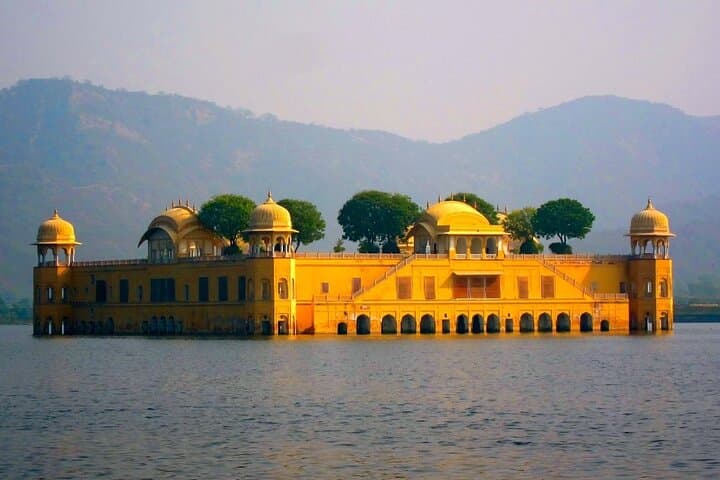
Jaipur’s built landscape grew from 18th-century urban planning by Maharaja Sawai Jai Singh II and the longer arc of Rajput and Mughal influence. Amber Fort sits on volcanic and metamorphic outcrops of the Aravalli range, its courtyards and mirror-work reflecting strategic hilltop placement. Jantar Mantar records an era of scientific curiosity with oversized stone instruments; Jal Mahal demonstrates how water features were engineered into royal leisure.
Cultural notes: expect markets selling block-printed textiles and blue pottery, and vendors who can explain traditional Rajasthani crafts. Local life pulses around chowks and bazaars—move with patience and curiosity.
Practical guidance: the private tour covers transport, licensed guide, and lunch options; plan for roughly seven hours including short walks and stairs at monuments. Carry sun protection, comfortable shoes for uneven stone, and small local currency for incidental purchases. Peak-season mornings are best for photography and cooler air; midafternoon often brings crowds and heat.
A well-paced day in Jaipur reveals architectural detail, layered history, and the practical rhythms of a living city—informative, accessible, and best approached with sensible footwear and an open schedule.
easy.
7 hours.
Suitable for most fitness levels; expect short walks, stairs, and standing during visits
Yes—the private tour includes round-trip pickup and drop-off from locations within Jaipur as specified at booking.
Entry fees are included when selected in the package; confirm your chosen pricing option at booking for admissions covered.
Walking is light to moderate: expect short walks, stair climbs at Amber Fort and Hawa Mahal, and standing while exploring museums and observatories.
The buffet offers vegetarian and non-vegetarian options—notify the operator of dietary requirements when booking.
Jaipur was deliberately planned in the 18th century by Maharaja Sawai Jai Singh II and reflects Rajput urban design and Mughal-influenced architecture; Jantar Mantar is a UNESCO World Heritage astronomical site from that era.
Visitors are encouraged to avoid littering, use refillable bottles where possible, and follow site rules to protect fragile stonework and painted surfaces at historic monuments.
Taj One Day Tour operates guided outdoor trips and adventures with an emphasis on safety, stewardship, and memorable experiences.
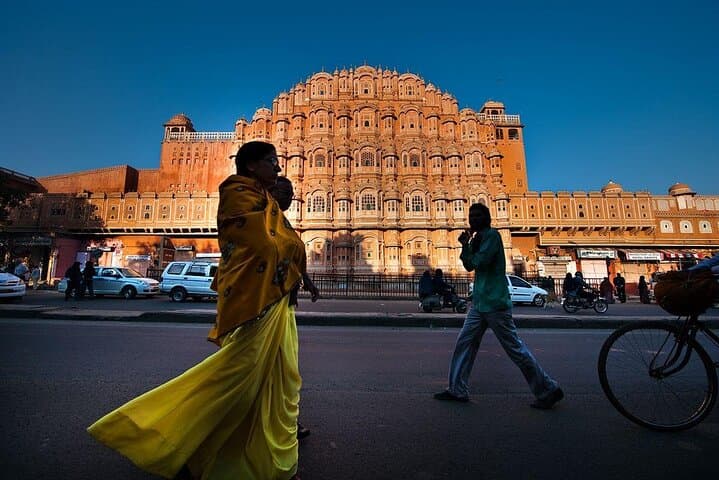
The day begins with a city waking to sunlight against the pale sandstone of Jaipur: tuk-tuks threading busy streets, the Aravalli hills watching over the skyline, and a guide waiting with a cool bottle of water and a plan. Visitors move from the broad ramparts of Amber Fort to the intimate jharokhas of Hawa Mahal, each stop unfolding a different chapter of the city's past.
The day begins with a city waking to sunlight against the pale sandstone of Jaipur: tuk-tuks threading busy streets, the Aravalli hills watching over the skyline, and a guide waiting with a cool bottle of water and a plan. Visitors move from the broad ramparts of Amber Fort to the intimate jharokhas of Hawa Mahal, each stop unfolding a different chapter of the city's past.
Jaipur’s built landscape grew from 18th-century urban planning by Maharaja Sawai Jai Singh II and the longer arc of Rajput and Mughal influence. Amber Fort sits on volcanic and metamorphic outcrops of the Aravalli range, its courtyards and mirror-work reflecting strategic hilltop placement. Jantar Mantar records an era of scientific curiosity with oversized stone instruments; Jal Mahal demonstrates how water features were engineered into royal leisure.
Cultural notes: expect markets selling block-printed textiles and blue pottery, and vendors who can explain traditional Rajasthani crafts. Local life pulses around chowks and bazaars—move with patience and curiosity.
Practical guidance: the private tour covers transport, licensed guide, and lunch options; plan for roughly seven hours including short walks and stairs at monuments. Carry sun protection, comfortable shoes for uneven stone, and small local currency for incidental purchases. Peak-season mornings are best for photography and cooler air; midafternoon often brings crowds and heat.
A well-paced day in Jaipur reveals architectural detail, layered history, and the practical rhythms of a living city—informative, accessible, and best approached with sensible footwear and an open schedule.