THE ADVENTURE COLLECTIVE® · Independent discovery and booking for outdoor travel

Escape Marrakech for a day and follow mountain tracks into the Imlil valley for close-up views of Jebel Toubkal, village life, and easy high-altitude walking. Practical for beginners but respect altitude and sun exposure.
Escape Marrakech for a day and follow mountain tracks into the Imlil valley for close-up views of Jebel Toubkal, village life, and easy high-altitude walking. Practical for beginners but respect altitude and sun exposure.
A chill morning leaves Marrakech behind as the road climbs into the High Atlas and the air thins. Villages appear like clusters of ochre on the hills; scent of wood smoke and thyme rides the breeze. At Imlil the tourist traffic eases and trails fan out toward the Toubkal massif, where jagged peaks push the skyline and the valley pulls hikers into stone and cedar.
Verified experiences and guided adventures in the surrounding area.
Operated by Exploring Atlas Mountains · Imlil, Marrakesh-Safi
A chill morning leaves Marrakech behind as the road climbs into the High Atlas and the air thins. Villages appear like clusters of ochre on the hills; scent of wood smoke and thyme rides the breeze. At Imlil the tourist traffic eases and trails fan out toward the Toubkal massif, where jagged peaks push the skyline and the valley pulls hikers into stone and cedar.
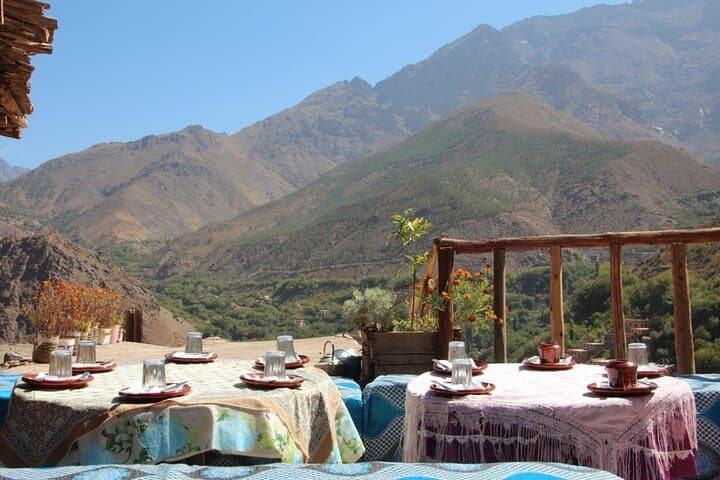
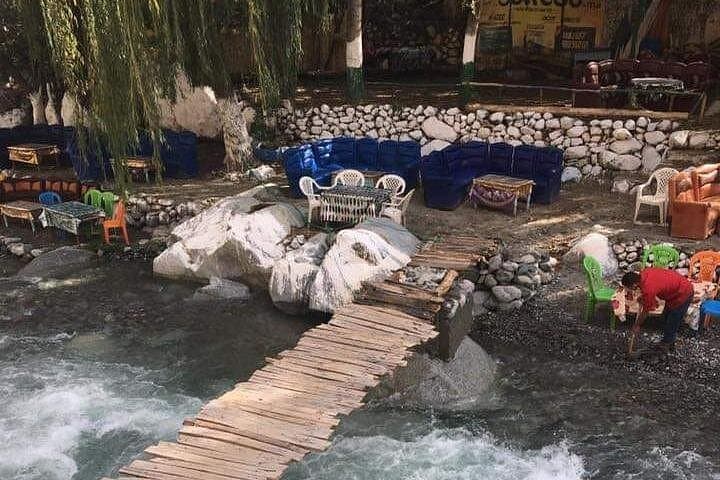
The High Atlas is a young, rugged range carved by uplift and glacial action, its steep valleys hosting Amazigh (Berber) villages whose terraced fields and mule tracks have shaped local movement for centuries. Imlil serves as a gateway — a place where culture, geology and pastoral life intersect. Along the short ascent toward a restaurant with a Toubkal-facing terrace, expect rough stone paths, loose scree at higher pitches, and a tangle of irrigation channels that still sustain orchards below.
This day trip is practical: a 20-minute hike from the village to lunch means minimal technical exposure, but altitude and sun make the outing deceptively demanding. Plan for layered clothing, steady footwear, and sun protection. Hydrate before you climb and move at a steady pace; the massif will test quickness and reward patience with panoramic views of Africa’s second-highest peak.
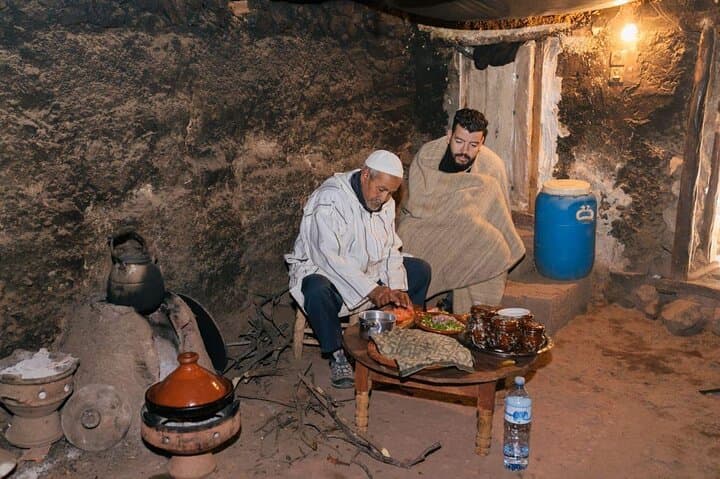
Whether you’re after a crisp mountain panorama, a snapshot of Amazigh village life, or a modest introduction to high-elevation hiking, the Imlil and Toubkal Valley day tour delivers a compact, accessible Atlas experience.
moderate.
5–6 hours.
Basic fitness for walking 20–90 minutes at a time; able to handle short climbs and uneven terrain.
The guided walking sections are short — typically around 20 minutes to the lunch viewpoint, with optional additional short walks depending on the group.
No technical experience is required, but travelers should be comfortable with uneven terrain and moderate uphill walking; altitude can make exertion feel harder.
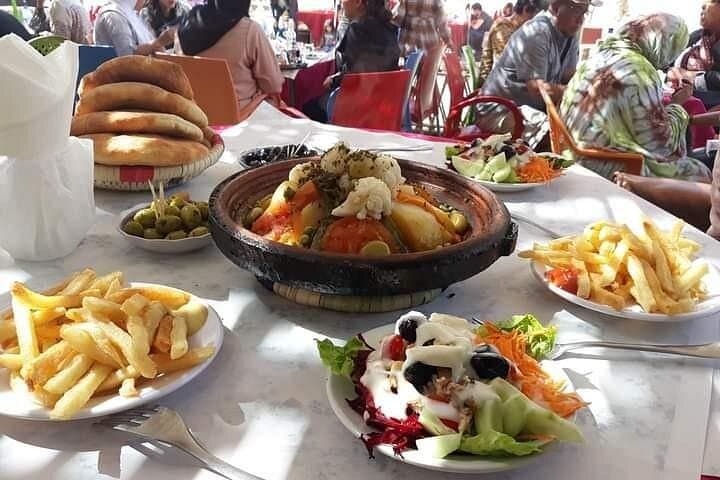
Lunch, bottled water, round-trip transport from Marrakech in an air-conditioned vehicle, and local guiding are typically included.
Yes — most operators offer hotel pickup within Marrakech; confirm pickup point when booking.
The High Atlas has long been home to Amazigh communities whose terraced agriculture and transhumant patterns shaped settlement routes; Imlil developed as a logistical hub for Toubkal access.
Increased day tourism stresses water and trail surfaces; stick to marked paths, avoid single-use plastics, and support local guides to channel benefits to the community.
Exploring Atlas Mountains operates guided outdoor trips and adventures with an emphasis on safety, stewardship, and memorable experiences.
A chill morning leaves Marrakech behind as the road climbs into the High Atlas and the air thins. Villages appear like clusters of ochre on the hills; scent of wood smoke and thyme rides the breeze. At Imlil the tourist traffic eases and trails fan out toward the Toubkal massif, where jagged peaks push the skyline and the valley pulls hikers into stone and cedar.
A chill morning leaves Marrakech behind as the road climbs into the High Atlas and the air thins. Villages appear like clusters of ochre on the hills; scent of wood smoke and thyme rides the breeze. At Imlil the tourist traffic eases and trails fan out toward the Toubkal massif, where jagged peaks push the skyline and the valley pulls hikers into stone and cedar.
The High Atlas is a young, rugged range carved by uplift and glacial action, its steep valleys hosting Amazigh (Berber) villages whose terraced fields and mule tracks have shaped local movement for centuries. Imlil serves as a gateway — a place where culture, geology and pastoral life intersect. Along the short ascent toward a restaurant with a Toubkal-facing terrace, expect rough stone paths, loose scree at higher pitches, and a tangle of irrigation channels that still sustain orchards below.
This day trip is practical: a 20-minute hike from the village to lunch means minimal technical exposure, but altitude and sun make the outing deceptively demanding. Plan for layered clothing, steady footwear, and sun protection. Hydrate before you climb and move at a steady pace; the massif will test quickness and reward patience with panoramic views of Africa’s second-highest peak.
Whether you’re after a crisp mountain panorama, a snapshot of Amazigh village life, or a modest introduction to high-elevation hiking, the Imlil and Toubkal Valley day tour delivers a compact, accessible Atlas experience.