THE ADVENTURE COLLECTIVE® · Independent discovery and booking for outdoor travel

Leave Marrakech for a full-day journey into the High Atlas to hike toward Aremd, visit waterfalls and argan cooperatives, and share lunch in a Berber home. Expect easy-to-moderate walking, vivid mountain views, and cultural insights into Amazigh life.
Leave Marrakech for a full-day journey into the High Atlas to hike toward Aremd, visit waterfalls and argan cooperatives, and share lunch in a Berber home. Expect easy-to-moderate walking, vivid mountain views, and cultural insights into Amazigh life.
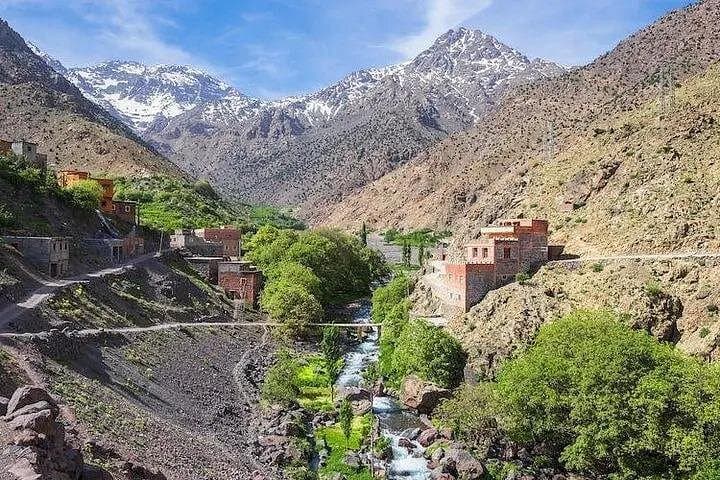
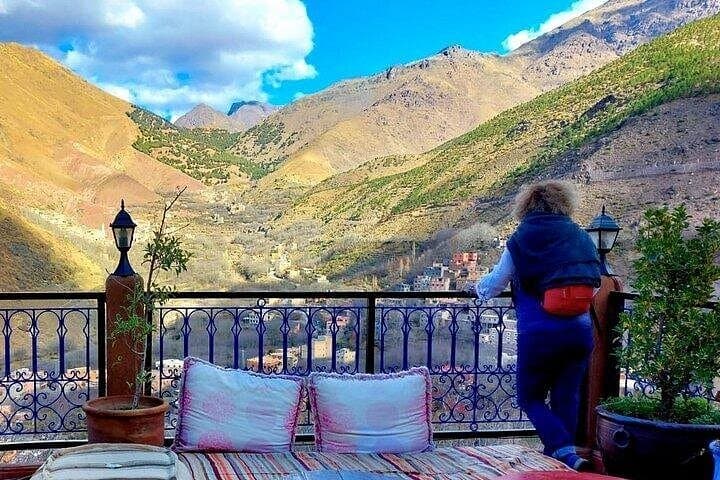
A cool wind from the High Atlas slaps the face of the minivan as you leave Marrakech, and by the time the hand-built terraces of Imlil appear the city noise has been traded for water channels and birdsong. You step out in a narrow village square; stone paths climb toward hamlets and the valley opens in steps of barley and walnut trees. The guide points uphill, where a mule train and a handful of hikers start toward Aremd. The mountain seems to breathe, offering shade and exposure in alternating breaths.
Verified experiences and guided adventures in the surrounding area.
Operated by mountains desert tours · Imlil, Marrakesh-Safi
A cool wind from the High Atlas slaps the face of the minivan as you leave Marrakech, and by the time the hand-built terraces of Imlil appear the city noise has been traded for water channels and birdsong. You step out in a narrow village square; stone paths climb toward hamlets and the valley opens in steps of barley and walnut trees. The guide points uphill, where a mule train and a handful of hikers start toward Aremd. The mountain seems to breathe, offering shade and exposure in alternating breaths.
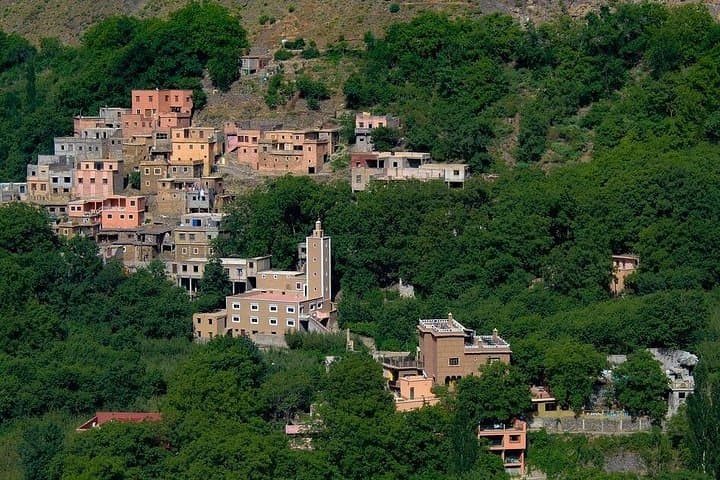
This landscape sits on the southern edge of the High Atlas, the product of Africa colliding with Eurasia — fold mountains punctuated by granite ribs and deep valleys carved by winter runoff. The area is home to Amazigh (Berber) communities whose craft traditions include argan pressing and communal tea culture; Moulay Ibrahim near Imlil is a local spiritual site with a small shrine and age-old pilgrim routes.
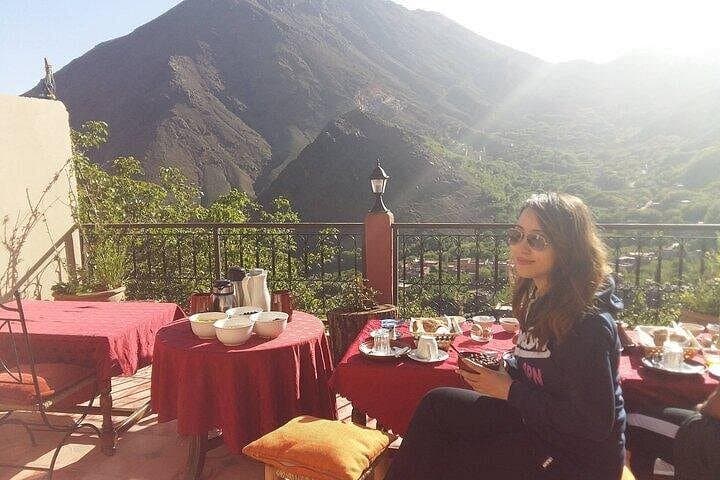
On this eight-hour loop expect easy-to-moderate walking, options to ride mules, and a home-cooked lunch in a Berber house featuring tagine and mint tea. Spring brings alpine flowers across the Kik Plateau at 1,800 m; winter can pile snow on higher tracks. Guides translate history and point out ancient irrigation channels that still shape fields below.
Practical notes: allow eight hours including transfers from Marrakech, wear sturdy footwear for uneven stone paths, carry 1–2 liters of water and sun protection, and be ready to tip hosts for a shared meal. Respect local customs when visiting homes and dress modestly for village encounters.
moderate.
8 hours.
Suitable for travelers who can walk uneven paths for several hours and climb short steep sections; basic fitness recommended
Drive time is approximately 1–1.5 hours each way depending on traffic and exact pickup point.
The tour is adaptable; families and less-mobile travelers can use mules for steeper stretches and choose shorter walks.
Lunch in a Berber home is included; small donations at shrines or purchases at cooperatives are extra.
Tipping is customary; consider a small tip for the guide and a modest gesture to the family hosting lunch.
The High Atlas route has long connected Amazigh villages and hosted Sufi pilgrimage sites such as Moulay Ibrahim; terraced irrigation systems here date back centuries.
Visit cooperatives and family homes with low-impact purchasing; stick to established paths to minimize erosion and avoid leaving waste behind.
mountains desert tours operates guided outdoor trips and adventures with an emphasis on safety, stewardship, and memorable experiences.
A cool wind from the High Atlas slaps the face of the minivan as you leave Marrakech, and by the time the hand-built terraces of Imlil appear the city noise has been traded for water channels and birdsong. You step out in a narrow village square; stone paths climb toward hamlets and the valley opens in steps of barley and walnut trees. The guide points uphill, where a mule train and a handful of hikers start toward Aremd. The mountain seems to breathe, offering shade and exposure in alternating breaths.
A cool wind from the High Atlas slaps the face of the minivan as you leave Marrakech, and by the time the hand-built terraces of Imlil appear the city noise has been traded for water channels and birdsong. You step out in a narrow village square; stone paths climb toward hamlets and the valley opens in steps of barley and walnut trees. The guide points uphill, where a mule train and a handful of hikers start toward Aremd. The mountain seems to breathe, offering shade and exposure in alternating breaths.
This landscape sits on the southern edge of the High Atlas, the product of Africa colliding with Eurasia — fold mountains punctuated by granite ribs and deep valleys carved by winter runoff. The area is home to Amazigh (Berber) communities whose craft traditions include argan pressing and communal tea culture; Moulay Ibrahim near Imlil is a local spiritual site with a small shrine and age-old pilgrim routes.
On this eight-hour loop expect easy-to-moderate walking, options to ride mules, and a home-cooked lunch in a Berber house featuring tagine and mint tea. Spring brings alpine flowers across the Kik Plateau at 1,800 m; winter can pile snow on higher tracks. Guides translate history and point out ancient irrigation channels that still shape fields below.
Practical notes: allow eight hours including transfers from Marrakech, wear sturdy footwear for uneven stone paths, carry 1–2 liters of water and sun protection, and be ready to tip hosts for a shared meal. Respect local customs when visiting homes and dress modestly for village encounters.