THE ADVENTURE COLLECTIVE® · Independent discovery and booking for outdoor travel

Experience both sides of Iguazu Falls in a single private day—walk Argentine boardwalks to the Devil’s Throat, then cross to Brazil for sweeping panoramic views. This guided tour maximizes perspectives while handling logistics and transfers for a stress-free day.
Experience both sides of Iguazu Falls in a single private day—walk Argentine boardwalks to the Devil’s Throat, then cross to Brazil for sweeping panoramic views. This guided tour maximizes perspectives while handling logistics and transfers for a stress-free day.
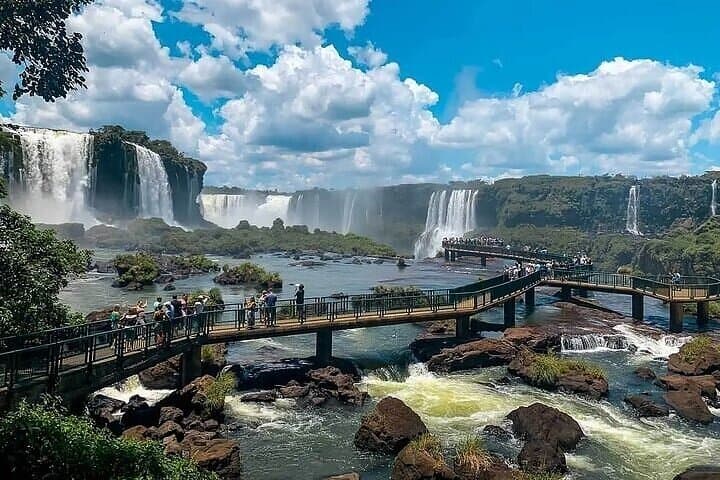
You step out of the van and the air rearranges itself around a wall of spray—sound arrives first, a low, constant roar that seems to push you forward. On the Argentine boardwalks the falls lean in close; on the Brazilian platforms the cataracts unfold like a wild curtain. All day the water dares you to stand closer, to let mist map the edges of your jacket.
Verified experiences and guided adventures in the surrounding area.
Operated by Iguazu Holidays · Foz do Iguaçu, Paraná
You step out of the van and the air rearranges itself around a wall of spray—sound arrives first, a low, constant roar that seems to push you forward. On the Argentine boardwalks the falls lean in close; on the Brazilian platforms the cataracts unfold like a wild curtain. All day the water dares you to stand closer, to let mist map the edges of your jacket.
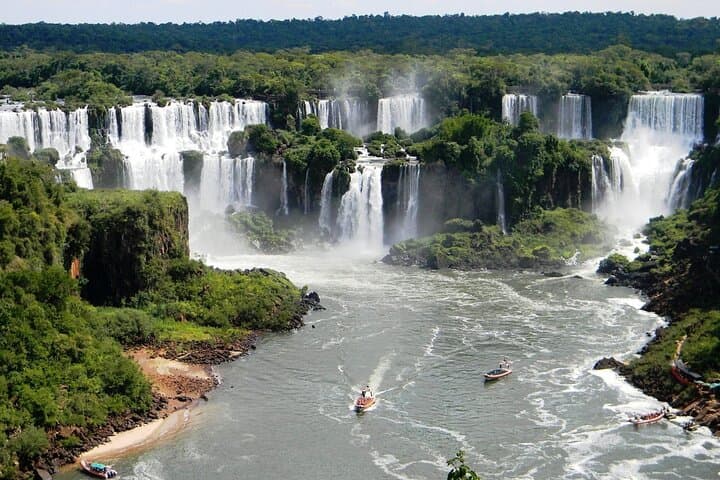
Geology here is blunt: basalt flows cut by the Paraná River created the stepped escarpment that fragments into roughly 275 distinct drops. The name Iguazú comes from the Guarani for "big water," and the Indigenous presence still threads the region’s culture in craft, stories, and local guides. The two national parks—Argentina’s (est. 1934) and Brazil’s (est. 1939)—protect the rainforest that feeds the falls and the wildlife that claims it.
Practically: this private full-day tour covers the Upper and Lower Circuits and Devil’s Throat on the Argentine side (about 7 km of trails total), then transfers to Brazilian viewpoints (roughly 2 km of easy trails) for panoramic perspectives. Expect boardwalks, stairs, and persistent spray—waterproof layers and quick-dry clothing are essential. Passport and any visas are required for the cross-border transfer; park entrance fees are typically paid separately. Bring cash or card, sturdy shoes with grip, and a charged camera—binoculars help for bird and monkey sightings.
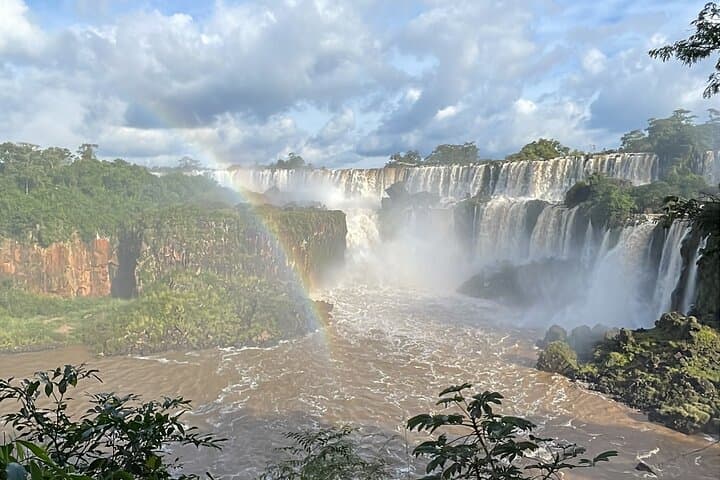
Timing matters: early light softens the spray, later in the day the sun makes rainbows through the mist. Stay on marked trails, respect wildlife (coatis and toucans are bold), and plan for an active 8–10 hour day with plenty of photographic reward.
moderate.
8–10 hours.
Suitable for travelers comfortable with all-day walking and stairs; basic mobility needed for boardwalks and viewpoints.
Yes. You must carry a valid passport and check whether you need a visa for either country; border procedures are handled during the tour but documentation is your responsibility.
Admission is typically not included—buy park tickets on site or online as instructed by your operator; have card or local currency available.
Expect roughly 7 km of walking on the Argentine side and about 2 km on the Brazilian side, mostly on boardwalks and stairs with viewpoints along the way.
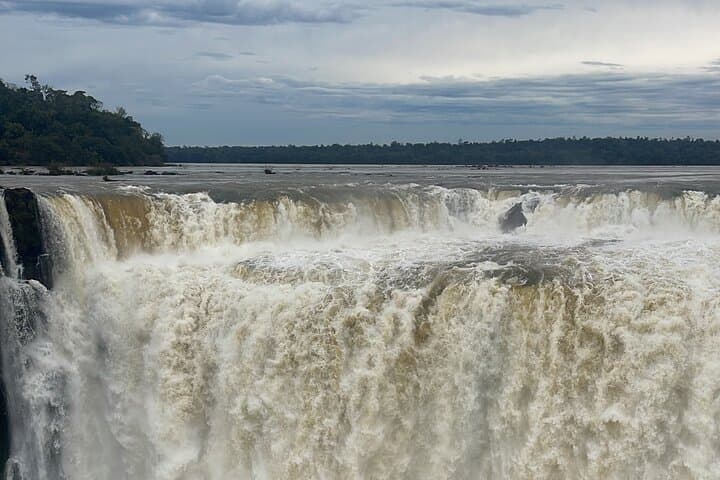
Yes—some platforms, especially near Devil’s Throat, create heavy spray; waterproof layers and protective covers for cameras are recommended.
The name Iguazú comes from the Guarani language; both national parks were created in the 1930s to protect the falls and surrounding Atlantic Forest.
The parks manage high visitor numbers through boardwalks and viewing platforms to limit erosion and habitat disturbance—stay on trails and avoid feeding wildlife to reduce impact.
Iguazu Holidays operates guided outdoor trips and adventures with an emphasis on safety, stewardship, and memorable experiences.
You step out of the van and the air rearranges itself around a wall of spray—sound arrives first, a low, constant roar that seems to push you forward. On the Argentine boardwalks the falls lean in close; on the Brazilian platforms the cataracts unfold like a wild curtain. All day the water dares you to stand closer, to let mist map the edges of your jacket.
You step out of the van and the air rearranges itself around a wall of spray—sound arrives first, a low, constant roar that seems to push you forward. On the Argentine boardwalks the falls lean in close; on the Brazilian platforms the cataracts unfold like a wild curtain. All day the water dares you to stand closer, to let mist map the edges of your jacket.
Geology here is blunt: basalt flows cut by the Paraná River created the stepped escarpment that fragments into roughly 275 distinct drops. The name Iguazú comes from the Guarani for "big water," and the Indigenous presence still threads the region’s culture in craft, stories, and local guides. The two national parks—Argentina’s (est. 1934) and Brazil’s (est. 1939)—protect the rainforest that feeds the falls and the wildlife that claims it.
Practically: this private full-day tour covers the Upper and Lower Circuits and Devil’s Throat on the Argentine side (about 7 km of trails total), then transfers to Brazilian viewpoints (roughly 2 km of easy trails) for panoramic perspectives. Expect boardwalks, stairs, and persistent spray—waterproof layers and quick-dry clothing are essential. Passport and any visas are required for the cross-border transfer; park entrance fees are typically paid separately. Bring cash or card, sturdy shoes with grip, and a charged camera—binoculars help for bird and monkey sightings.
Timing matters: early light softens the spray, later in the day the sun makes rainbows through the mist. Stay on marked trails, respect wildlife (coatis and toucans are bold), and plan for an active 8–10 hour day with plenty of photographic reward.