THE ADVENTURE COLLECTIVE® · Independent discovery and booking for outdoor travel

Step onto a frozen lake between Pemberton and Whistler and fish for rainbow, cutthroat, bull, and brook trout through an eight‑inch hole. This full‑day outing combines heated ice huts, expert guides, and remote mountain scenery—dress for subzero temps and bring a BC fishing licence.
Step onto a frozen lake between Pemberton and Whistler and fish for rainbow, cutthroat, bull, and brook trout through an eight‑inch hole. This full‑day outing combines heated ice huts, expert guides, and remote mountain scenery—dress for subzero temps and bring a BC fishing licence.
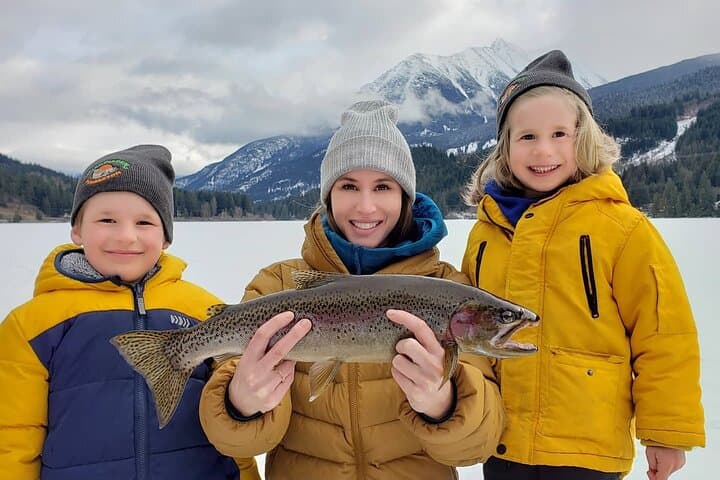
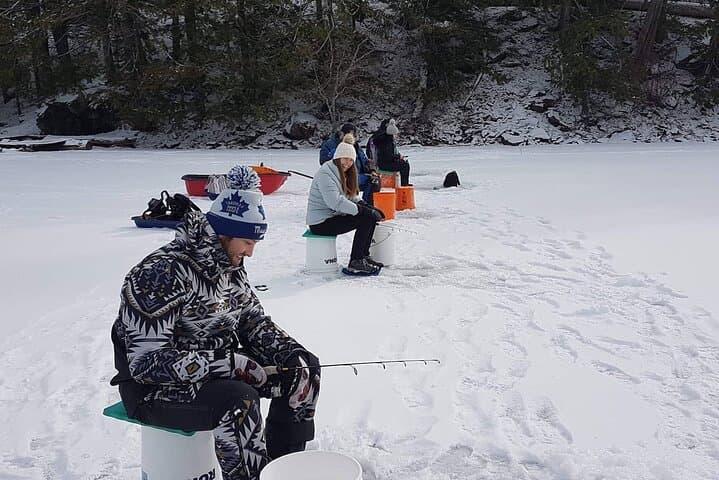
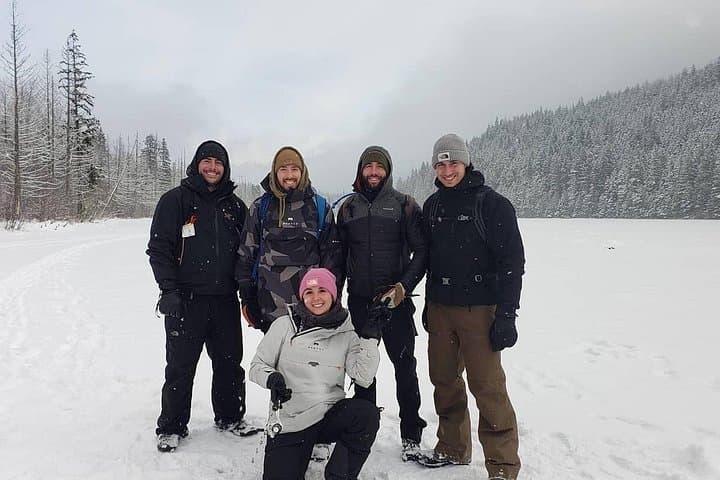
The first cold bite comes like a small, electric tug through an eight‑inch aperture in the lake: a line tightens, breath fogs in the air, and the guide's headlamp throws a halo over crystalline snow. You're not on a quiet pond in some picture book—this is high‑country winter with mountains leaning in close and a wind that tests your layers. Guides arrive with portable heated huts and augers, but plenty of anglers still opt for the stripped‑down rhythm of a bucket and jig. Either way, the lake makes demands: you respect the ice and you move when the trout decide to play.
Verified experiences and guided adventures in the surrounding area.
Operated by Pemberton Fish Finder · Pemberton, British Columbia
The first cold bite comes like a small, electric tug through an eight‑inch aperture in the lake: a line tightens, breath fogs in the air, and the guide's headlamp throws a halo over crystalline snow. You're not on a quiet pond in some picture book—this is high‑country winter with mountains leaning in close and a wind that tests your layers. Guides arrive with portable heated huts and augers, but plenty of anglers still opt for the stripped‑down rhythm of a bucket and jig. Either way, the lake makes demands: you respect the ice and you move when the trout decide to play.
These lakes—between Pemberton and Whistler—are products of the Coast Mountains' slow work: glaciers carved basins and left cold, oxygen‑rich water that trout favor. The region sits on unceded territories of the Lil'wat and N'Quatqua peoples, whose deep knowledge of seasonal runs and waterways informed local fishing practices long before guide services appeared. Today, the rhythm of the day blends old skills and modern safety: checking thickness, packing heaters, and reading the subtle stutter of a jig under the ice.
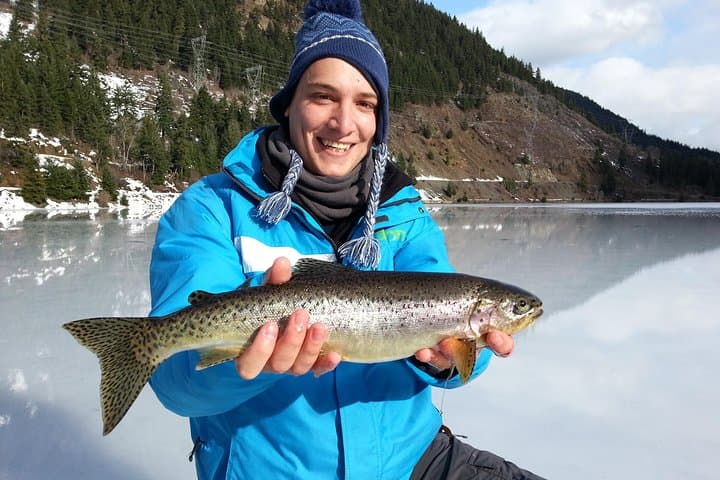
Species you’ll target read like a fishing ledger: rainbow, cutthroat, brook, and the occasionally beefy bull trout—bring your forearm if you’re after anything approaching ten pounds. Fishing through an 8" hole is half technical exercise, half patience game: bait and small spoons work for lethargic winter trout, while vertical jigging teases reactive strikes. Heaters make the day civilized; without them, hot drinks and hand warmers are essential.
Practicalities keep the day enjoyable. The tour is a full eight hours; guests meet at a designated spot and follow the guide in their own vehicles. A valid British Columbia Freshwater Fishing License is required (buy online at www.fishing.gov.bc.ca) and adherence to local catch limits matters—guides will brief you. Operators supply rods, tackle, ice auguring, and huts when conditions allow, but you’ll want insulated, waterproof boots, layered clothing, and a sled to move gear over snow. Expect a mix of standing on ice, stooping to tend lines, and quick bursts of adrenaline when a trout comes through the hole.
For first‑timers: learn simple vertical jigging motions and keep your drag fairly loose—winter trout are strong and the small hole creates friction. For photographers: the best frames are close‑focus on icy breath and gear, then quick wide shots when a fish breaks the surface against a snow‑capped ridge. Respect the lake—pack out all trash, follow guide instructions on hut placement, and be aware that weather can change fast. Ice fishing here is not just about the catch; it's about occupying a winter landscape that will test your preparation and reward patience with cold clarity and the pure, surprising joy of a hooked trout.
easy.
8 hours.
Suitable for most people who can stand and move on icy, slightly uneven surfaces for several hours; minimal hiking.
Yes. Every angler must carry a valid British Columbia Freshwater Fishing Licence; purchase online at www.fishing.gov.bc.ca.
Guides bring heated huts and stoves when conditions allow, but availability depends on lake access and weather—dress for full exposure just in case.
Yes; children may participate but must be accompanied by an adult and dressed appropriately for sub‑freezing conditions.
Expect rainbow, cutthroat, brook, and occasionally bull trout; sizes vary, with strong fish possible through the small hole.
Guides choose lakes and fishing spots based on local ice thickness and safety checks; always follow their instructions on where to step and set up.
Yes. The tour meets at a designated spot and guests follow the guide to the fishing location in their own vehicles.
The lakes and valleys around Pemberton sit on traditional territories of Lil'wat and St'at'imc peoples; fishing has long been part of local subsistence and seasonal patterns.
Respect catch limits and practice leave‑no‑trace: pack out gear and trash, and follow guide guidance to minimize impact on fragile winter ecosystems.
Pemberton Fish Finder operates guided outdoor trips and adventures with an emphasis on safety, stewardship, and memorable experiences.
The first cold bite comes like a small, electric tug through an eight‑inch aperture in the lake: a line tightens, breath fogs in the air, and the guide's headlamp throws a halo over crystalline snow. You're not on a quiet pond in some picture book—this is high‑country winter with mountains leaning in close and a wind that tests your layers. Guides arrive with portable heated huts and augers, but plenty of anglers still opt for the stripped‑down rhythm of a bucket and jig. Either way, the lake makes demands: you respect the ice and you move when the trout decide to play.
The first cold bite comes like a small, electric tug through an eight‑inch aperture in the lake: a line tightens, breath fogs in the air, and the guide's headlamp throws a halo over crystalline snow. You're not on a quiet pond in some picture book—this is high‑country winter with mountains leaning in close and a wind that tests your layers. Guides arrive with portable heated huts and augers, but plenty of anglers still opt for the stripped‑down rhythm of a bucket and jig. Either way, the lake makes demands: you respect the ice and you move when the trout decide to play.
These lakes—between Pemberton and Whistler—are products of the Coast Mountains' slow work: glaciers carved basins and left cold, oxygen‑rich water that trout favor. The region sits on unceded territories of the Lil'wat and N'Quatqua peoples, whose deep knowledge of seasonal runs and waterways informed local fishing practices long before guide services appeared. Today, the rhythm of the day blends old skills and modern safety: checking thickness, packing heaters, and reading the subtle stutter of a jig under the ice.
Species you’ll target read like a fishing ledger: rainbow, cutthroat, brook, and the occasionally beefy bull trout—bring your forearm if you’re after anything approaching ten pounds. Fishing through an 8" hole is half technical exercise, half patience game: bait and small spoons work for lethargic winter trout, while vertical jigging teases reactive strikes. Heaters make the day civilized; without them, hot drinks and hand warmers are essential.
Practicalities keep the day enjoyable. The tour is a full eight hours; guests meet at a designated spot and follow the guide in their own vehicles. A valid British Columbia Freshwater Fishing License is required (buy online at www.fishing.gov.bc.ca) and adherence to local catch limits matters—guides will brief you. Operators supply rods, tackle, ice auguring, and huts when conditions allow, but you’ll want insulated, waterproof boots, layered clothing, and a sled to move gear over snow. Expect a mix of standing on ice, stooping to tend lines, and quick bursts of adrenaline when a trout comes through the hole.
For first‑timers: learn simple vertical jigging motions and keep your drag fairly loose—winter trout are strong and the small hole creates friction. For photographers: the best frames are close‑focus on icy breath and gear, then quick wide shots when a fish breaks the surface against a snow‑capped ridge. Respect the lake—pack out all trash, follow guide instructions on hut placement, and be aware that weather can change fast. Ice fishing here is not just about the catch; it's about occupying a winter landscape that will test your preparation and reward patience with cold clarity and the pure, surprising joy of a hooked trout.