THE ADVENTURE COLLECTIVE® · Independent discovery and booking for outdoor travel

Ride from Cusco into high-Andean farmland to explore Moray’s concentric terraces and Maras’ salt pans. This full-day horseback trip blends Inca agricultural history with steady mountain riding and scenic stops.
Ride from Cusco into high-Andean farmland to explore Moray’s concentric terraces and Maras’ salt pans. This full-day horseback trip blends Inca agricultural history with steady mountain riding and scenic stops.
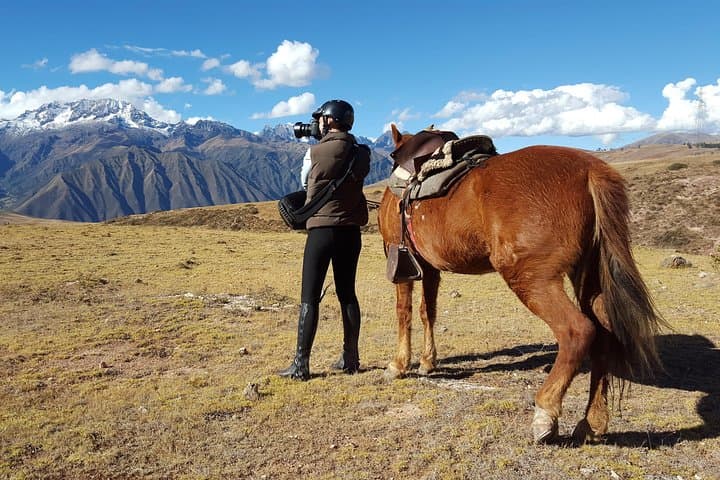
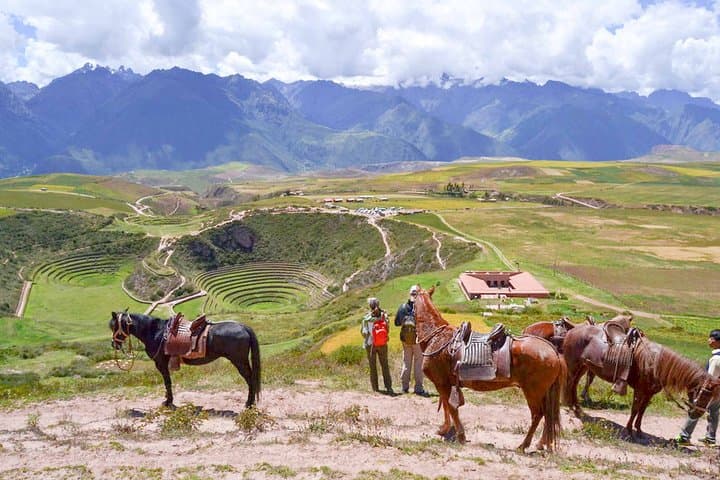
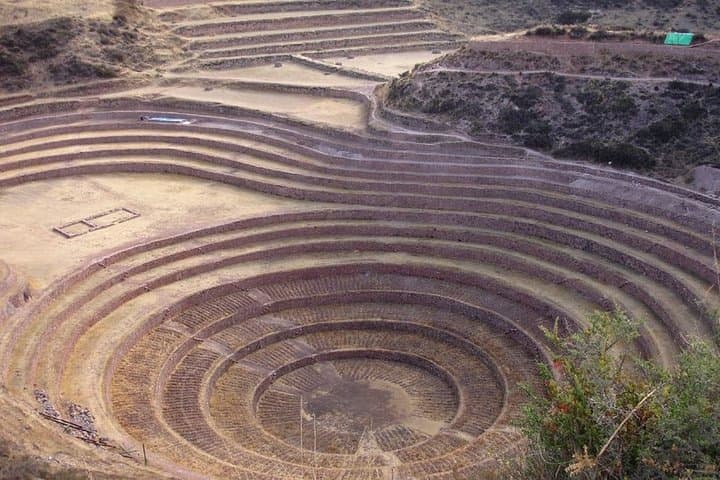
The morning air is sharp at 3,400 meters as riders mount near Cusco, horses stamping on compacted earth while the Andes open ahead. The route pushes through working farmland and high grass, climbs gentle ridgelines, and reaches concentric agricultural terraces at Moray — circular echoes of Inca agricultural ingenuity where temperature varies by as much as 15°C between levels.
Verified experiences and guided adventures in the surrounding area.
Operated by Horseback Riding Cusco · Cusco, Cusco Region
The morning air is sharp at 3,400 meters as riders mount near Cusco, horses stamping on compacted earth while the Andes open ahead. The route pushes through working farmland and high grass, climbs gentle ridgelines, and reaches concentric agricultural terraces at Moray — circular echoes of Inca agricultural ingenuity where temperature varies by as much as 15°C between levels.
This ride threads living history: Sacsayhuamán’s massive stonework sits close to the city, while Moray and Maras speak to Inca experimentation and colonial-era village life. Geology here is folded and eroded volcanic rock and glacial outwash; terraces follow natural basins carved into the hills. In Maras, a 400+ year church anchors town life; nearby Salineras de Maras, a network of prehistoric salt pans, glints like a stepped coastline on sunlit slopes.
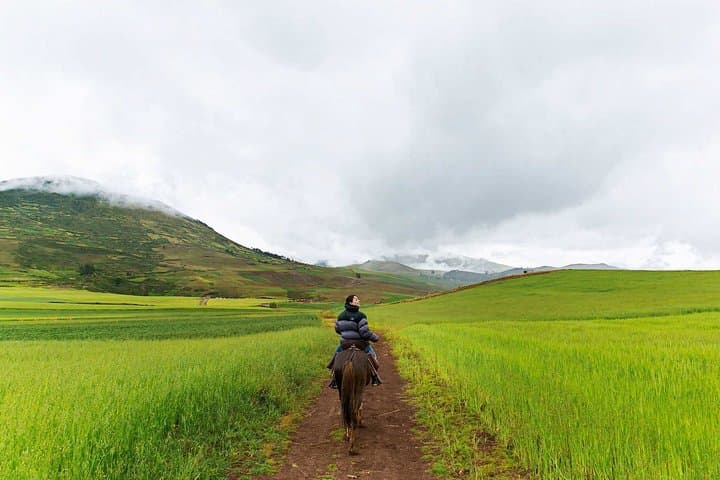
Expect mostly singletrack and mule trails, intermittent packed dirt roads, and short rocky sections — not technical, but higher-altitude riding requires steady balance. Guides interpret agricultural practices, ceremonial sites, and local crop adaptations as you move between viewpoints. Wildlife is subtle: upland birds call, and the wind pushes clouds across the ridgelines.
Practically: acclimatize in Cusco for 24–48 hours, wear layered clothing, bring sun protection and a reusable water bottle, and be ready to dismount briefly on uneven ground. The excursion runs about seven hours with box lunch, helmets provided, and private transport between sites. For travelers curious about Andean agriculture and comfortable on horseback, this is a day that pairs cultural context with steady, scenic riding.
moderate.
7–8 hours.
Suitable for people who can sit in a saddle for several hours and handle short rocky sections; not recommended for severe back problems.
No advanced experience is required—guides provide well-trained horses and helmets; basic riding ability and balance are helpful.
Cusco sits around 3,400 m and sites like Moray are similar; travelers should acclimatize and avoid heavy exertion on arrival day.
Bookings require passenger weight and advise against the tour for guests with spinal, heart conditions, or pregnancy; check the operator’s limits when reserving.
Private transport between sites, an English-speaking guide, helmets, snacks, and a box lunch are typically included.
The terraces at Moray are believed to be Inca agricultural laboratories used to test crops at microclimates; Maras salt pans date to pre-Inca times and were later managed under colonial structures.
Stick to established trails and avoid disturbing ancient terraces; local communities rely on sustainable salt harvesting and visitor fees that support maintenance.
Horseback Riding Cusco operates guided outdoor trips and adventures with an emphasis on safety, stewardship, and memorable experiences.
The morning air is sharp at 3,400 meters as riders mount near Cusco, horses stamping on compacted earth while the Andes open ahead. The route pushes through working farmland and high grass, climbs gentle ridgelines, and reaches concentric agricultural terraces at Moray — circular echoes of Inca agricultural ingenuity where temperature varies by as much as 15°C between levels.
The morning air is sharp at 3,400 meters as riders mount near Cusco, horses stamping on compacted earth while the Andes open ahead. The route pushes through working farmland and high grass, climbs gentle ridgelines, and reaches concentric agricultural terraces at Moray — circular echoes of Inca agricultural ingenuity where temperature varies by as much as 15°C between levels.
This ride threads living history: Sacsayhuamán’s massive stonework sits close to the city, while Moray and Maras speak to Inca experimentation and colonial-era village life. Geology here is folded and eroded volcanic rock and glacial outwash; terraces follow natural basins carved into the hills. In Maras, a 400+ year church anchors town life; nearby Salineras de Maras, a network of prehistoric salt pans, glints like a stepped coastline on sunlit slopes.
Expect mostly singletrack and mule trails, intermittent packed dirt roads, and short rocky sections — not technical, but higher-altitude riding requires steady balance. Guides interpret agricultural practices, ceremonial sites, and local crop adaptations as you move between viewpoints. Wildlife is subtle: upland birds call, and the wind pushes clouds across the ridgelines.
Practically: acclimatize in Cusco for 24–48 hours, wear layered clothing, bring sun protection and a reusable water bottle, and be ready to dismount briefly on uneven ground. The excursion runs about seven hours with box lunch, helmets provided, and private transport between sites. For travelers curious about Andean agriculture and comfortable on horseback, this is a day that pairs cultural context with steady, scenic riding.