THE ADVENTURE COLLECTIVE® · Independent discovery and booking for outdoor travel

Ride from Pokhara up to Sarangkot on a full-day guided horseback trip that threads village lanes, terraces, and ridge trails. Expect panoramic Himalayan views, cultural encounters with farmers, and steady climbs across mixed dirt and stone terrain.
Ride from Pokhara up to Sarangkot on a full-day guided horseback trip that threads village lanes, terraces, and ridge trails. Expect panoramic Himalayan views, cultural encounters with farmers, and steady climbs across mixed dirt and stone terrain.
A crisp morning in Pokhara begins with the soft clop of hooves and a guide calling up the trail — you mount and the countryside opens. Rice terraces step downward toward Phewa Lake while the Annapurna and Dhaulagiri ranges watch from a blue rim; the wind seems to push you uphill as the valley unfolds.
Verified experiences and guided adventures in the surrounding area.
Operated by AM Travels and Tours · Pokhara, Gandaki Province
A crisp morning in Pokhara begins with the soft clop of hooves and a guide calling up the trail — you mount and the countryside opens. Rice terraces step downward toward Phewa Lake while the Annapurna and Dhaulagiri ranges watch from a blue rim; the wind seems to push you uphill as the valley unfolds.
The route follows village tracks and old mule trails historically used to move crops and livestock between terraces and markets. Geologically, Sarangkot is a ridge of moraine and older uplifted deposits that provides a rare, uninterrupted western view of the high Himalaya. Culturally, horses remain working animals for local farmers and the ride offers genuine exchanges with villagers who tend fields of millet and maize.
Expect roughly 12–20 km of mixed terrain over a full day, with around 600–900 m of elevation gain depending on your starting point in Pokhara. Trails are dirt and stone; some forested stretches shade you, others expose you to the sun and sweeping vistas. The climb is steady rather than technical — the challenge is endurance more than skill.
Practical guidance: bring layered clothing for sharp temperature swings, a brimmed hat, sun protection, and enough water (2–3 L). Use closed-toe shoes and follow your pony handler’s instructions for mounting, dismounting, and pace. Photography stops are frequent and brief; plan for short breaks rather than long rests so horses remain comfortable. Time your ride for early morning or late afternoon if you want the best light on the peaks.
This is an immersive day that balances slow travel, cultural contact, and sustained mountain views — accessible to riders with basic experience and a readiness for a full day in the saddle.
moderate.
6 hours.
Suitable for people with basic fitness and some endurance — expect several hours in the saddle and a steady uphill grade.
No advanced skills are required; guides provide basic instruction and a pony handler accompanies each rider, but comfort in the saddle for several hours helps.
Expect a steady uphill totaling roughly 600–900 m elevation gain depending on route; paths are mostly gradual but sustained.
Yes — the tour typically includes hotel pickup and drop-off within Pokhara city limits as part of the package.
Policies vary by operator; younger riders may require an accompanying adult and specialized ponies — check age limits when booking.
Sarangkot has long served local communities as a grazing and lookout ridge; in recent decades it became a paragliding and viewpoint destination while remaining tied to agrarian life below.
Stick to established trails to minimize erosion and avoid feeding or crowding livestock and wildlife; local handlers prioritize horse welfare and low-impact routes.
AM Travels and Tours operates guided outdoor trips and adventures with an emphasis on safety, stewardship, and memorable experiences.
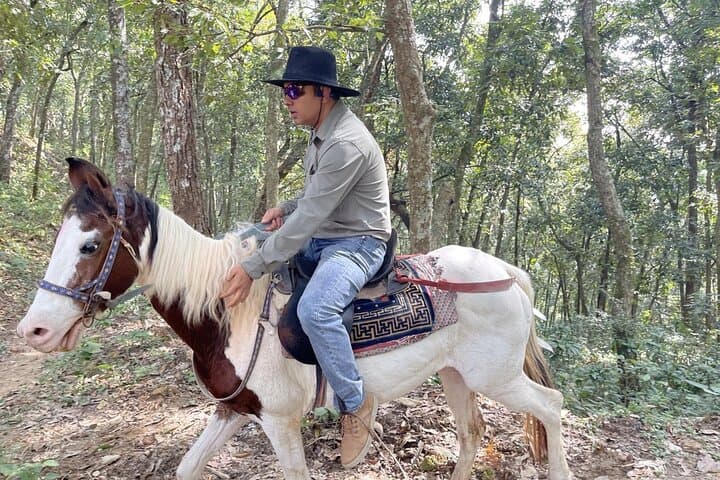
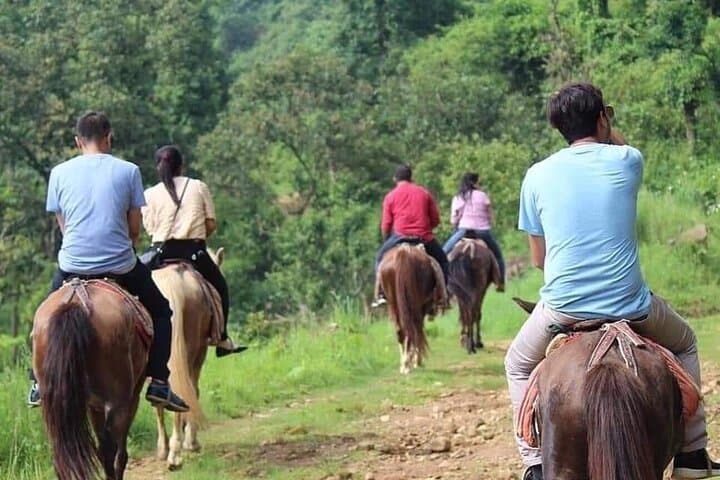
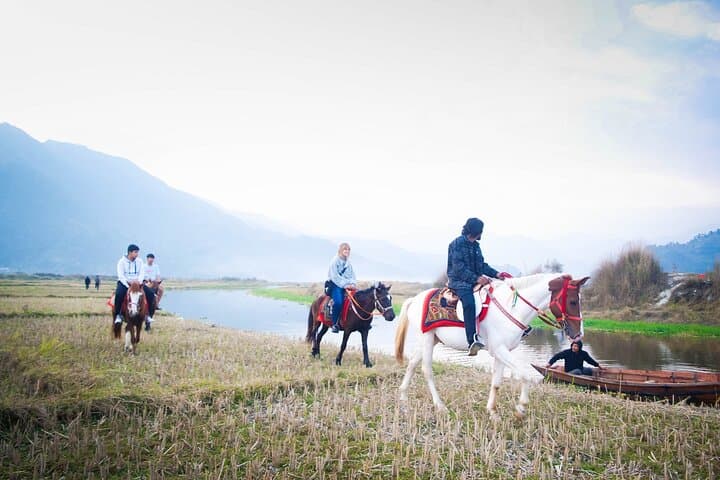
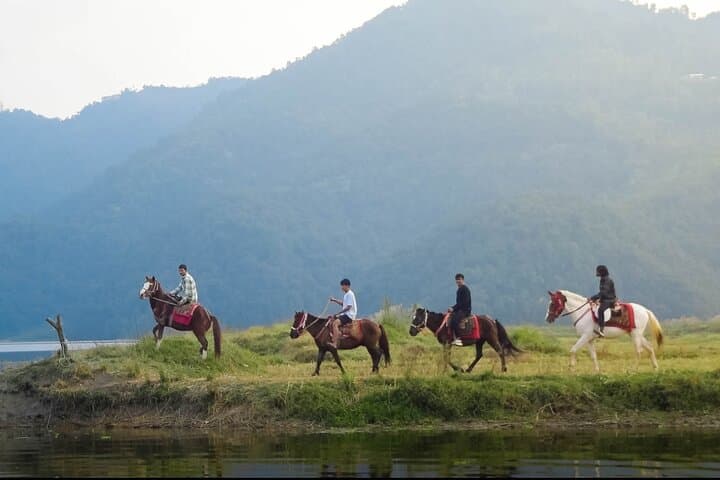
A crisp morning in Pokhara begins with the soft clop of hooves and a guide calling up the trail — you mount and the countryside opens. Rice terraces step downward toward Phewa Lake while the Annapurna and Dhaulagiri ranges watch from a blue rim; the wind seems to push you uphill as the valley unfolds.
A crisp morning in Pokhara begins with the soft clop of hooves and a guide calling up the trail — you mount and the countryside opens. Rice terraces step downward toward Phewa Lake while the Annapurna and Dhaulagiri ranges watch from a blue rim; the wind seems to push you uphill as the valley unfolds.
The route follows village tracks and old mule trails historically used to move crops and livestock between terraces and markets. Geologically, Sarangkot is a ridge of moraine and older uplifted deposits that provides a rare, uninterrupted western view of the high Himalaya. Culturally, horses remain working animals for local farmers and the ride offers genuine exchanges with villagers who tend fields of millet and maize.
Expect roughly 12–20 km of mixed terrain over a full day, with around 600–900 m of elevation gain depending on your starting point in Pokhara. Trails are dirt and stone; some forested stretches shade you, others expose you to the sun and sweeping vistas. The climb is steady rather than technical — the challenge is endurance more than skill.
Practical guidance: bring layered clothing for sharp temperature swings, a brimmed hat, sun protection, and enough water (2–3 L). Use closed-toe shoes and follow your pony handler’s instructions for mounting, dismounting, and pace. Photography stops are frequent and brief; plan for short breaks rather than long rests so horses remain comfortable. Time your ride for early morning or late afternoon if you want the best light on the peaks.
This is an immersive day that balances slow travel, cultural contact, and sustained mountain views — accessible to riders with basic experience and a readiness for a full day in the saddle.