THE ADVENTURE COLLECTIVE® · Independent discovery and booking for outdoor travel

See Herzegovina’s key sights in one intensive day from Sarajevo: Konjic’s Ottoman bridge, the Battle of the Neretva memorial, Mostar’s UNESCO Old Bridge, Blagaj’s karst spring and historic Počitelj. This guided, small-group tour blends geology, history and accessible walking tours.
See Herzegovina’s key sights in one intensive day from Sarajevo: Konjic’s Ottoman bridge, the Battle of the Neretva memorial, Mostar’s UNESCO Old Bridge, Blagaj’s karst spring and historic Počitelj. This guided, small-group tour blends geology, history and accessible walking tours.
You step onto the coach as Sarajevo thins behind you; by mid-morning the mountains give way to a carved landscape of limestone, karst springs and the green ribbon of the Neretva. The day unfolds like a compact field guide to Herzegovina: a stone bridge reassembled after war, a Dervish tekke pouring cold spring water into a canyon, and towns that hold Ottoman arches and Austro-Hungarian facades in the same glance.
Verified experiences and guided adventures in the surrounding area.
Operated by Bosnian Voyager · Sarajevo, Federation of Bosnia and Herzegovina
You step onto the coach as Sarajevo thins behind you; by mid-morning the mountains give way to a carved landscape of limestone, karst springs and the green ribbon of the Neretva. The day unfolds like a compact field guide to Herzegovina: a stone bridge reassembled after war, a Dervish tekke pouring cold spring water into a canyon, and towns that hold Ottoman arches and Austro-Hungarian facades in the same glance.
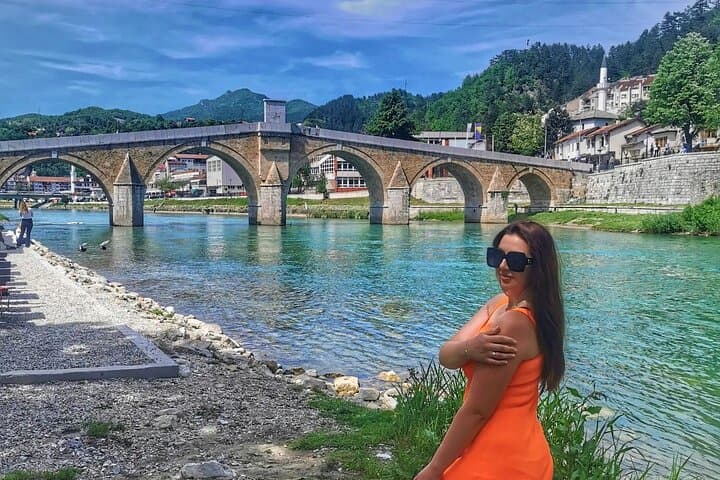
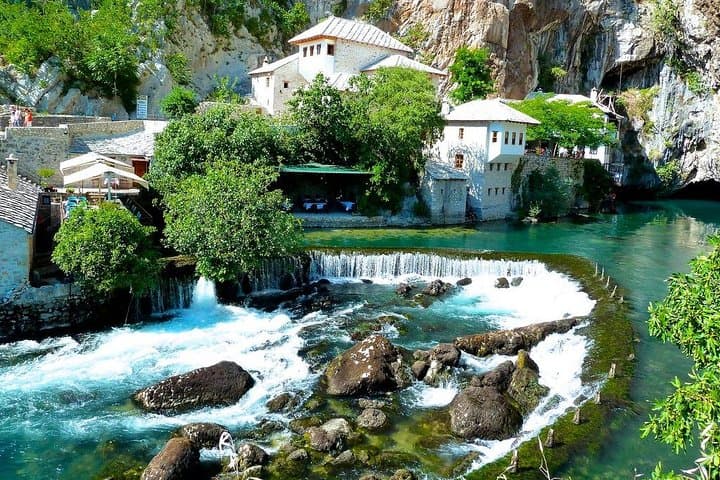
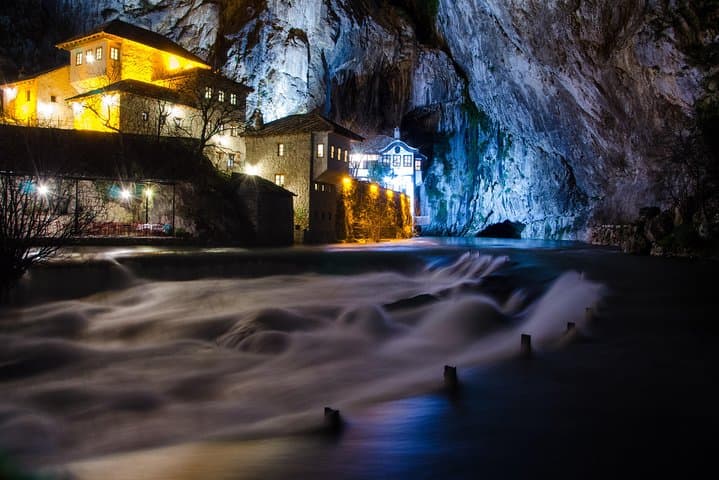
Konjic greets you with its 17th-century Ottoman bridge and forested slopes above the Neretva. Jablanica and the Battle of the Neretva memorial recall a wartime chapter that shaped local memory and the country's later monuments. Mostar — UNESCO-listed for its Old Bridge — is the cultural and photographic center of the route; expect bazaar alleys, riverfront cafes, and agile cliff divers in summer. Blagaj’s spring (Vrelo Bune) is a raw geological show: karstic water gushing cold and steady from a cliff that feels like the land breathing.
Practicalities are straightforward: this is a long, coach-based day so carry layers, sun protection and a refillable bottle. Walking tours involve cobbled streets and some uphill viewpoints; comfortable footwear and a moderate level of mobility make the day easier. Bring small cash for local crafts and cafe stops; most towns accept cards but smaller vendors may not. Photography is excellent in morning and late afternoon light; plan to move quickly between highlights if you want time to linger. The route is ideal for travelers who want concentrated cultural and natural highlights of Herzegovina without overnight logistics.
easy.
10–12 hours.
Suitable for travelers in average health; requires standing and short walks on uneven surfaces but no sustained hiking.
The full-day tour lasts about 10–12 hours and departs from Sarajevo with hotel pickup typically in the morning.
Yes—the itinerary is coach-based with short walks; adjustability for pace and some accessibility accommodations are usually available.
Inclusions vary by operator; this tour often includes bottled water, entrance fees and transport—confirm whether lunch is included when booking.
Local currency is the Bosnia and Herzegovina convertible mark (BAM); Bosnian/Croatian/Serbian are spoken, but English is common in tourist areas.
The region blends Ottoman-era architecture with later Austro-Hungarian influences; the Old Bridge in Mostar is a UNESCO site rebuilt after wartime destruction.
Karst springs and river habitats are sensitive—stick to marked paths at Vrelo Bune, avoid single-use plastics and support local businesses to reduce visitor impact.
Bosnian Voyager operates guided outdoor trips and adventures with an emphasis on safety, stewardship, and memorable experiences.

You step onto the coach as Sarajevo thins behind you; by mid-morning the mountains give way to a carved landscape of limestone, karst springs and the green ribbon of the Neretva. The day unfolds like a compact field guide to Herzegovina: a stone bridge reassembled after war, a Dervish tekke pouring cold spring water into a canyon, and towns that hold Ottoman arches and Austro-Hungarian facades in the same glance.
You step onto the coach as Sarajevo thins behind you; by mid-morning the mountains give way to a carved landscape of limestone, karst springs and the green ribbon of the Neretva. The day unfolds like a compact field guide to Herzegovina: a stone bridge reassembled after war, a Dervish tekke pouring cold spring water into a canyon, and towns that hold Ottoman arches and Austro-Hungarian facades in the same glance.
Konjic greets you with its 17th-century Ottoman bridge and forested slopes above the Neretva. Jablanica and the Battle of the Neretva memorial recall a wartime chapter that shaped local memory and the country's later monuments. Mostar — UNESCO-listed for its Old Bridge — is the cultural and photographic center of the route; expect bazaar alleys, riverfront cafes, and agile cliff divers in summer. Blagaj’s spring (Vrelo Bune) is a raw geological show: karstic water gushing cold and steady from a cliff that feels like the land breathing.
Practicalities are straightforward: this is a long, coach-based day so carry layers, sun protection and a refillable bottle. Walking tours involve cobbled streets and some uphill viewpoints; comfortable footwear and a moderate level of mobility make the day easier. Bring small cash for local crafts and cafe stops; most towns accept cards but smaller vendors may not. Photography is excellent in morning and late afternoon light; plan to move quickly between highlights if you want time to linger. The route is ideal for travelers who want concentrated cultural and natural highlights of Herzegovina without overnight logistics.