THE ADVENTURE COLLECTIVE® · Independent discovery and booking for outdoor travel

Explore Gyeongju’s UNESCO treasures on a private full-day tour from Busan. See Bulguksa, Seokguram Grotto, Cheomseongdae Observatory and the tumuli, with hotel pickup and an English guide included.
Explore Gyeongju’s UNESCO treasures on a private full-day tour from Busan. See Bulguksa, Seokguram Grotto, Cheomseongdae Observatory and the tumuli, with hotel pickup and an English guide included.
A morning drive from Busan pulls you across low coastal ridges toward Gyeongju, where stone tombs and temple roofs puncture a calm horizon. You step from an air-conditioned minivan into a landscape that still carries the measured pace of the Silla capital: temple courtyards, a granite grotto perched above the East Sea, and grassy burial mounds that rise like small hills across a quiet park.
Verified experiences and guided adventures in the surrounding area.
Operated by Kangsan Travel Service Co.,Ltd · Gyeongju, North Gyeongsang
A morning drive from Busan pulls you across low coastal ridges toward Gyeongju, where stone tombs and temple roofs puncture a calm horizon. You step from an air-conditioned minivan into a landscape that still carries the measured pace of the Silla capital: temple courtyards, a granite grotto perched above the East Sea, and grassy burial mounds that rise like small hills across a quiet park.
Gyeongju was the heart of the Silla Dynasty (57 BC–935 AD). Its monuments—Bulguksa’s wooden halls and Seokguram’s carved Buddha—sit on older granite and volcanic outcrops shaped by Korea’s geologic past. Cheomseongdae, an early astronomical observatory, speaks to scientific practice; the tumuli of Tumuli Park reveal funerary customs and artifacts now housed in the Gyeongju National Museum. Gyochon Village offers a glimpse of later Joseon-era village life.
Practically: this private, full-day tour runs about nine hours with hotel pickup and drop-off from Busan, bottled water, onboard Wi‑Fi and an English-speaking guide. Expect moderate walking on paved paths and staircases—temple approaches include steps, while the tomb park is largely level. Carry layered clothing for coastal winds, a camera, and cash for lunch (paid on-site). Visit early or late in the day to avoid peak crowds at Bulguksa and Seokguram.
Preservation matters here—stay on paths, respect shrine rules (limited photography inside some areas), and follow guide instructions. With a little planning, the day combines straightforward logistics and richly readable history: stone, sea, and centuries of craft that still shape the present.
moderate.
9 hours.
Light to moderate fitness; able to walk several hours with short stair climbs.
Admissions for the main sites visited (Seokguram, Bulguksa, Cheonmachong, Gyeongju National Museum) are included in the tour price as listed.
Yes—round-trip hotel pickup and drop-off from Busan hotels are included; exact pickup details are confirmed after booking.
The tour notes wheelchair accessibility, but some temple interiors and Seokguram’s grotto have steps—contact the operator to confirm specific access needs.
A professional English-speaking guide is provided; ask at booking if you need another language to be arranged.
Gyeongju was the Silla Kingdom’s capital for nearly a millennium, its monuments reflecting state religion, astronomy and mortuary practices.
UNESCO listing helps fund conservation; visitors should stay on marked trails, avoid touching artifacts and follow site-specific photography rules to reduce wear.
Kangsan Travel Service Co.,Ltd operates guided outdoor trips and adventures with an emphasis on safety, stewardship, and memorable experiences.
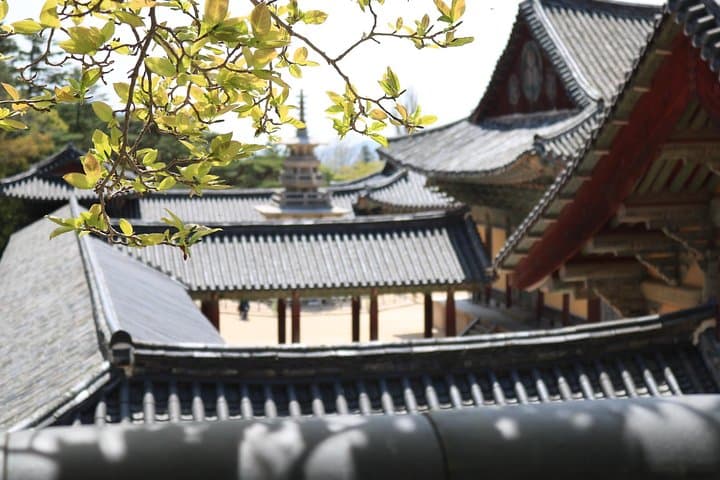
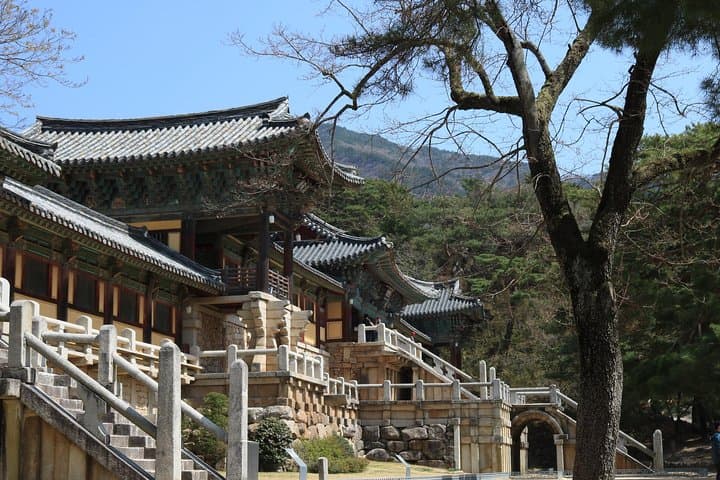
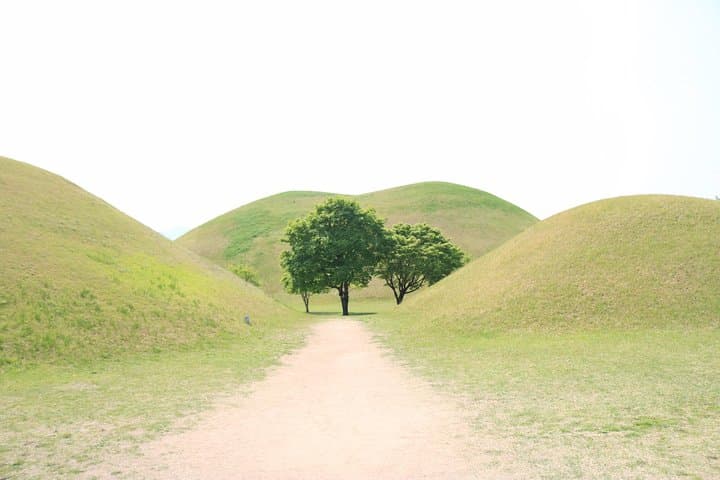
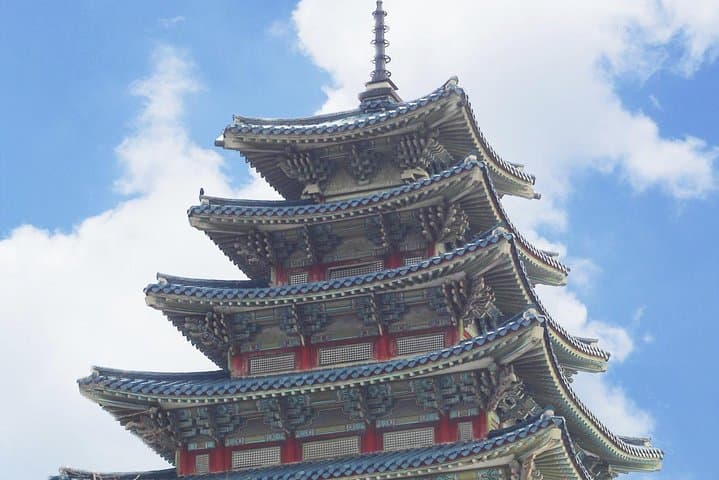
A morning drive from Busan pulls you across low coastal ridges toward Gyeongju, where stone tombs and temple roofs puncture a calm horizon. You step from an air-conditioned minivan into a landscape that still carries the measured pace of the Silla capital: temple courtyards, a granite grotto perched above the East Sea, and grassy burial mounds that rise like small hills across a quiet park.
A morning drive from Busan pulls you across low coastal ridges toward Gyeongju, where stone tombs and temple roofs puncture a calm horizon. You step from an air-conditioned minivan into a landscape that still carries the measured pace of the Silla capital: temple courtyards, a granite grotto perched above the East Sea, and grassy burial mounds that rise like small hills across a quiet park.
Gyeongju was the heart of the Silla Dynasty (57 BC–935 AD). Its monuments—Bulguksa’s wooden halls and Seokguram’s carved Buddha—sit on older granite and volcanic outcrops shaped by Korea’s geologic past. Cheomseongdae, an early astronomical observatory, speaks to scientific practice; the tumuli of Tumuli Park reveal funerary customs and artifacts now housed in the Gyeongju National Museum. Gyochon Village offers a glimpse of later Joseon-era village life.
Practically: this private, full-day tour runs about nine hours with hotel pickup and drop-off from Busan, bottled water, onboard Wi‑Fi and an English-speaking guide. Expect moderate walking on paved paths and staircases—temple approaches include steps, while the tomb park is largely level. Carry layered clothing for coastal winds, a camera, and cash for lunch (paid on-site). Visit early or late in the day to avoid peak crowds at Bulguksa and Seokguram.
Preservation matters here—stay on paths, respect shrine rules (limited photography inside some areas), and follow guide instructions. With a little planning, the day combines straightforward logistics and richly readable history: stone, sea, and centuries of craft that still shape the present.