THE ADVENTURE COLLECTIVE® · Independent discovery and booking for outdoor travel

Spend a full day from Marrakech at Ouzoud Falls—one of Morocco’s most photographed cascades—walking forested trails, watching curious macaques and taking optional boat rides beneath the cliffs. Practical tips on timing, footwear and what to expect make this an attainable day trip.
Spend a full day from Marrakech at Ouzoud Falls—one of Morocco’s most photographed cascades—walking forested trails, watching curious macaques and taking optional boat rides beneath the cliffs. Practical tips on timing, footwear and what to expect make this an attainable day trip.
The morning light slices across the Atlas foothills as the minibus hums toward the falls; by the time you step out, mist and the constant pulse of water have already claimed the air. Ouzoud’s torrents drop in a series of stepped cliffs, the water pulling at the valley as if eager to reach the pool below, while olive groves and orchards frame the approach.
Verified experiences and guided adventures in the surrounding area.
Operated by Moroccan Mahi Trip · Ouzoud, Azilal Province
The morning light slices across the Atlas foothills as the minibus hums toward the falls; by the time you step out, mist and the constant pulse of water have already claimed the air. Ouzoud’s torrents drop in a series of stepped cliffs, the water pulling at the valley as if eager to reach the pool below, while olive groves and orchards frame the approach.
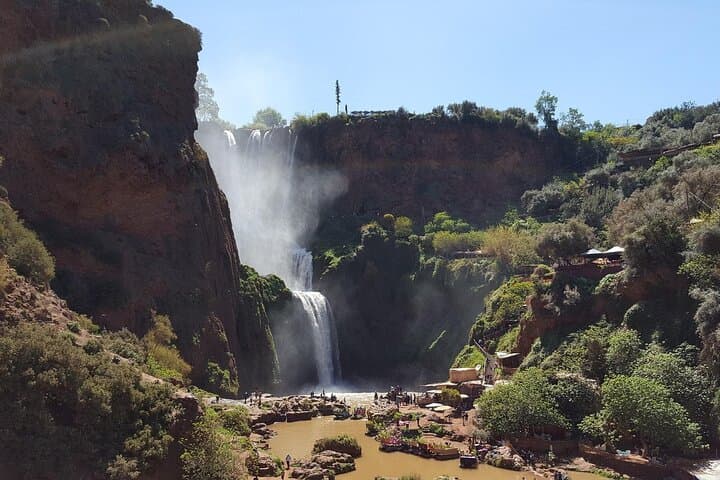
Geologically the falls cut through Miocene-era sandstone and marl, creating terraces and plunge pools that have shaped local agriculture for centuries. The area sits in Azilal province, where Berber villages built simple stone terraces and mills; you’ll see traces of that working landscape in irrigation channels and small mills near the rivulets.
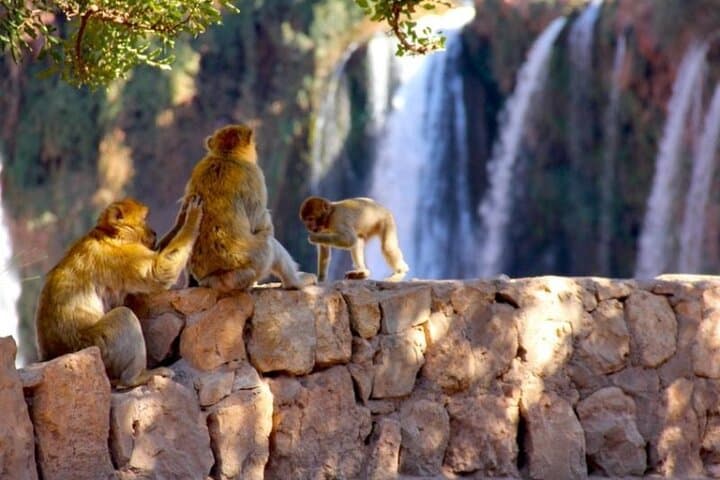
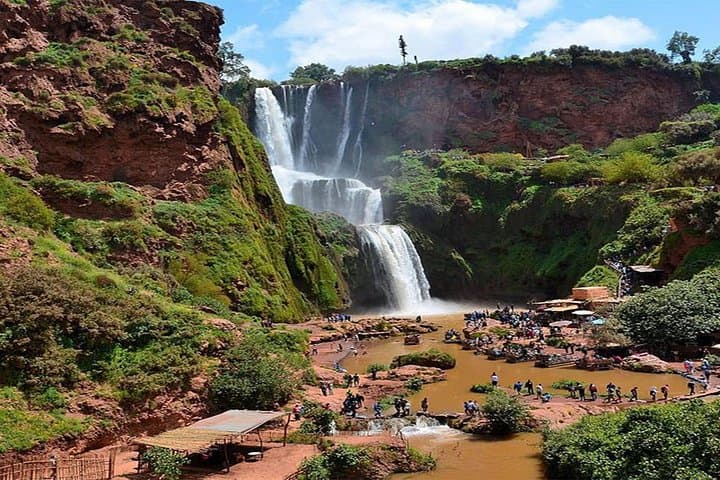
On trail, expect forested paths, switchbacks and viewpoints that tilt you toward sudden panoramas. Barbary macaques are curious and used to people—keep pockets closed. Local restaurants line the rim for tagines with a view, and traditional boats can give a short ride in calmer pools when conditions permit.
Practical edge: the tour is long—plan for 11–12 hours including transit from Marrakech. Wear grippy shoes for damp, uneven trails and bring layered sun protection; river spray makes rock surfaces slick. Carry water and cash for small eateries, and arrive midweek or early to avoid the biggest crowds. If you have back or heart issues, opt out—the route involves steps and some uneven footing. With common-sense precautions, a day at Ouzoud is an accessible, dramatic encounter with Morocco’s mountain water and rural life.
moderate.
11–12 hours.
Suitable for travelers in moderate fitness; expect walking on uneven terrain and some stair sections
The guided tour includes about 1h05–1h30 each way; total tour duration is roughly 11–12 hours including pickups and stops.
Swimming is possible in some pools when the current is calm, but it depends on flow and local rules—ask the guide before entering water.
Barbary macaques are generally used to people but can grab food or belongings; do not feed them and secure loose items.
Lunch at an overlook restaurant is usually not included—most tours stop at local restaurants where you pay on site.
The falls sit in a rural Berber landscape where traditional terraces and water mills reflect centuries of mountain agriculture.
Visitors should avoid feeding wildlife, carry out waste, and stick to paths to protect erosion-prone slopes and local water quality.
Moroccan Mahi Trip operates guided outdoor trips and adventures with an emphasis on safety, stewardship, and memorable experiences.
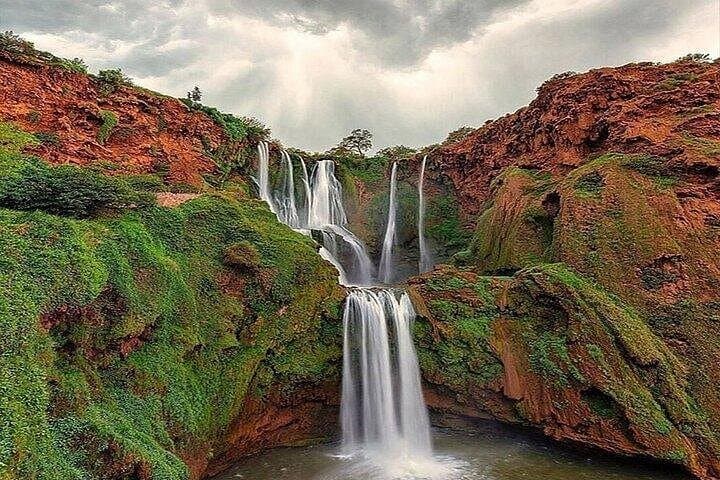
The morning light slices across the Atlas foothills as the minibus hums toward the falls; by the time you step out, mist and the constant pulse of water have already claimed the air. Ouzoud’s torrents drop in a series of stepped cliffs, the water pulling at the valley as if eager to reach the pool below, while olive groves and orchards frame the approach.
The morning light slices across the Atlas foothills as the minibus hums toward the falls; by the time you step out, mist and the constant pulse of water have already claimed the air. Ouzoud’s torrents drop in a series of stepped cliffs, the water pulling at the valley as if eager to reach the pool below, while olive groves and orchards frame the approach.
Geologically the falls cut through Miocene-era sandstone and marl, creating terraces and plunge pools that have shaped local agriculture for centuries. The area sits in Azilal province, where Berber villages built simple stone terraces and mills; you’ll see traces of that working landscape in irrigation channels and small mills near the rivulets.
On trail, expect forested paths, switchbacks and viewpoints that tilt you toward sudden panoramas. Barbary macaques are curious and used to people—keep pockets closed. Local restaurants line the rim for tagines with a view, and traditional boats can give a short ride in calmer pools when conditions permit.
Practical edge: the tour is long—plan for 11–12 hours including transit from Marrakech. Wear grippy shoes for damp, uneven trails and bring layered sun protection; river spray makes rock surfaces slick. Carry water and cash for small eateries, and arrive midweek or early to avoid the biggest crowds. If you have back or heart issues, opt out—the route involves steps and some uneven footing. With common-sense precautions, a day at Ouzoud is an accessible, dramatic encounter with Morocco’s mountain water and rural life.