THE ADVENTURE COLLECTIVE® · Independent discovery and booking for outdoor travel

Spend a full day walking ancient lava flows, climbing a cinder cone and threading a lava tube on a guided tour of Craters of the Moon. This trip combines clear geology, Apollo-era history and practical guidance for exploring a volcanic landscape.
Spend a full day walking ancient lava flows, climbing a cinder cone and threading a lava tube on a guided tour of Craters of the Moon. This trip combines clear geology, Apollo-era history and practical guidance for exploring a volcanic landscape.
A low, black horizon stretches out like an otherworldly map as your vehicle pulls up at the Robert L. Lambert Visitor Center—sun hard on pumice and sage, wind shaping the distant cinder cones. The visitor center’s windows frame the Snake River Canyon and the Perrine Bridge, but the real draw is the lava plain that once flowed from the Great Rift and now challenges you to read the planet’s volcanic history in texture and shadow.
Verified experiences and guided adventures in the surrounding area.
Operated by Big Green Adventure Tours · Arco, Idaho
A low, black horizon stretches out like an otherworldly map as your vehicle pulls up at the Robert L. Lambert Visitor Center—sun hard on pumice and sage, wind shaping the distant cinder cones. The visitor center’s windows frame the Snake River Canyon and the Perrine Bridge, but the real draw is the lava plain that once flowed from the Great Rift and now challenges you to read the planet’s volcanic history in texture and shadow.
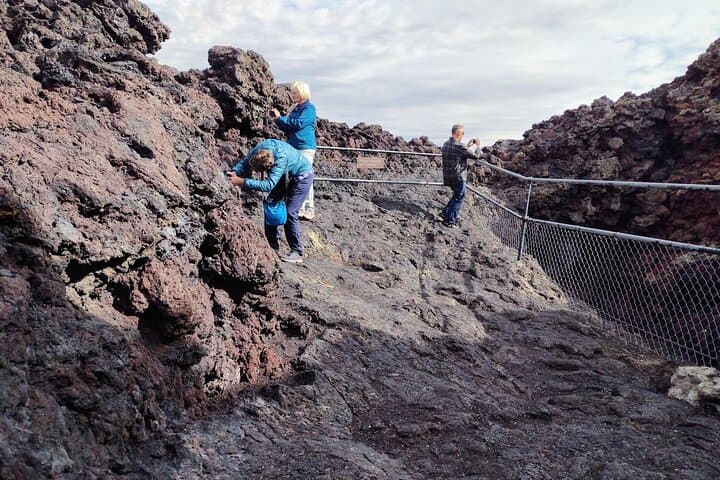
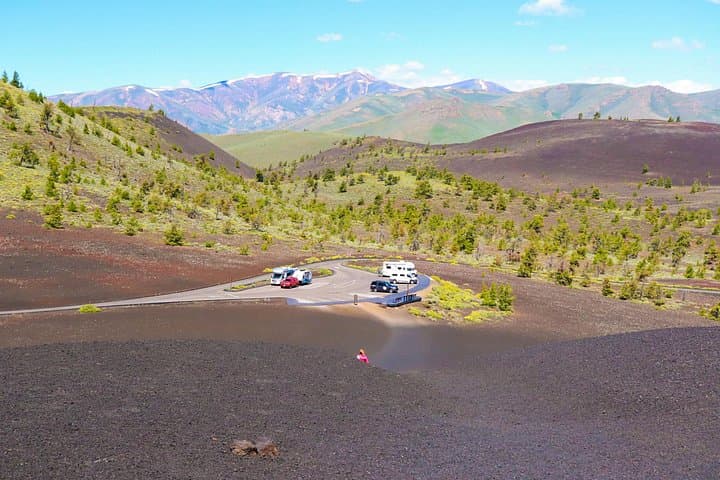
Geology here is honest and immediate: basaltic lava flows, cinder cones and spatter cones created by fissure eruptions, with Inferno Cone offering a short but steep 160-foot climb and a 360-degree field study of the rift system. Astronauts used parts of this landscape to rehearse lunar surface work in the 1960s; signs and exhibits at the center connect modern science to human stories.
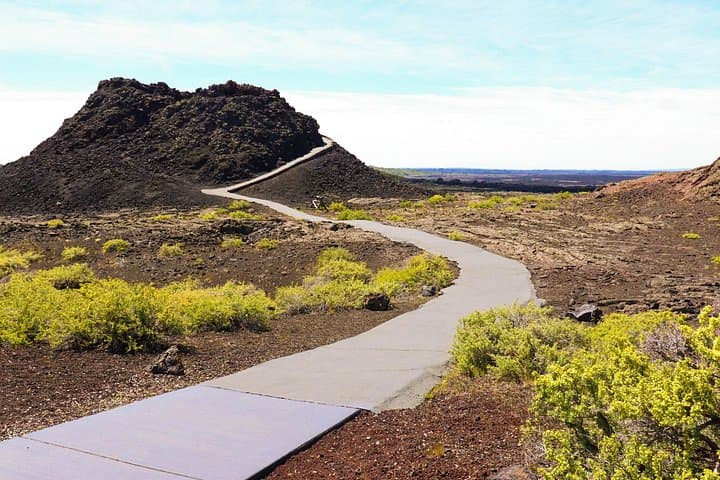
You’ll walk paved interpretation trails at North Crater Flow (about 1/4 mile) and Devil’s Orchard (roughly 1/2 mile), eat lunch near the Cave Area, then move into Indian Tunnel—the park’s largest lava tube—where collapsed sections let light and dust slip through like theatrical shafts.
Practical edge: this is a full-day outing (roughly 7–8 hours) on relatively easy terrain punctuated by short hikes and a few steep steps. Expect wide-open sun, loose cinder underfoot, and confined spaces inside lava tubes. The guided format includes bottled water, a boxed lunch and transport in an air-conditioned vehicle; bring sturdy shoes, sun protection and a small headlamp for exploring tunnels. Timing-wise, mornings reduce heat and afternoon light sharpens the volcanic textures—plan accordingly.
easy.
7–8 hours.
Suitable for most fitness levels; short steep sections (Inferno Cone) require basic mobility and balance.
The tour runs about 7–8 hours and is rated easy—most walking is short, paved interpretive trails with one short 1/2-mile climb (Inferno Cone) gaining about 160 feet.
Indian Tunnel is accessible and commonly visited; expect uneven ground, some low or collapsed sections, and patches of dim light—use caution and a light source.
Visitor Center facilities include restrooms; the tour provides a boxed lunch and bottled water, but bring extra snacks if you prefer.
Yes—this tour is generally suitable for a wide range of ages, though participants should be comfortable with short hikes, steps and confined spaces in lava tubes.
Parts of the monument were used as a training ground for Apollo astronauts; the lava plains and cinder cones record multiple episodes of basaltic fissure eruptions.
The fragile soil and cryptobiotic crust on many surfaces recover slowly—stay on designated trails and avoid walking on bare crust to protect this desert ecosystem.
Big Green Adventure Tours operates guided outdoor trips and adventures with an emphasis on safety, stewardship, and memorable experiences.
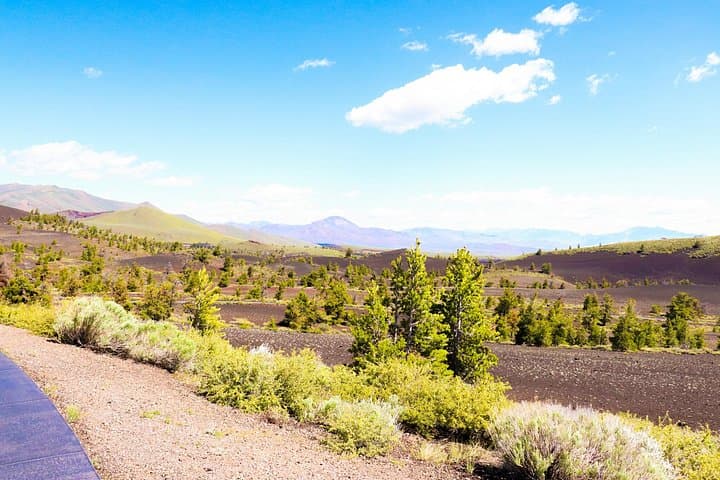
A low, black horizon stretches out like an otherworldly map as your vehicle pulls up at the Robert L. Lambert Visitor Center—sun hard on pumice and sage, wind shaping the distant cinder cones. The visitor center’s windows frame the Snake River Canyon and the Perrine Bridge, but the real draw is the lava plain that once flowed from the Great Rift and now challenges you to read the planet’s volcanic history in texture and shadow.
A low, black horizon stretches out like an otherworldly map as your vehicle pulls up at the Robert L. Lambert Visitor Center—sun hard on pumice and sage, wind shaping the distant cinder cones. The visitor center’s windows frame the Snake River Canyon and the Perrine Bridge, but the real draw is the lava plain that once flowed from the Great Rift and now challenges you to read the planet’s volcanic history in texture and shadow.
Geology here is honest and immediate: basaltic lava flows, cinder cones and spatter cones created by fissure eruptions, with Inferno Cone offering a short but steep 160-foot climb and a 360-degree field study of the rift system. Astronauts used parts of this landscape to rehearse lunar surface work in the 1960s; signs and exhibits at the center connect modern science to human stories.
You’ll walk paved interpretation trails at North Crater Flow (about 1/4 mile) and Devil’s Orchard (roughly 1/2 mile), eat lunch near the Cave Area, then move into Indian Tunnel—the park’s largest lava tube—where collapsed sections let light and dust slip through like theatrical shafts.
Practical edge: this is a full-day outing (roughly 7–8 hours) on relatively easy terrain punctuated by short hikes and a few steep steps. Expect wide-open sun, loose cinder underfoot, and confined spaces inside lava tubes. The guided format includes bottled water, a boxed lunch and transport in an air-conditioned vehicle; bring sturdy shoes, sun protection and a small headlamp for exploring tunnels. Timing-wise, mornings reduce heat and afternoon light sharpens the volcanic textures—plan accordingly.