THE ADVENTURE COLLECTIVE® · Independent discovery and booking for outdoor travel

Spend a full day moving between the Giza Plateau and the Egyptian Museum with an Egyptology guide who explains the engineering, ritual and artifacts behind the images. This guided tour combines close-up encounters with the pyramids and Sphinx and curated time among the museum's ancient treasures.
Spend a full day moving between the Giza Plateau and the Egyptian Museum with an Egyptology guide who explains the engineering, ritual and artifacts behind the images. This guided tour combines close-up encounters with the pyramids and Sphinx and curated time among the museum's ancient treasures.
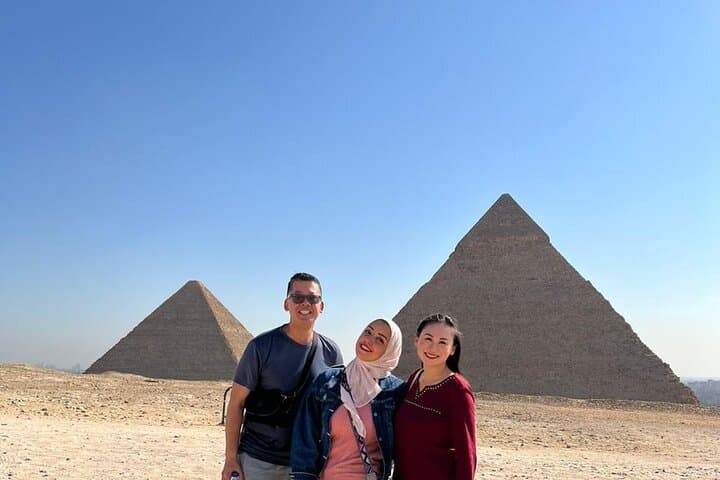
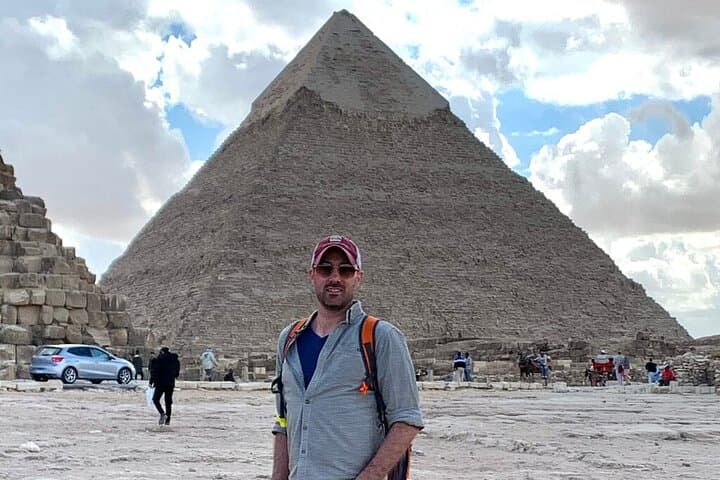
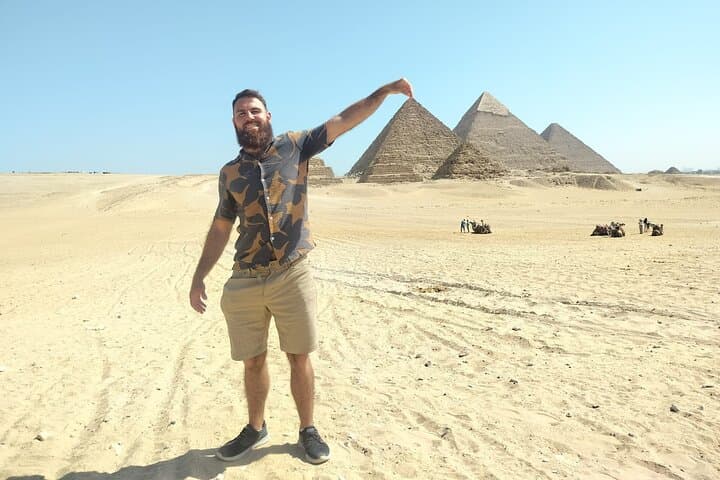
You arrive on the Giza Plateau with a wash of dry wind pushing grit against the stone—an immediate reminder that these monuments live in a working, breathing landscape rather than a postcard. The guide leads the group across compacted sand and limestone blocks to the three great pyramids: Khufu (Cheops), Khafre (Chephren) and Menkaure (Mykerinus). Close-up, the scale and angled faces insist you step back and recalibrate distance and time.
Verified experiences and guided adventures in the surrounding area.
Operated by Egypt Best Holidays · Giza, Cairo Governorate
You arrive on the Giza Plateau with a wash of dry wind pushing grit against the stone—an immediate reminder that these monuments live in a working, breathing landscape rather than a postcard. The guide leads the group across compacted sand and limestone blocks to the three great pyramids: Khufu (Cheops), Khafre (Chephren) and Menkaure (Mykerinus). Close-up, the scale and angled faces insist you step back and recalibrate distance and time.
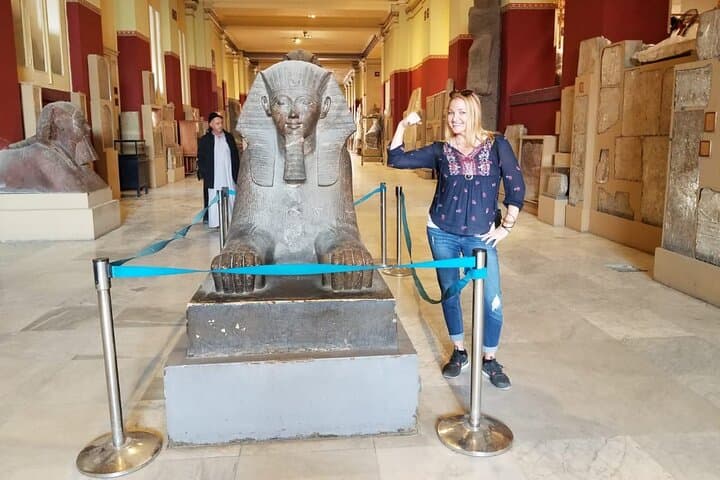
The plateau and Valley Temple are records in stone: hewn limestone and granite with tool marks that hint at 4,500 years of engineering. The Sphinx, carved from a single ridge, keeps a mute watch over the approach, its face eroded by centuries of wind and human contact. Later, in central Cairo, the Egyptian Museum holds the other side of the story—cartonnage, funerary goods and the glittering Tutankhamun trove recovered in the 1920s.
Expect a full day—7–8 hours—mixing short walks across uneven surfaces, a possible camel or horse ride, and long indoor viewing in museum galleries. Practical points: carry sun protection and plenty of water, wear shoes with grip for dusty ramps and steps, and be ready for crowds at popular displays. Entrance fees for monuments are paid on site (card accepted). The tour balances big-picture history with close inspection of artifacts and architecture, offering context from an Egyptology-trained guide while handling logistics—air-conditioned transfers and hotel pickup—so you can focus on sight and detail without the planning friction.
moderate.
7–8 hours.
Suitable for most travelers who can walk on uneven ground for several hours and tolerate brief climbs; not recommended for those with severe mobility limits due to steps and narrow interior passages.
Entrance fees are not included and are paid on-site; cards are accepted for major purchases but carry small cash for incidentals.
The tour runs about 7–8 hours with hotel pickup and drop-off in Cairo or Giza provided in air-conditioned vehicles.
Yes; access to the interior is available during opening hours but may be limited by time, crowding, or additional fees—your guide will advise on the best time to enter.
Children generally enjoy the visual spectacle; however, the interior of pyramids involves tight, steep passages and uneven surfaces, which can be difficult for those with limited mobility.
The Giza pyramids date to the Fourth Dynasty (c. 2600–2500 BCE) and were built as royal tombs combining limestone casing with internal granite chambers.
High visitor numbers stress both monuments and museum artifacts—stay on marked paths, avoid touching delicate carvings, and follow guide instructions to help protect fragile sites.
Egypt Best Holidays operates guided outdoor trips and adventures with an emphasis on safety, stewardship, and memorable experiences.
You arrive on the Giza Plateau with a wash of dry wind pushing grit against the stone—an immediate reminder that these monuments live in a working, breathing landscape rather than a postcard. The guide leads the group across compacted sand and limestone blocks to the three great pyramids: Khufu (Cheops), Khafre (Chephren) and Menkaure (Mykerinus). Close-up, the scale and angled faces insist you step back and recalibrate distance and time.
You arrive on the Giza Plateau with a wash of dry wind pushing grit against the stone—an immediate reminder that these monuments live in a working, breathing landscape rather than a postcard. The guide leads the group across compacted sand and limestone blocks to the three great pyramids: Khufu (Cheops), Khafre (Chephren) and Menkaure (Mykerinus). Close-up, the scale and angled faces insist you step back and recalibrate distance and time.
The plateau and Valley Temple are records in stone: hewn limestone and granite with tool marks that hint at 4,500 years of engineering. The Sphinx, carved from a single ridge, keeps a mute watch over the approach, its face eroded by centuries of wind and human contact. Later, in central Cairo, the Egyptian Museum holds the other side of the story—cartonnage, funerary goods and the glittering Tutankhamun trove recovered in the 1920s.
Expect a full day—7–8 hours—mixing short walks across uneven surfaces, a possible camel or horse ride, and long indoor viewing in museum galleries. Practical points: carry sun protection and plenty of water, wear shoes with grip for dusty ramps and steps, and be ready for crowds at popular displays. Entrance fees for monuments are paid on site (card accepted). The tour balances big-picture history with close inspection of artifacts and architecture, offering context from an Egyptology-trained guide while handling logistics—air-conditioned transfers and hotel pickup—so you can focus on sight and detail without the planning friction.