THE ADVENTURE COLLECTIVE® · Independent discovery and booking for outdoor travel

See Egypt’s most iconic funerary monuments in a single day: Giza’s pyramids and Sphinx, the Step Pyramid at Saqqara, and Dahshour’s Bent and Red Pyramids. This private, full-day tour bundles archaeology and logistics so you can focus on the sites.
See Egypt’s most iconic funerary monuments in a single day: Giza’s pyramids and Sphinx, the Step Pyramid at Saqqara, and Dahshour’s Bent and Red Pyramids. This private, full-day tour bundles archaeology and logistics so you can focus on the sites.
You arrive on the Giza Plateau as the sun slices the desert air—gold light outlining the three great silhouettes that dominate the skyline. Sand crunches underfoot and limestone blocks tower above, a scale you feel as much as see. A private Egyptologist leads you through the complex, the Sphinx’s carved face turning toward the desert with an almost watchful patience.
Verified experiences and guided adventures in the surrounding area.
Operated by Egypt Vibes · Giza, Cairo Governorate
You arrive on the Giza Plateau as the sun slices the desert air—gold light outlining the three great silhouettes that dominate the skyline. Sand crunches underfoot and limestone blocks tower above, a scale you feel as much as see. A private Egyptologist leads you through the complex, the Sphinx’s carved face turning toward the desert with an almost watchful patience.
This route stitches major phases of early Egyptian funerary architecture into one day: the Fourth Dynasty smooth-sided pyramids at Giza (c. 2560 BCE), the lion-bodied Sphinx, the Step Pyramid of Djoser at Saqqara—Imhotep’s revolutionary stacked mastaba—and the experimental forms at Dahshour, where Sneferu’s Bent and Red Pyramids chart the shift to true smooth-sided monuments. Geologically, the limestone cap and local desert sands shape how these structures weather; culturally, these sites remain active touchstones of Egyptian identity and archaeological study.
Expect a full day of short walks (Giza site walking 1–3 km, Saqqara and Dahshour spreads adding several flat, uneven stretches). Elevation gain is negligible; terrain alternates between packed sand, loose gravel, and paved walkways. Bring sun protection, water, and comfortable, sturdy shoes; plan to move between sites by car (drives can be 30–60 minutes depending on traffic).
Practical points: photography is permitted but interior pyramid access is limited and ticketed; mid-morning start avoids the strongest heat and biggest crowds. The tour typically includes entrance fees, lunch, water and private transfers—making it a compact, historically dense day for travelers based in Cairo.
easy.
8 hours.
Suitable for most travelers with basic mobility; requires standing and walking on uneven surfaces for multiple short intervals.
This tour states that entrance fees to the mentioned historical places are included, but specific interior-access tickets (like entering certain pyramids) may be extra—confirm with the operator.
Expect 1–3 km of walking within Giza and similar short walks at Saqqara and Dahshour; terrain is flat but uneven, so allow time for pauses.
The tour is rated easy and suitable for most fitness levels, but it involves outdoor exposure and walking; those with mobility limitations should check vehicle drop-off points and inquire about reduced walking options.
Interior access is limited and controlled by site authorities; some pyramid interior tickets are available but may require additional fees and advance request.
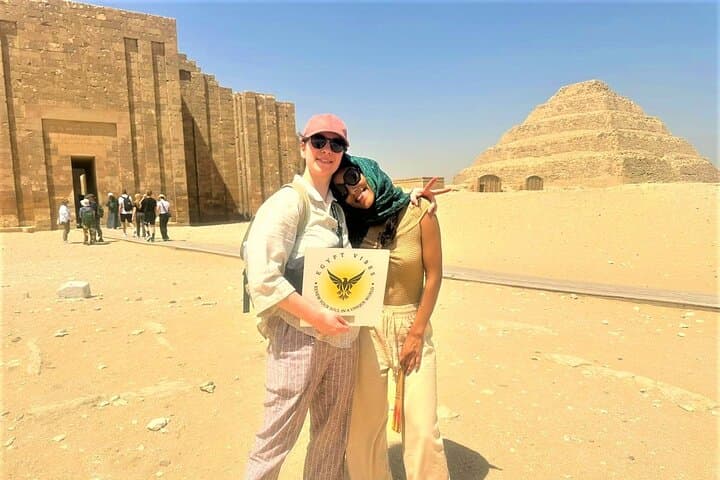
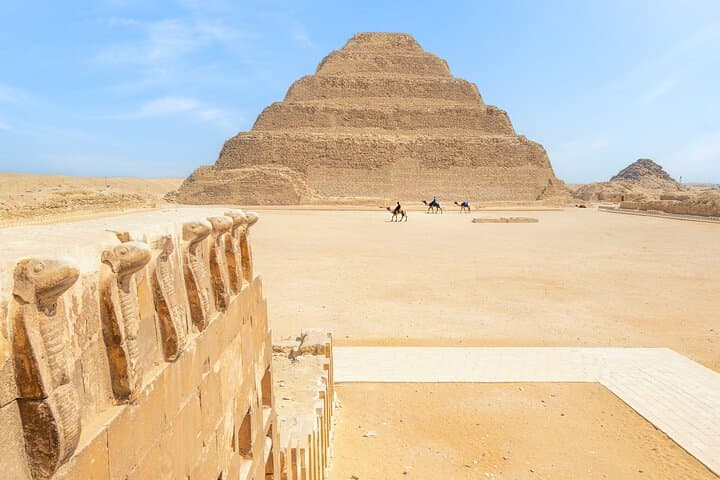
The Step Pyramid at Saqqara (built for Djoser c. 2670 BCE) marks the shift from single-level mastaba tombs to stacked stone construction, overseen by architect Imhotep.
High visitor numbers and natural erosion threaten fragile stone surfaces; follow paths, avoid climbing monuments, and support guides who promote preservation.
Egypt Vibes operates guided outdoor trips and adventures with an emphasis on safety, stewardship, and memorable experiences.
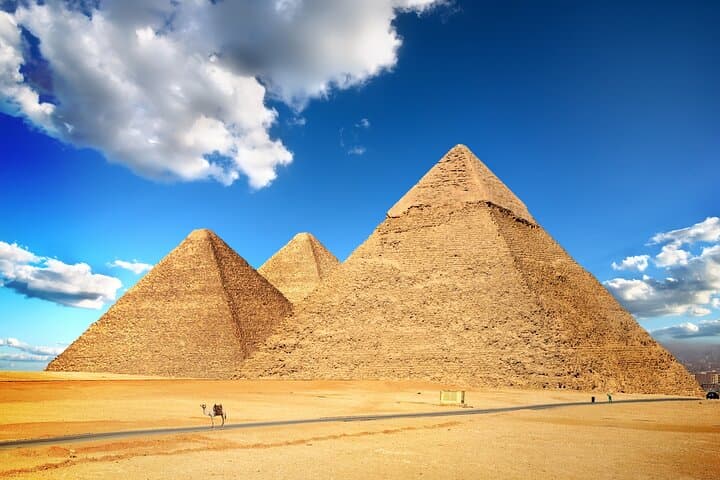
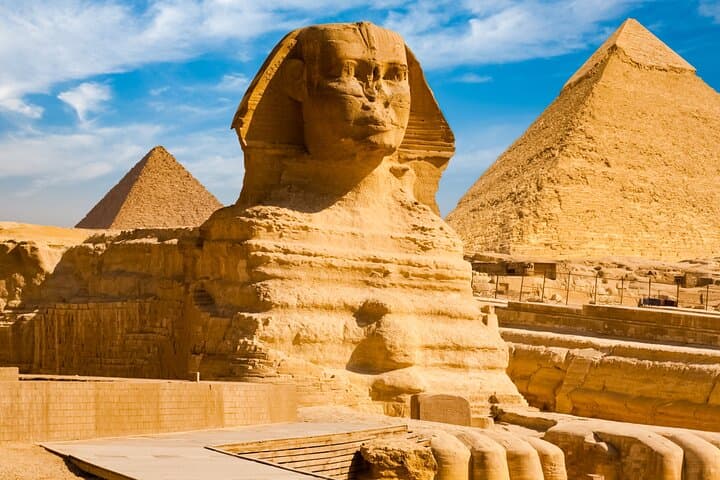
You arrive on the Giza Plateau as the sun slices the desert air—gold light outlining the three great silhouettes that dominate the skyline. Sand crunches underfoot and limestone blocks tower above, a scale you feel as much as see. A private Egyptologist leads you through the complex, the Sphinx’s carved face turning toward the desert with an almost watchful patience.
You arrive on the Giza Plateau as the sun slices the desert air—gold light outlining the three great silhouettes that dominate the skyline. Sand crunches underfoot and limestone blocks tower above, a scale you feel as much as see. A private Egyptologist leads you through the complex, the Sphinx’s carved face turning toward the desert with an almost watchful patience.
This route stitches major phases of early Egyptian funerary architecture into one day: the Fourth Dynasty smooth-sided pyramids at Giza (c. 2560 BCE), the lion-bodied Sphinx, the Step Pyramid of Djoser at Saqqara—Imhotep’s revolutionary stacked mastaba—and the experimental forms at Dahshour, where Sneferu’s Bent and Red Pyramids chart the shift to true smooth-sided monuments. Geologically, the limestone cap and local desert sands shape how these structures weather; culturally, these sites remain active touchstones of Egyptian identity and archaeological study.
Expect a full day of short walks (Giza site walking 1–3 km, Saqqara and Dahshour spreads adding several flat, uneven stretches). Elevation gain is negligible; terrain alternates between packed sand, loose gravel, and paved walkways. Bring sun protection, water, and comfortable, sturdy shoes; plan to move between sites by car (drives can be 30–60 minutes depending on traffic).
Practical points: photography is permitted but interior pyramid access is limited and ticketed; mid-morning start avoids the strongest heat and biggest crowds. The tour typically includes entrance fees, lunch, water and private transfers—making it a compact, historically dense day for travelers based in Cairo.