THE ADVENTURE COLLECTIVE® · Independent discovery and booking for outdoor travel

Drive from Baku to a landscape where earth, flame and stone keep their own stories—the mud volcanoes that bubble, a hillside that burns continuously, and Gobustan’s 5,000–20,000-year-old rock art. This private full-day tour stitches those chapters into seven hours of geology, history and short walks.
Drive from Baku to a landscape where earth, flame and stone keep their own stories—the mud volcanoes that bubble, a hillside that burns continuously, and Gobustan’s 5,000–20,000-year-old rock art. This private full-day tour stitches those chapters into seven hours of geology, history and short walks.
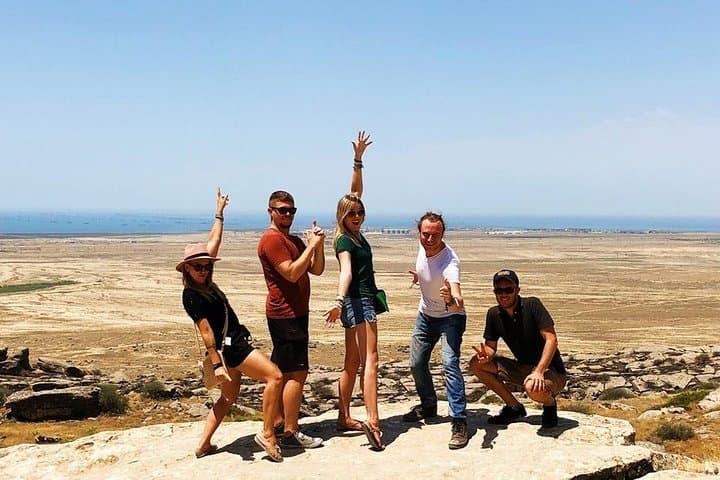
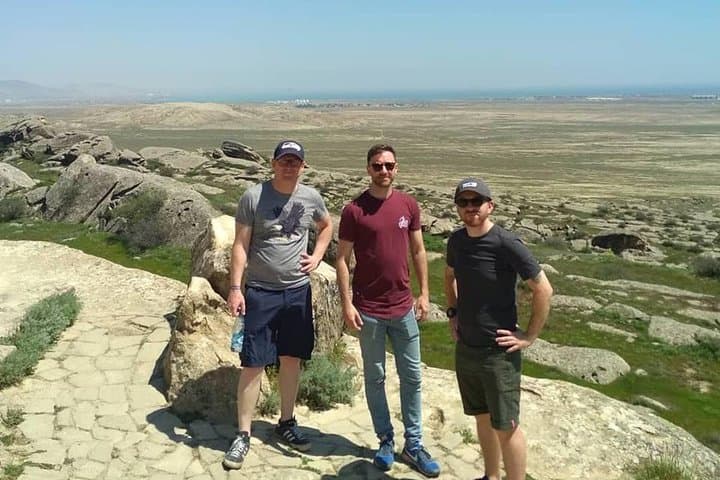
You step out of Baku’s glass-and-stone skyline into a different geography: scrubbed steppe, low limestone ridges and the occasional column of steam from a smoking earth. The van eases onto the Absheron peninsula and the driver points to a hillside with a constant orange tongue—Yanar Dag—where natural gas keeps a slope alight. Later you stand on a wind-scoured plateau in Gobustan, tracing millennia-old pecked figures on rock faces while the Caspian hovers as a distant silver line.
Verified experiences and guided adventures in the surrounding area.
Operated by Best Baku Tours · Baku, Absheron District
You step out of Baku’s glass-and-stone skyline into a different geography: scrubbed steppe, low limestone ridges and the occasional column of steam from a smoking earth. The van eases onto the Absheron peninsula and the driver points to a hillside with a constant orange tongue—Yanar Dag—where natural gas keeps a slope alight. Later you stand on a wind-scoured plateau in Gobustan, tracing millennia-old pecked figures on rock faces while the Caspian hovers as a distant silver line.
This one-day loop condenses Azerbaijan’s elemental history—fire and oil, nomads and caravans—into a measured itinerary. Gobustan’s rock art dates from 5,000 to 20,000 years ago; the petroglyphs map migration routes, hunting scenes and ritual gestures. Geologically, the area is restless: Azerbaijan hosts a third of the world’s mud volcanoes, a surface hint at deep hydrocarbon activity. Those grassy knolls that bubble and sputter are not theatrical props, they’re vents where subsurface gas and mud escape. On Absheron, natural gas seeping from the ground has burned for centuries and shaped religious practice; the Ateshgah Fire Temple records Hindu, Sikh and Zoroastrian pilgrims who visited these flames.
Culturally, the tour threads through different eras: the Ateshgah courtyard with its Persian inscriptions, the reconstructed Bibi-Heybat mosque that reconnects the modern city to pre-Soviet spiritual life, and an array of early oil-industry sites that mark Baku’s industrial firsts. Guides frame these stops plainly—why the land burns, how people read rock faces, and how oil changed a region’s economy.
Practicalities are straightforward. The tour lasts roughly seven hours with about an hour each way by road from central Baku; expect short walks at each site—15 minutes at Yanardag, longer at Gobustan’s open-air museum. Paths are uneven limestone and ash fields; wear sturdy shoes and allow 30–90 minutes to explore the main petroglyph plateau and museum. Many admissions are ticketed separately, so carry a small amount of local currency. Hydration matters: the steppe sun is relentless from late spring through early fall; bring 1–2 liters of water and sun protection.
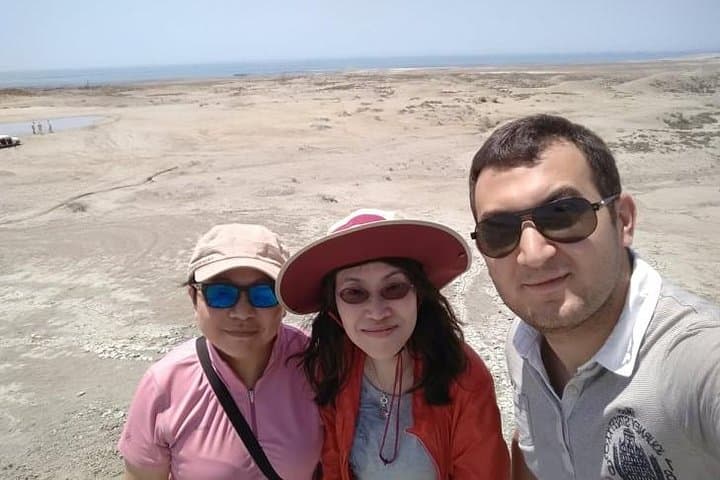
Photography rewards are immediate: flames against blue sky, close-up petroglyph detail, and the lunar-like mud flats. Respect the sites—rock art erodes with touch. For visitors who like a mix of easy walking, geology and cultural history, this private full-day tour is a compact, revealing slice of Azerbaijan’s elemental landscape.
easy.
6–7 hours.
Suitable for travelers in average fitness; activities are short walks and low-impact terrain.
The tour runs about 7 hours total (420 minutes) including driving and site visits.
Admissions are generally not included—bring local cash to pay small entrance fees for museums or reserves.
Yes; the itinerary involves short, easy walks. Guests with mobility issues should notify the operator for pickup and assistance.
Most mud volcanoes bubble and spit periodically but major eruptions are rare and unpredictable—viewing guarantees a bubbling landscape, not explosive events.
Yes; the tour includes a stop at the Ateshgah fire temple complex where you can walk the courtyard and see the altar area.
No, food is not included but you’ll have time to purchase snacks or a light meal; bringing your own provisions is recommended.
Gobustan’s petroglyphs record human activity from the Mesolithic through Bronze Age; Absheron’s constant gas seeps shaped ancient fire cults and later industrial oil booms.
Petroglyphs and mud volcano ecosystems are fragile—stay on marked paths, don’t remove mud or stones, and support local guides who manage visitor impact.
Best Baku Tours operates guided outdoor trips and adventures with an emphasis on safety, stewardship, and memorable experiences.
You step out of Baku’s glass-and-stone skyline into a different geography: scrubbed steppe, low limestone ridges and the occasional column of steam from a smoking earth. The van eases onto the Absheron peninsula and the driver points to a hillside with a constant orange tongue—Yanar Dag—where natural gas keeps a slope alight. Later you stand on a wind-scoured plateau in Gobustan, tracing millennia-old pecked figures on rock faces while the Caspian hovers as a distant silver line.
You step out of Baku’s glass-and-stone skyline into a different geography: scrubbed steppe, low limestone ridges and the occasional column of steam from a smoking earth. The van eases onto the Absheron peninsula and the driver points to a hillside with a constant orange tongue—Yanar Dag—where natural gas keeps a slope alight. Later you stand on a wind-scoured plateau in Gobustan, tracing millennia-old pecked figures on rock faces while the Caspian hovers as a distant silver line.
This one-day loop condenses Azerbaijan’s elemental history—fire and oil, nomads and caravans—into a measured itinerary. Gobustan’s rock art dates from 5,000 to 20,000 years ago; the petroglyphs map migration routes, hunting scenes and ritual gestures. Geologically, the area is restless: Azerbaijan hosts a third of the world’s mud volcanoes, a surface hint at deep hydrocarbon activity. Those grassy knolls that bubble and sputter are not theatrical props, they’re vents where subsurface gas and mud escape. On Absheron, natural gas seeping from the ground has burned for centuries and shaped religious practice; the Ateshgah Fire Temple records Hindu, Sikh and Zoroastrian pilgrims who visited these flames.
Culturally, the tour threads through different eras: the Ateshgah courtyard with its Persian inscriptions, the reconstructed Bibi-Heybat mosque that reconnects the modern city to pre-Soviet spiritual life, and an array of early oil-industry sites that mark Baku’s industrial firsts. Guides frame these stops plainly—why the land burns, how people read rock faces, and how oil changed a region’s economy.
Practicalities are straightforward. The tour lasts roughly seven hours with about an hour each way by road from central Baku; expect short walks at each site—15 minutes at Yanardag, longer at Gobustan’s open-air museum. Paths are uneven limestone and ash fields; wear sturdy shoes and allow 30–90 minutes to explore the main petroglyph plateau and museum. Many admissions are ticketed separately, so carry a small amount of local currency. Hydration matters: the steppe sun is relentless from late spring through early fall; bring 1–2 liters of water and sun protection.
Photography rewards are immediate: flames against blue sky, close-up petroglyph detail, and the lunar-like mud flats. Respect the sites—rock art erodes with touch. For visitors who like a mix of easy walking, geology and cultural history, this private full-day tour is a compact, revealing slice of Azerbaijan’s elemental landscape.