THE ADVENTURE COLLECTIVE® · Independent discovery and booking for outdoor travel

Spend a full day exploring Egypt's greatest funerary sites: the Great Pyramids and Sphinx at Giza, the Step Pyramid at Saqqara, and the open‑air relics of ancient Memphis. This practical guide outlines what to expect, how to prepare, and local tips for a smoother visit.
Spend a full day exploring Egypt's greatest funerary sites: the Great Pyramids and Sphinx at Giza, the Step Pyramid at Saqqara, and the open‑air relics of ancient Memphis. This practical guide outlines what to expect, how to prepare, and local tips for a smoother visit.
At first light the limestone of the Giza Plateau looks almost white against the Nile's distant haze. You step from an air‑conditioned van onto hard, sun‑warmed stone and the scale of the Fourth Dynasty imposes itself: three massive pyramids, a weathered Sphinx, and a horizon that still holds the silhouette of ancient power.
Verified experiences and guided adventures in the surrounding area.
Operated by Cairo Dinner Cruise · Giza, Giza Governorate
At first light the limestone of the Giza Plateau looks almost white against the Nile's distant haze. You step from an air‑conditioned van onto hard, sun‑warmed stone and the scale of the Fourth Dynasty imposes itself: three massive pyramids, a weathered Sphinx, and a horizon that still holds the silhouette of ancient power.
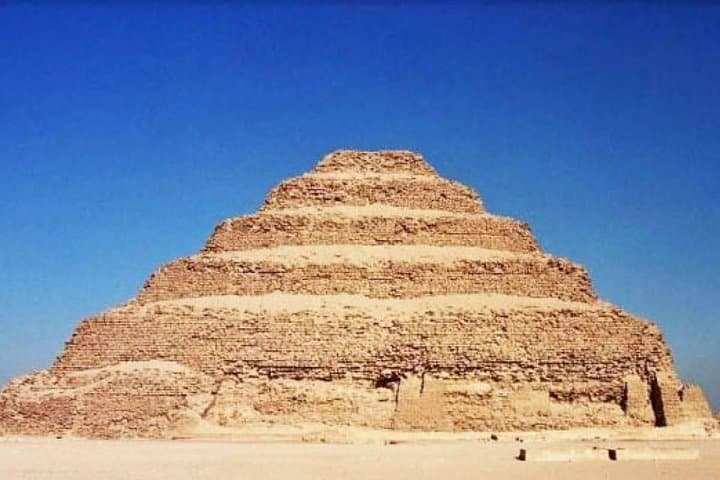
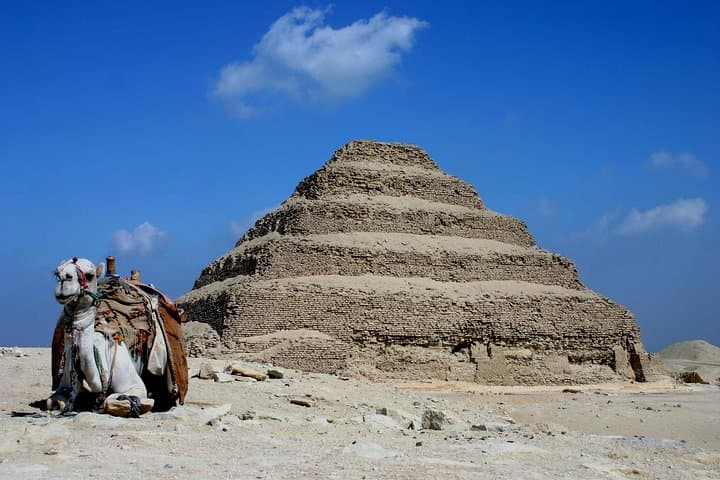
This single‑day route stitches together three eras of Egyptian funerary architecture. Giza's Khufu, Khafre and Menkaure pyramids date to the Fourth Dynasty and sit on a raised limestone platform cut from the desert edge of the Nile Valley. Saqqara, 27 km to the south, is older in places—home to Djoser's stepped mastaba that began the move from flat tombs to true pyramids. Memphis, founded around 3100 BC, preserves colossi and an alabaster sphinx that tell of the long administrative life of ancient Egypt.
Geologically, these monuments rest on compacted Nile silt and Eocene limestone; expect uneven, broken paving and soft sand between sites. Culturally, vendors, papyrus workshops and government‑certified souvenir stops are part of the experience—use them to learn but shop selectively.
Practical guidance: start early (tour begins around 08:00), wear sturdy shoes and high‑SPF sun protection, and carry water even if bottled water is provided. Walking across complexes totals a few kilometers with mostly flat but rocky terrain; uneven steps and low doorways may require bending or a short scramble. Purchase any inside‑tomb tickets in advance if you want to enter specific burial chambers. With planning, this eight‑hour loop delivers a compact primer on Egypt's monumental past without sacrificing comfort.
easy.
8 hours.
Suitable for most fitness levels; requires walking several flat but uneven kilometers and standing for guided explanations
Basic area entry is often included but specific interior tombs or optional sites may require additional tickets—confirm at booking.
This is an approximately eight‑hour private day tour, typically starting around 08:00 with hotel pickup and returning in the afternoon.
Yes—sites are generally accessible for most ages, but there is walking on uneven ground and some low doorways; inform the operator of mobility needs.
Interior access is limited and often an optional paid upgrade; spaces are restricted so book these extras in advance if you want to enter.
Memphis served as Egypt’s ancient capital from the early dynastic period (c. 3100 BC); Saqqara preserves transitional innovations such as Djoser’s Step Pyramid that prefigure later stone pyramids.
The Giza Plateau and Pyramid Fields are part of a UNESCO World Heritage site facing pressure from urban expansion and tourism; stay on marked paths, avoid touching masonry and support licensed guides and certified shops.
Cairo Dinner Cruise operates guided outdoor trips and adventures with an emphasis on safety, stewardship, and memorable experiences.
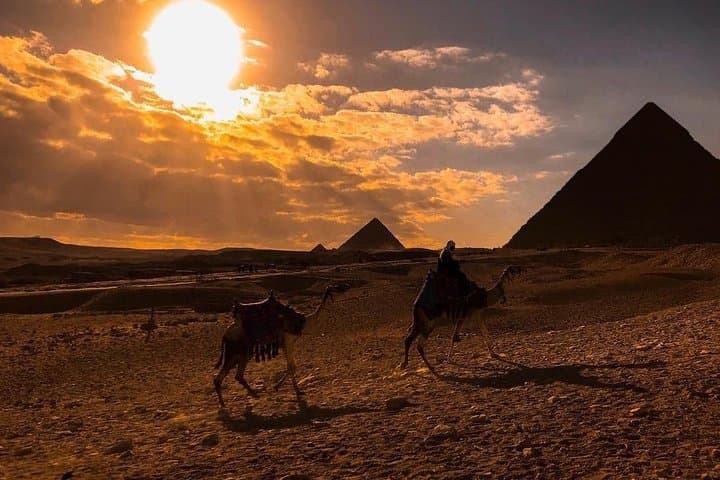
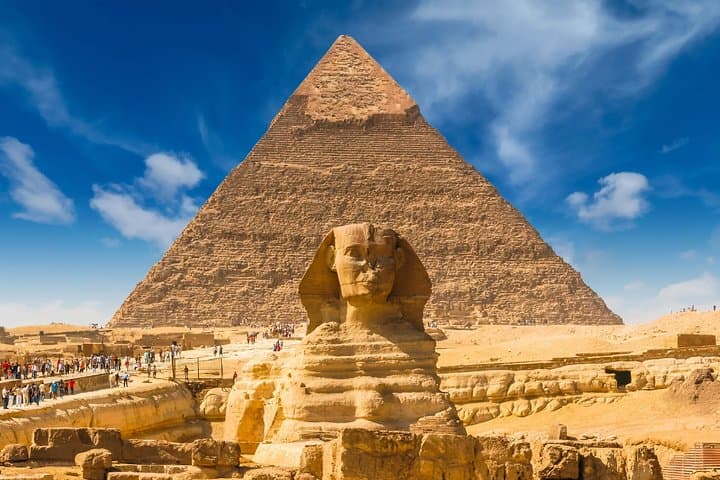
At first light the limestone of the Giza Plateau looks almost white against the Nile's distant haze. You step from an air‑conditioned van onto hard, sun‑warmed stone and the scale of the Fourth Dynasty imposes itself: three massive pyramids, a weathered Sphinx, and a horizon that still holds the silhouette of ancient power.
At first light the limestone of the Giza Plateau looks almost white against the Nile's distant haze. You step from an air‑conditioned van onto hard, sun‑warmed stone and the scale of the Fourth Dynasty imposes itself: three massive pyramids, a weathered Sphinx, and a horizon that still holds the silhouette of ancient power.
This single‑day route stitches together three eras of Egyptian funerary architecture. Giza's Khufu, Khafre and Menkaure pyramids date to the Fourth Dynasty and sit on a raised limestone platform cut from the desert edge of the Nile Valley. Saqqara, 27 km to the south, is older in places—home to Djoser's stepped mastaba that began the move from flat tombs to true pyramids. Memphis, founded around 3100 BC, preserves colossi and an alabaster sphinx that tell of the long administrative life of ancient Egypt.
Geologically, these monuments rest on compacted Nile silt and Eocene limestone; expect uneven, broken paving and soft sand between sites. Culturally, vendors, papyrus workshops and government‑certified souvenir stops are part of the experience—use them to learn but shop selectively.
Practical guidance: start early (tour begins around 08:00), wear sturdy shoes and high‑SPF sun protection, and carry water even if bottled water is provided. Walking across complexes totals a few kilometers with mostly flat but rocky terrain; uneven steps and low doorways may require bending or a short scramble. Purchase any inside‑tomb tickets in advance if you want to enter specific burial chambers. With planning, this eight‑hour loop delivers a compact primer on Egypt's monumental past without sacrificing comfort.